Do You Need an 11 Month Home Warranty Inspection?

In short, yes. If you bought a new construction home, an 11-month home warranty inspection is one of the smartest moves you can make before your first year is up. A licensed inspector checks the home top to bottom and documents any builder defects while your one-year warranty still pays for the repairs.

Wait too long, and those fixes come out of your pocket. At Serenity Home Inspections, we run these inspections across Metro Atlanta, from new subdivisions in Alpharetta and Suwanee to Peachtree Corners. This guide explains what the inspection covers, when to schedule it, and how it differs from a home warranty or home insurance.

What Is an 11 Month Home Warranty Inspection?

An 11-month home warranty inspection is a full home inspection done in the 11th month after you close on a new construction home, right before the builder’s one-year warranty expires.

It is also called a builder’s warranty inspection or a new construction warranty inspection. The goal is simple. Find the defects that have shown up during your first year in the home, put them in writing, and submit them to your builder while they are still responsible for the repairs.

New does not mean flawless. Most homes look perfect on move-in day, but homes settle, systems get used hard, and small mistakes from a fast build start to show after a few seasons. A nail pop here, a hairline crack there, a duct that was never sealed right.

City and county inspections confirm code compliance, but they do not catch every installation error or quality issue. A trained inspector does, and this is your last chance to flag them on the builder’s dime.

At Serenity, this is one of three phases we offer on new construction, alongside the pre-drywall and final walkthrough inspections. You can read more about our builder’s warranty inspection and how it fits into the new construction process.

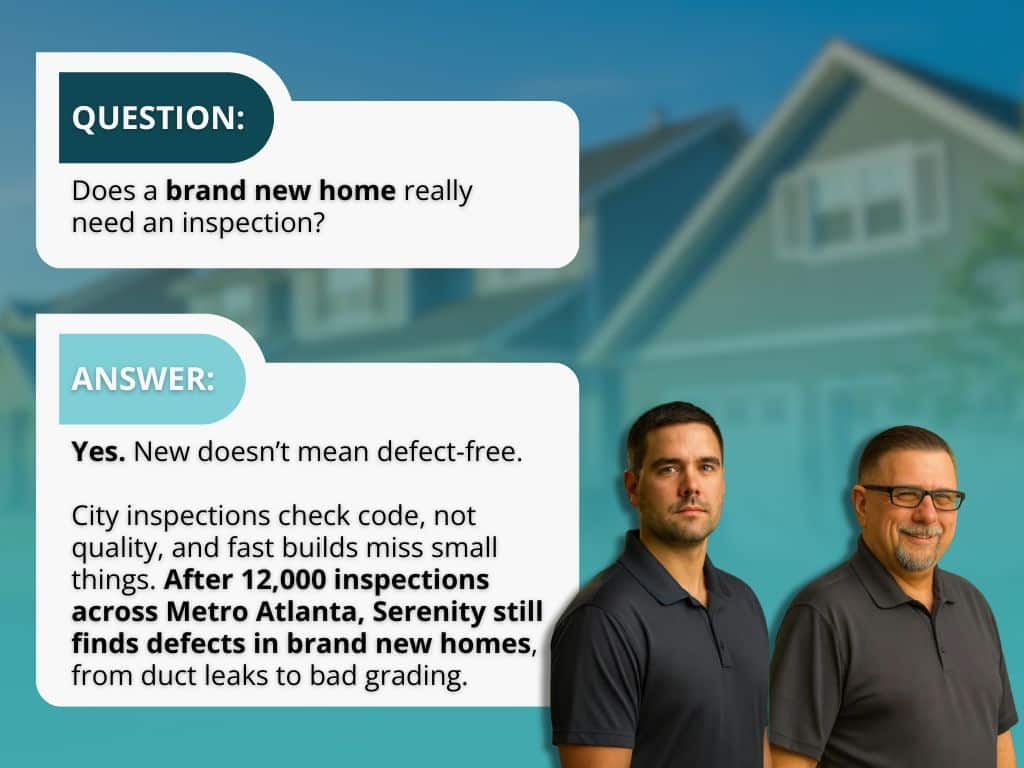
Serenity Home Inspections graphic explaining that a brand new home still needs an 11 month home warranty inspection because city inspections check code, not quality

When Should You Schedule It? (Month 10 or 11)

Schedule your inspection in the 10th or 11th month after closing, at least four to six weeks before your one-year warranty expires. That window is not random. You need enough time to get the report, send your claims to the builder, and let them schedule repairs before the deadline. Cut it too close, and you lose your room to negotiate.

Here is why the 11th month works best:

  • It gives the home a full year of real use, so seasonal issues have time to appear.
  • It leaves a buffer before the warranty deadline to file claims and get responses.
  • It catches problems while the builder is still on the hook, not after.

Many homeowners get busy and miss the window. Set a reminder for 10 months after your closing date. If you are already past that point and the clock is ticking, call your inspector right away and tell them how many days you have left so they can prioritize your report.

What Does an 11 Month Warranty Inspection Cover?

An 11-month warranty inspection covers the same ground as a full home inspection. The inspector reviews your home’s major systems and structure from the roof down to the foundation.

In Georgia’s climate, where hot, humid summers run from May through September and storms roll through every spring, that thorough look matters even more.

A typical inspection checks:

  • Roof, attic, flashing, and ventilation
  • Exterior, siding, grading, and drainage around the foundation
  • Foundation and visible structural components
  • HVAC performance and the ductwork
  • Plumbing fixtures, water heater, and visible pipes
  • Electrical panel, outlets, and wiring
  • Windows, doors, and weather sealing
  • Interior finishes, drywall cracks, nail pops, and uneven floors

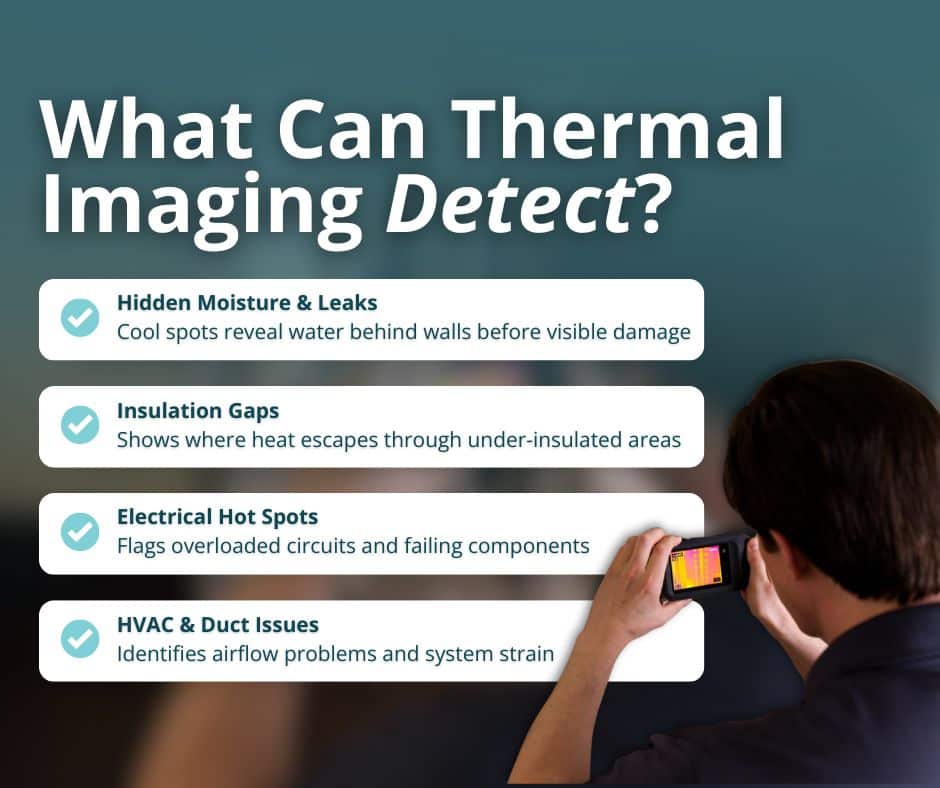
Serenity includes infrared thermal imaging on these inspections to spot moisture, insulation gaps, and electrical hot spots behind walls that a visual check alone would miss.

In Atlanta’s humidity, a small hidden leak can turn into mold or rot fast, so catching it early is worth far more than the cost of the inspection. A good inspector also knows the common new construction mistakes that show up again and again, even in well-built homes, and exactly where to look for them.

Builder’s Warranty vs Home Warranty vs Home Insurance

These three terms get mixed up constantly, so here is the plain version. A builder’s warranty comes free with your new home and is provided by the builder. A home warranty is a service contract you choose to buy. Home insurance is a policy your lender requires that covers sudden damage.

The FTC explains that a builder’s warranty comes with new construction and covers items that are a permanent part of the home, like plumbing, electrical, and structural work. A home warranty, by contrast, is really a service contract that costs extra and usually covers appliances and systems in existing homes.

Most builders’ warranties follow a tiered structure. The exact terms depend on your builder’s contract, but a common setup looks like this:

CoverageTypical lengthWhat it covers
Workmanship and materials1 yearMost components: drywall, paint, trim, siding, fixtures
Major systems2 yearsElectrical, plumbing, HVAC
Structural defectsUp to 10 yearsFoundation, framing, load-bearing elements

The one-year workmanship tier is the broadest and the shortest, which is exactly why the 11-month inspection is timed to it. For a deeper breakdown of how a service contract compares to a policy, see our guide on the difference between a home warranty and home insurance.

One more thing worth clearing up. Every Serenity inspection comes with a free 90-day home warranty that protects covered systems for the first 90 days after your inspection. That is separate from your builder’s warranty and from any service contract you buy on your own.

What to Do After the Inspection

Once you have your report, move quickly. Submit it to your builder in writing as a formal warranty claim before your deadline. A written, photo-rich report is your strongest tool for getting repairs approved. Take these steps:

  1. Review the report and flag the most serious items first.
  2. Send the full list to your builder in writing, with photos.
  3. Prioritize safety and structural issues, then systems, then cosmetic fixes.
  4. Get repair confirmations in writing, including what was done and when.
  5. Verify the repairs before your warranty officially ends.

Reputable builders honor these claims, and a clear report makes it easy for them to schedule the work. To get the best results from your coverage, make sure you’re making the most of your builder’s warranty.

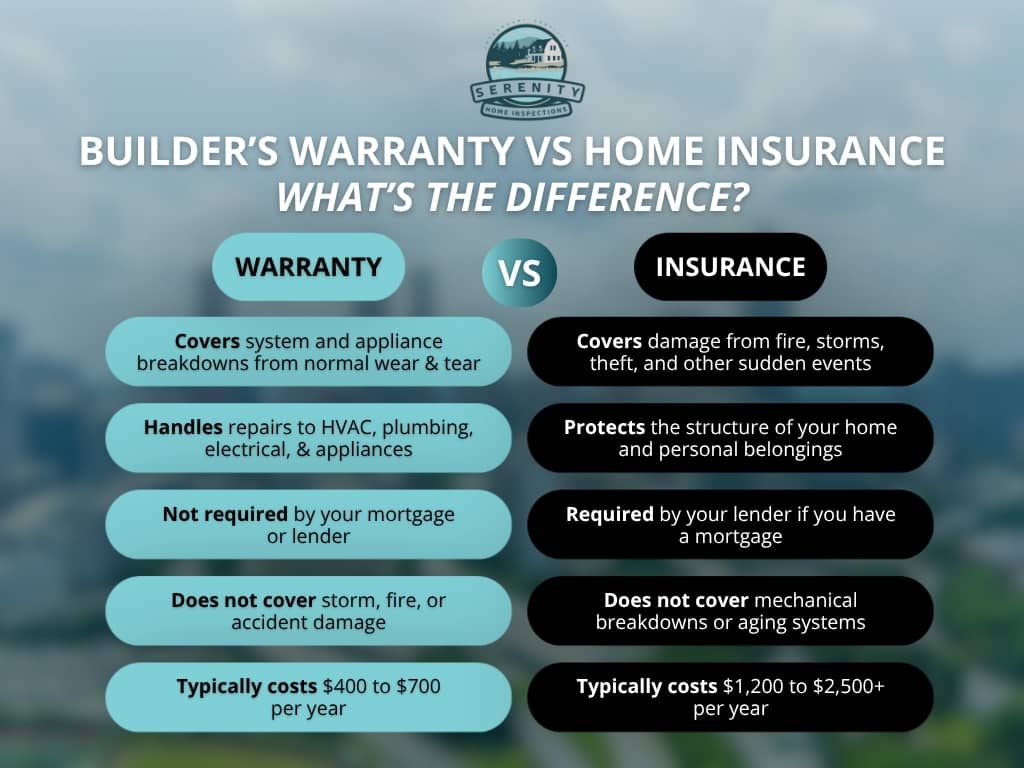
Comparison graphic displaying the primary differences between a builder's home warranty and homeowner's insueance.

Related Questions to Explore

Does a home warranty company require an inspection?

Usually not. Most home warranty providers sell you a service contract without requiring a home inspection first. Getting an independent inspection before you buy one is still smart, because a home warranty will not cover pre-existing problems. Knowing the real condition of your systems helps you decide whether the coverage is worth it.

How long is a builder’s warranty good for?

Most builders’ warranties cover workmanship and materials for one year, major systems for about two years, and structural defects for up to ten years. The exact terms live in your builder’s contract, so read it closely and note the dates. The one-year mark is the deadline that matters most for your 11-month inspection.

Is an 11-month warranty inspection worth it?

For almost every new construction owner, yes. The inspection usually costs a few hundred dollars, while the repairs it uncovers, like a duct leak, a grading problem, or missing attic insulation, can run into the thousands. Catching those while the builder still pays for them is one of the best returns you will get as a new homeowner.

When to Call a Professional

If your new home is coming up on its first birthday, now is the time to book your inspection. Reach out to Serenity Home Inspections if any of these apply to you:

  • Your builder’s one-year warranty is within two months of expiring.
  • You have noticed cracks, leaks, sticking doors, or HVAC issues since moving in.
  • You want thermal imaging included to catch hidden moisture before it spreads.
  • You are not sure what your builder’s warranty covers and want a clear punch list.

We serve homeowners across Metro Atlanta, including Alpharetta, Suwanee, and Peachtree Corners, and we deliver same-day reports so you have time to act before your deadline.

Conclusion

An 11-month home warranty inspection is your last clear shot at holding your builder accountable before the one-year warranty closes. The key takeaways:

  • Schedule it in month 10 or 11, with four to six weeks of buffer before your warranty expires.
  • It is a full inspection of your home’s systems and structure, with a written report for your builder.
  • A builder’s warranty, a home warranty, and home insurance are three different things, and none of them replaces a real inspection.

With over 12,000 inspections completed across Metro Atlanta, Serenity’s inspectors know exactly what to look for in a one-year-old home. Schedule your 11-month inspection today.

What Do Inspectors Look For in a House? Room-by-Room

A home inspector looks for problems with a house’s major systems and safety: the roof, foundation, electrical, plumbing, heating and cooling, and the interior and exterior, plus anything that signals a safety hazard or an expensive repair on the horizon. The job is to give you a clear, honest picture of a home’s true condition before you buy.

At Serenity Home Inspections, we have completed more than 12,000 inspections across Metro Atlanta since 2011, so we know where houses tend to hide their flaws. This guide walks through every area an inspector checks, the red flags that surface most often, and what a standard inspection does not cover.

What Does a Home Inspector Actually Do?

A home inspector performs a visual, non-invasive examination of a home’s accessible systems and reports their condition in writing. An inspector does not tear open walls or move heavy furniture. They evaluate what they can see and safely reach, then document defects, safety concerns, and components nearing the end of their life.

Most inspectors follow a published standard of practice, such as the InterNACHI Standards of Practice that our team is certified under. That standard defines what gets inspected and how, so you receive a consistent, professional report rather than a casual opinion.

A typical inspection takes two to four hours, depending on the size and age of the home, and the written home inspection report usually follows the same day or the next.

One thing worth clearing up early: an inspection is not an appraisal. An appraiser works for the lender and estimates market value. An inspector works for you and reports condition and safety. You want both.

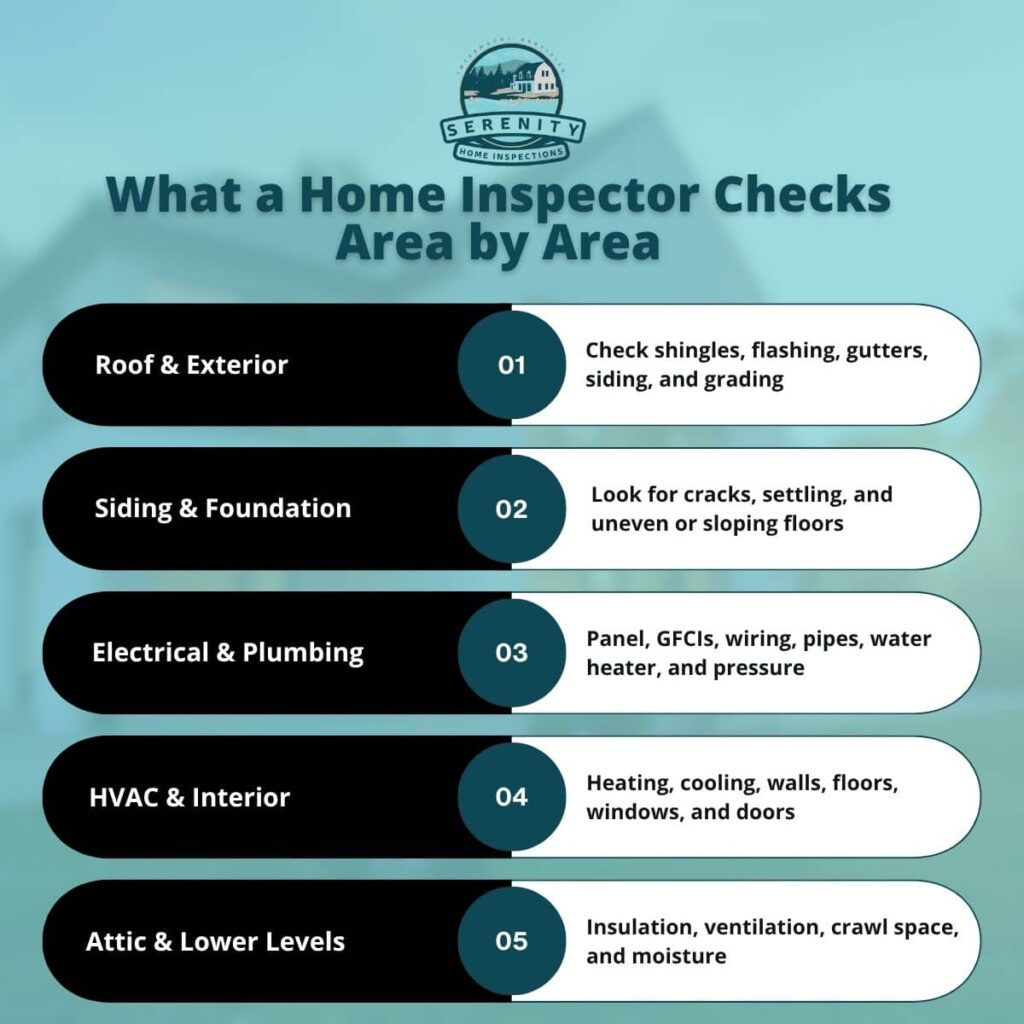
Serenity Home Inspections graphic showing what a home inspector checks area by area: roof and exterior, siding and foundation, electrical and plumbing, HVAC and interior, attic and lower levels

The Major Systems a Home Inspector Checks

A standard home inspection covers the home from the roof down to the foundation. Here is what an inspector evaluates in each area.

Roof, Gutters, and Chimney

The roof is one of the first and most important things an inspector checks, because it is among the most expensive components to replace. Inspectors look for missing, curling, or damaged shingles, worn flashing around penetrations, soft spots, and signs of past leaks.

They also assess gutters, downspouts, and the chimney cap and crown. A roof near the end of its life can shift a negotiation, so its remaining lifespan matters as much as its current leaks.

Foundation and Structure

Inspectors look for cracks, settling, bowing walls, sloping floors, and gaps around doors and windows that point to structural movement. Not every crack is a problem. A thin vertical crack is often just concrete shrinkage, while a horizontal crack or one with displacement deserves a closer look.

If you want a deeper read on which cracks matter, this guide on how to gauge the severity of a foundation crack breaks it down well. In Metro Atlanta, our red clay soil expands and contracts with moisture, which stresses foundations more than in many other regions, so this section gets real attention on local homes.

Electrical System

Inspectors test and evaluate the electrical system with safety as the priority. They check the main panel, breakers and fuses, outlets, switches, light fixtures, and wiring.

Common findings include missing GFCI protection near sinks and bathrooms, double-tapped breakers, outdated panels, and improper or unsafe splices. These are flagged because faulty wiring is a leading cause of house fires.

Plumbing and Water Heater

The plumbing review covers supply lines, drain lines, water pressure, the water heater, and visible pipe materials. Inspectors look for leaks, corrosion, weak pressure, and outdated materials like polybutylene or galvanized steel that tend to fail. A standard inspection only confirms that fixtures drain and flush.

It does not show the condition of the underground sewer line, which is why a sewer scope inspection is often worth adding to older properties.

Heating and Cooling (HVAC)

Inspectors evaluate the heating and cooling system for proper function and overall condition. That includes the furnace, evaporator coil, compressor, ductwork, air handler, thermostat, and filter. Red flags include a cracked heat exchanger, dirty or neglected components, improper venting, and equipment near the end of its service life.

We frequently use infrared thermal imaging to spot temperature differences that reveal hidden HVAC and insulation issues.

Attic, Insulation, and Ventilation

The attic tells the story of the home above the ceiling. Inspectors check roof decking for staining from leaks, framing for damage or improper modifications, insulation for adequate depth, and ventilation for proper airflow through soffit and ridge vents.

Poor attic ventilation traps heat and moisture, which shortens roof life and can fuel mold growth.

Basement and Crawl Space

Below the living space, inspectors look for water intrusion, efflorescence, standing water, sagging support beams, and signs of mold or wood rot. Moisture is the recurring theme here.

A musty odor is often the first clue that something needs attention, and knowing how to diagnose a musty smell in the basement helps resolve what those smells usually point to. Basements and crawl spaces are also where radon tends to enter, which leads to the next point.

Interior: Walls, Floors, Windows, and Doors

Inside each room, inspectors check walls, ceilings, and floors for cracks, water stains, and sagging, and they operate windows and doors to confirm they open, close, and seal.

Sticking doors and uneven floors can be cosmetic, or they can hint at foundation movement, so inspectors read them alongside everything else.

Exterior, Grading, and Drainage

Outside, inspectors evaluate siding, trim, decks, porches, and the grading around the home. They look for warped or loose siding, rot, and ground that slopes toward the foundation instead of away from it.

Poor drainage is one of the most common root causes of basement and foundation moisture, so this section often connects back to problems found elsewhere.

Built-In Appliances and Safety Devices

Inspectors test built-in appliances such as the stove, dishwasher, and built-in microwave for basic function, and they check safety devices like smoke and carbon monoxide detectors. These are small items individually, but a report full of inexpensive, easy fixes still gives a buyer a useful punch list before move-in.

What Commonly Gets Flagged: Red Flags That Can Derail a Sale

The findings most likely to affect a sale are safety hazards and high-cost repairs. Most homes have some defects, so the goal is not a perfect house. The goal is to catch the deal-breakers. The issues that come up most often, and carry the most weight, include:

  • Roof at the end of its life or with active leaks
  • Foundation cracks with displacement or signs of structural movement
  • Electrical hazards like outdated panels, missing GFCI protection, or unsafe wiring
  • Major plumbing problems, including sewer line failures and hidden leaks
  • A failing or non-functional HVAC system
  • Water intrusion and moisture in the basement or crawl space

When the report shows significant issues, you and your agent can request repairs, ask for a credit, or walk away. A strong inspection contingency is what protects your options and your earnest money during that window.

What a Standard Home Inspection Does Not Include

A standard inspection is a visual check of accessible systems, so several important items require separate, specialized testing. The most common add-ons include:

  • Radon testing. Radon is an odorless, radioactive gas, and the EPA notes it is the second leading cause of lung cancer in the United States, per EPA guidance on radon health risks. North Georgia sits in elevated radon zones, so radon testing is a smart pairing with a general inspection here.
  • Mold and air quality testing. Visible mold gets noted, but mold and air quality testing confirm what is in the air and behind the surfaces.
  • Sewer scope. A camera sends a live view down the underground sewer line, where standard inspections cannot reach.
  • Termite and pest (WDO). A WDO and pest inspection, sometimes called a Georgia termite letter, documents wood-destroying organisms.
  • Pool and septic. Each is its own specialized inspection.

For a full breakdown of what is and is not part of the base service, see what’s included in your home inspection.

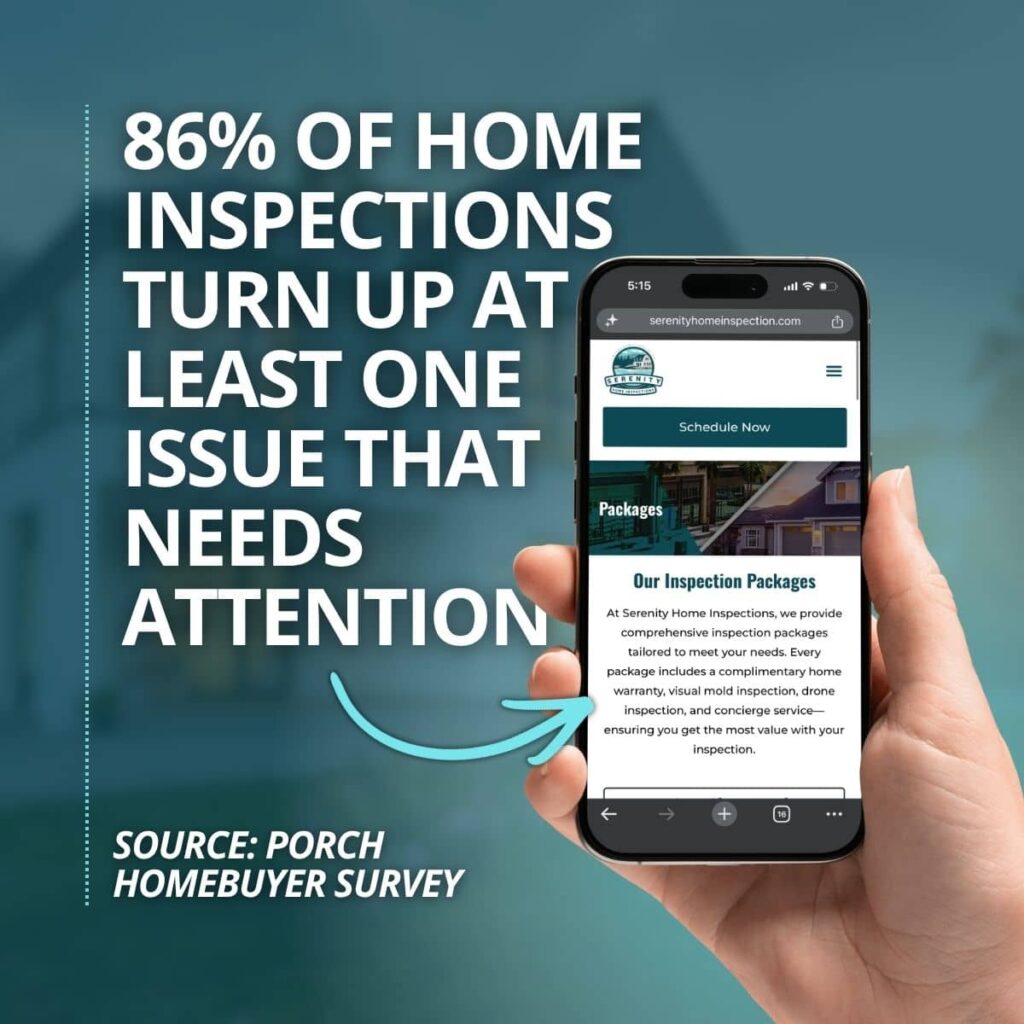
Stat graphic noting 86% of home inspections find at least one issue, from Serenity Home Inspections

What Inspectors Pay Extra Attention to in Older Atlanta Homes

Older Metro Atlanta homes, like those in Grant Park, Kirkwood, and Virginia Highland, carry great character and a few predictable issues. Inspectors look closely at aging electrical systems, original plumbing materials, clay or cast-iron sewer lines, and foundation movement tied to the area’s red clay soil.

Homes built before 1990, or with large trees near the sewer line, are strong candidates for a sewer scope. Knowing the local patterns is the difference between a generic checklist and an inspection that reflects how Atlanta homes actually age.

Related Questions to Explore

What do home inspectors look for the most? Inspectors focus most on safety hazards and the home’s most expensive systems: the roof, foundation, electrical, plumbing, and HVAC. These carry the biggest repair costs and the greatest safety impact, so they receive the most attention in the report.

How long does a home inspection take? A standard home inspection usually takes two to four hours, depending on the home’s size, age, and condition. Larger homes or added services like mold or drone inspections can take longer. We deliver same-day or next-day reports, so you have time to act within your due diligence window.

Should I attend my home inspection? Yes, attending is a good idea, especially for first-time buyers. Joining the last 30 to 60 minutes lets the inspector walk you through findings in person and explain which items are safety issues and which are routine maintenance.

Do home inspectors check for mold? Inspectors note visible mold and moisture during a standard inspection, but confirming the type and extent requires dedicated mold and air quality testing. Because mold spores are small and spread easily, a clean visual check does not always mean the air is clear.

What do home inspectors look for in a crawl space? In a crawl space, inspectors look for standing water, high humidity, sagging beams or joists, wood rot, pest activity, and signs of radon entry. Moisture is the main concern, since it drives most of the structural and air-quality problems found below the home.

Do new construction homes need an inspection? Yes. Even brand-new homes commonly have missing insulation, reversed wiring, and plumbing leaks. A new construction inspection catches these while the builder is still responsible for fixing them.

When to Call a Professional

A self-guided walkthrough helps you spot obvious issues, but a licensed inspector is the right call the moment you go under contract, especially in Atlanta’s fast-moving market, where due diligence windows are often only five to seven days.

Reach out early if you are a first-time buyer who wants the home explained in plain language, an investor who needs accurate repair costs, or a buyer relocating to Georgia who may not know the local soil and humidity issues.

At Serenity, every inspector is InterNACHI certified, reports arrive the same day or the next day, and every inspection is backed by our honor guarantee and a free 90-day warranty.

Conclusion

Knowing what an inspector checks puts you in control of one of the biggest decisions you will make. A few things to carry with you:

  • A standard inspection covers the roof, foundation, electrical, plumbing, HVAC, interior, and exterior, with a focus on safety and major costs.
  • Specialty concerns like radon, mold, sewer lines, and termites need separate testing.
  • The report is a tool: use it to negotiate repairs, request credits, or walk away with confidence.

When you are ready for a clear, honest read on a home’s condition, schedule a home inspection with Serenity and get the facts you need to move forward.

The Home Inspection Checklist All Buyers Should Have

A home inspection checklist tells you exactly what a licensed inspector examines before you close on a home, and what you should be paying attention to when they do.

At Serenity Home Inspections, we’ve completed more than 12,000 inspections across Atlanta, and one thing is consistent: buyers who understand the process get more out of the report. This guide walks you through every system on the checklist, how to use it during your inspection, and what to do when the report lands in your inbox.

What Does a Home Inspection Cover?

A home inspection is a visual, non-invasive review of the property’s major systems and structural components. The goal is to find material defects, or problems that affect the value of the home or pose a safety risk.

Here’s what a thorough inspection covers.

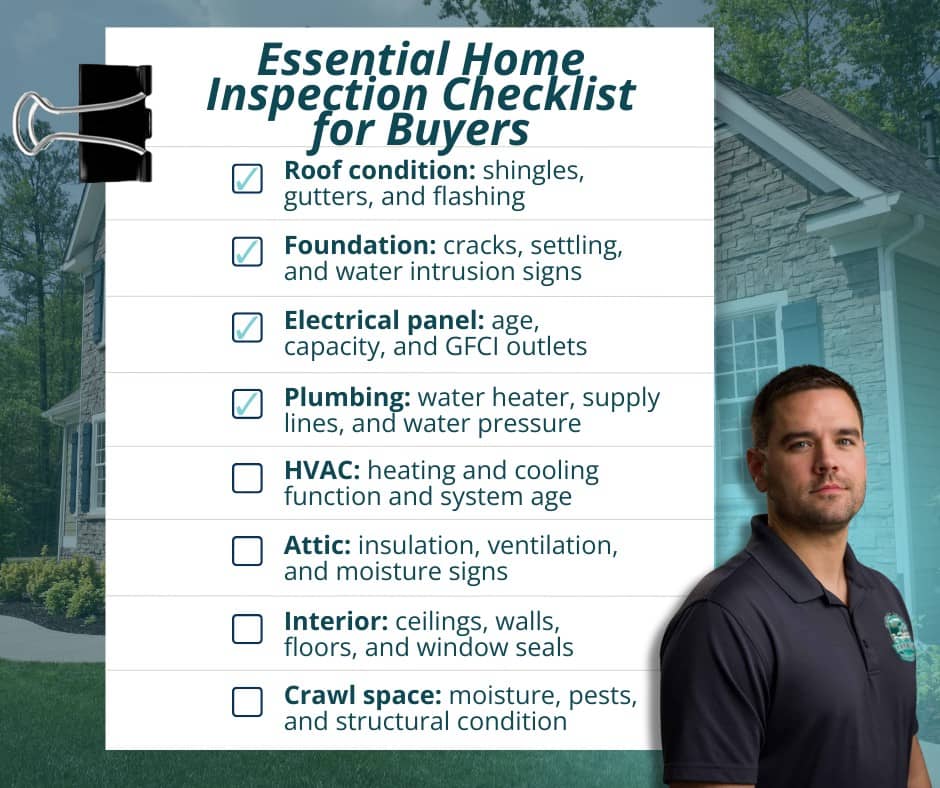
A comprehensive buyers home inspection checklist graphic from Serenity Home Inspections, detailing essential inspection items such as the roof, foundation, electrical panel, plumbing, HVAC, attic, interior, and crawl space.

Exterior and Roof

The exterior is the first thing an inspector evaluates. This includes:

  • Roof shingles: missing, curled, or cracked pieces; flashing and gutters
  • Siding and trim: condition of materials, signs of rot, gaps, or pest entry points
  • Grading and drainage: whether the ground slopes away from the foundation
  • Driveways, walkways, decks, and fencing: structural condition and safety
  • Windows and doors: seals, weatherstripping, and proper operation

Roof condition is one of the most common areas where buyers are surprised by the findings. Always ask the inspector how many years of useful life remain on the roof.

Foundation and Structure

The foundation supports everything above it. Inspectors look for:

  • Cracks in foundation walls, poured slabs, or block masonry
  • Signs of settlement or shifting
  • Evidence of water intrusion or prior patching
  • Structural beams and support posts for pest damage or rot

Not all cracks are deal-breakers. Hairline cracks from settling are common in older Atlanta homes. Horizontal cracks or cracks that are actively growing are a different story. If the inspector flags foundation concerns, requesting a structural engineer evaluation before closing is a smart next step.

Electrical System

The electrical inspection focuses on safety. Key items include:

  • Main electrical panel: age, capacity, condition, and brand (some older panels have known safety issues)
  • GFCI outlets in kitchens, bathrooms, and exterior areas
  • AFCI breakers in bedrooms
  • Outlet function and polarity
  • Visible wiring condition
  • Light fixtures and ceiling fans

Serenity’s inspectors test all accessible outlets and evaluate the panel for any signs of overcrowding, double-tapping, or improper wiring per InterNACHI standards for home inspection.

Plumbing System

A plumbing inspection checks:

  • Water heater: age, condition, proper venting, and temperature-pressure relief valve
  • Supply lines: material type (copper, PEX, older polybutylene, which can be flagged as a defect)
  • Drain and waste lines: flow, signs of slow drains or leaks
  • Water pressure at fixtures
  • Visible signs of past water damage under sinks and around toilets

Atlanta’s older neighborhoods have a mix of plumbing materials. Older homes sometimes still have galvanized steel supply lines, which restrict flow and corrode internally over time.

HVAC System

Heating and cooling are two of the most expensive systems to replace. The HVAC inspection covers:

  • Furnace and air handler: age, operation, heat exchanger condition
  • Air conditioning: cooling function, refrigerant lines, condenser unit
  • Ductwork: visible condition and connections
  • Thermostat operation and response
  • Air filter condition

A system that runs does not mean a system that runs well. The inspector will note the approximate age and flag anything that suggests deferred maintenance.

Interior and Attic

Inside the home, inspectors check:

  • Ceilings, walls, and floors: staining, cracks, soft spots, and sloping
  • Windows and interior doors: operation and seal failure (fogged glass between panes indicates a broken seal)
  • Attic: insulation levels, ventilation, signs of moisture or pest activity, and roof structure viewed from below
  • Crawl space (if accessible): moisture, insulation, pest activity, and structural condition
  • Built-in appliances: basic function testing of dishwasher, range, and exhaust fans

How to Use Your Inspection Checklist During the Visit

Walking through the home alongside your inspector is one of the most valuable things you can do as a buyer. Here’s how to make the most of the time.

Attend the Inspection Yourself

Buyers are always welcome to attend their inspection, and you should. Walking the home with the inspector gives you context that no written report fully captures. You’ll hear why something is flagged, how serious it is, and how to maintain it going forward. Plan for two to four hours, depending on home size.

Bring this checklist, a notepad, and a phone to take photos of anything you want to follow up on.

What to Watch For: Room by Room

Use the inspection as a second walkthrough. Beyond the formal checklist, look for:

AreaWhat to notice
KitchenCabinet condition, sink drainage speed, and exhaust fan function
BathroomsGrout and caulk around tile, toilet stability, and ventilation
Basement / Crawl spaceMusty smell, visible moisture staining, sump pump presence
GarageAuto-reverse function on door opener, fire rating on interior door
Attic accessInsulation coverage, any daylight visible through the roof structure

What Happens After the Inspection Report?

The report lands in your inbox, and suddenly, the real decision-making begins. Here’s what to do with it.

How to Read the Report

Serenity delivers same-day reports with photos, severity ratings, and clear descriptions. When you open it, focus first on items marked as safety hazards or major defects. Cosmetic issues and routine maintenance items are normal in any home.

Separate items into three buckets:

  1. Safety issues requiring immediate correction
  2. Costly repairs or system replacements are worth negotiating
  3. Maintenance items to plan for after closing

Negotiating Repairs or Credits

An inspection report is a negotiating tool. Buyers can request that sellers fix specific items before closing, reduce the purchase price, or provide a credit at closing to cover repairs.

Your real estate agent will guide the negotiation, but understanding what the inspector found gives you the data to ask for what is fair.

For a deeper look at what our inspections include and how we document findings, visit our general home inspection page.

Other Inspections Worth Considering

A general home inspection is thorough, but it does not cover everything. Depending on the property, buyers in the Atlanta area often add:

  • Radon testing: Radon is an odorless, radioactive gas that enters homes through foundation gaps. The EPA recommends testing all homes before purchase, since Georgia has areas of elevated radon potential. Serenity offers radon testing as an add-on.
  • Mold and air quality testing: Standard inspections include a visual mold check, but lab testing confirms what is present and at what levels. Learn more about mold and air quality testing.
  • Sewer scope inspection: A camera inspection of the main sewer line identifies root intrusion, collapse, or offset joints: common in homes with mature trees or cast iron lines. See our sewer scope inspection service.
  • WDO and pest inspection: Wood-destroying organism inspections check for termites and other wood-boring pests. Required by most lenders on FHA and VA loans.
  • Infrared thermal imaging: Thermal cameras can detect moisture hidden behind walls and missing insulation that a visual inspection misses.

If you are buying a home with a pool, we also offer a dedicated pool inspection.

Home buyers dealing with pest issues after closing often turn to professional pest control specialists. Understanding signs of a cockroach infestation before move-in can help set expectations for any issues the inspection may surface.

For buyers looking at older properties, knowing common concerns with stucco exterior walls is useful since stucco inspection findings often come up in the same report.

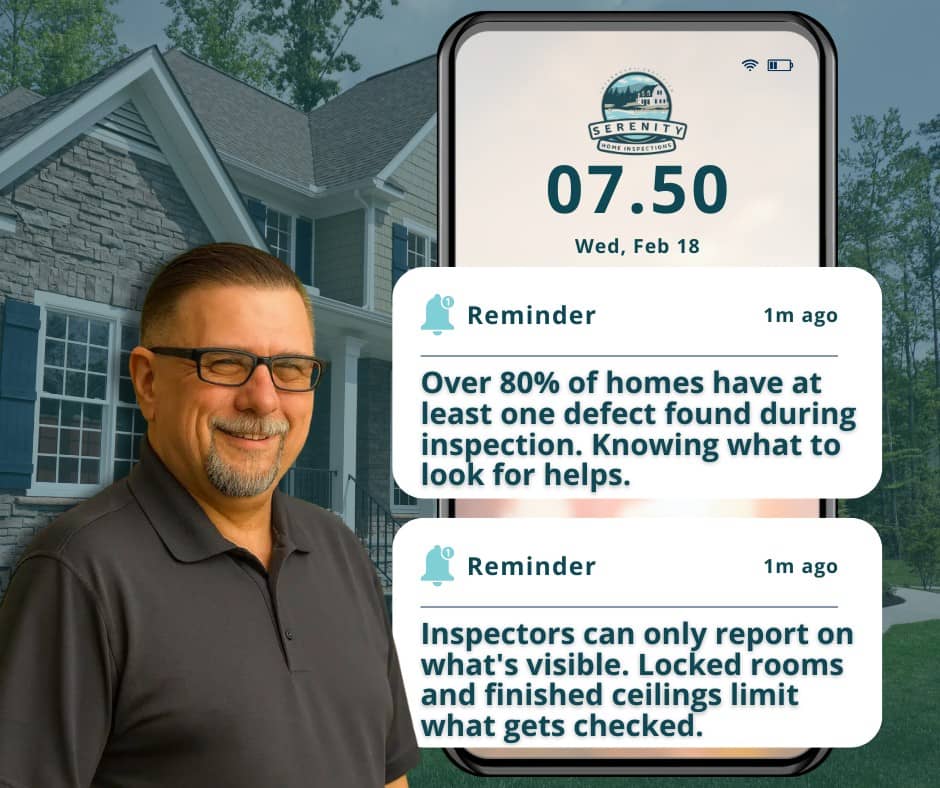
An infographic from Serenity Home Inspections featuring a phone notification style layout, sharing key reminders for a buyers home inspection checklist, including the fact that over 80% of homes have a defect and that inspectors can only check visible areas.

Related Questions to Explore

Can a Seller Refuse a Home Inspection? A seller cannot refuse a buyer’s right to an inspection if an inspection contingency is in the contract. However, sellers can decline specific inspection timing, require access conditions, or, in some competitive markets, buyers waive the contingency voluntarily to strengthen an offer. Waiving inspection is a significant risk and is not recommended. Review your contract with your agent before making that decision.

What Do Home Inspectors Not Check For? Standard home inspections do not include environmental testing (radon, mold, asbestos, lead paint), underground utility lines, or systems that are not readily accessible. Inspectors report on visible conditions on the day of the inspection, not future conditions or code compliance for past construction. For what’s included in your scope, see our inspection scope page.

How Much Does a Home Inspection Cost in Atlanta? Home inspection costs in Atlanta typically range from $350 to $550 for a standard single-family home, depending on size and age. Serenity offers inspection packages that bundle multiple services at a better value than booking them individually. Review our packages page for current pricing.

Should I Get an Inspection on a New Construction Home? Yes. New construction homes have defects, too. Sometimes because of rushed timelines, subcontractor handoffs, or items covered before the final walkthrough. A new construction inspection is especially valuable at the pre-drywall phase, when structural, electrical, and plumbing work is still visible.

We offer new construction inspections for all phases of the build. We wrote about what buyers should verify in detail in our guide to what’s included in your home inspection.

When to Call a Professional

This checklist gives you a framework for what inspectors evaluate, but a checklist is not a substitute for a licensed inspector’s judgment. If you are under contract on a home in the Atlanta area and have not yet scheduled your inspection, now is the time.

A few situations where you especially should not skip or delay scheduling:

  • The home is over 30 years old, which means most major systems are at or near the end of their useful life
  • The listing mentions past water damage, roof repairs, or foundation work
  • The home sat vacant for an extended period
  • You are buying a new build and want a pre-drywall phase inspection before concrete is poured

Serenity Home Inspections serves buyers throughout a 60-mile radius of Atlanta, including Peachtree Corners, Alpharetta, Marietta, Roswell, and surrounding counties. We deliver same-day reports and include a complimentary 90-day home warranty with every buyer inspection. Schedule your inspection today.

Conclusion

A home inspection checklist helps buyers walk into the process with confidence and walk out with clear answers. Here is what to take away:

  • A standard inspection covers the roof, foundation, electrical, plumbing, HVAC, and interior systems
  • Attending the inspection yourself gives you context that the written report cannot fully convey
  • The report is a negotiating tool: prioritize safety issues and major defects first
  • Add-on inspections for radon, mold, sewer, and pests can fill the gaps a general inspection leaves

Ready to schedule? Visit our general home inspection page or contact us to book your Atlanta-area inspection.

Who Verifies Repairs After a Home Inspection?

The buyer is ultimately responsible for verifying repairs after a home inspection, but that does not mean you do it alone. A combination of your real estate agent, the original inspector, and licensed contractors each play a role in confirming that the seller followed through.

At Serenity Home Inspections, we offer a dedicated repair verification inspection for buyers who want an independent, professional confirmation before they close.

Who Is Responsible for Verifying Repairs?

Short answer: the buyer.

You have the most at stake, and once you close, any repair issues become your problem, regardless of what was agreed to in the contract. The seller is not going to call you after closing to fix something they missed.

That said, the practical responsibility is shared. Your agent keeps the process moving, the inspector can return to verify work, and contractors leave a paper trail. What ties it all together is you pushing to confirm everything before the closing date arrives.

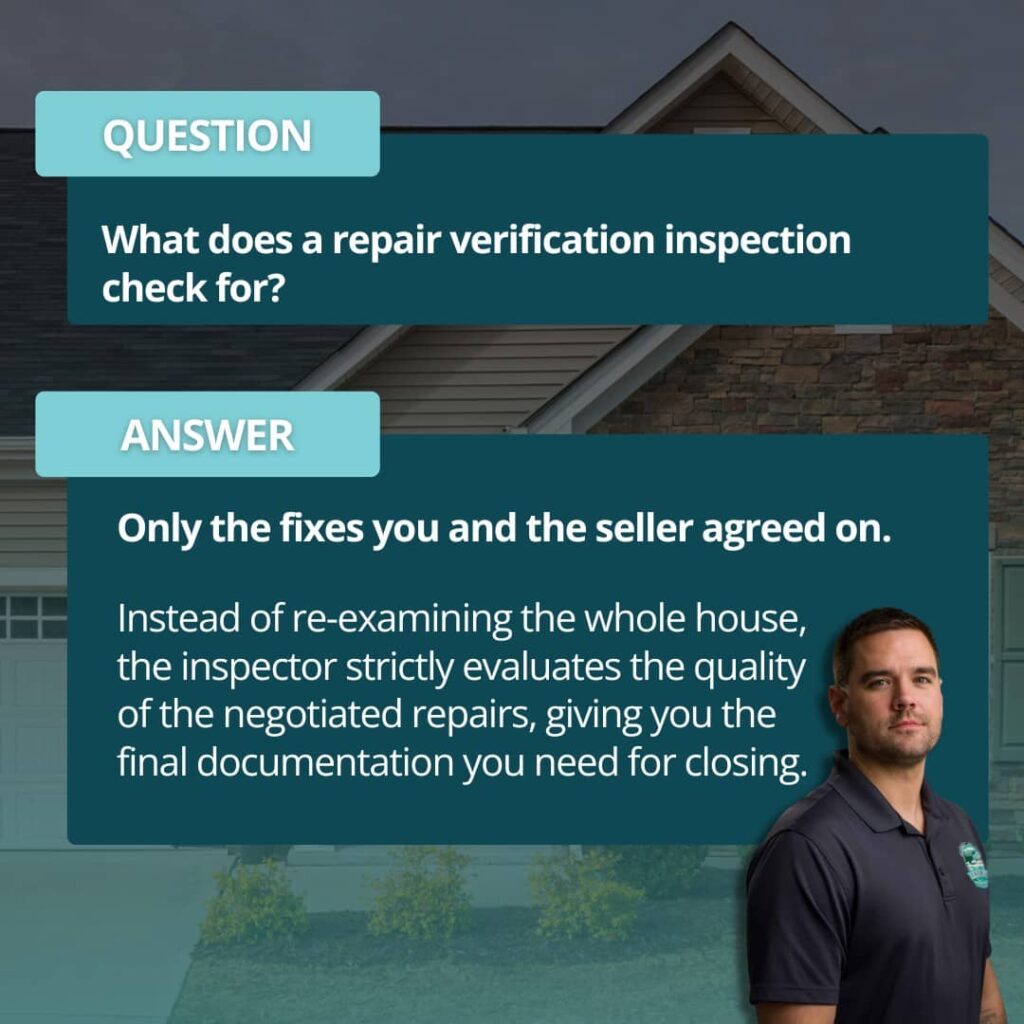
A Q&A graphic explaining what a repair verification inspection covers, featuring a Serenity Home Inspections team member in Atlanta.

The Four Parties Involved in Repair Verification

Repair verification is rarely one person’s job. Here’s how each party fits into the process.

The Buyer

As the buyer, your job is to stay organized. Keep a copy of the original inspection report alongside the repair addendum: the document listing which items the seller agreed to fix. Before closing, compare each line item against the receipts or documentation the seller provides.

During your final walkthrough, test the items that were repaired. Turn on the HVAC. Run the faucets. Check the outlets the inspector flagged. If something was supposed to be replaced and it looks untouched, that is the time to raise the issue. Not after you sign.

The Real Estate Agent

Your agent is your advocate through this process. They handle the back-and-forth with the seller’s agent, request documentation, and push back if something looks incomplete. A good agent will prompt you to schedule a re-inspection rather than rely on the seller’s word alone.

Agents do not do technical evaluations themselves. They cannot tell you whether an electrical repair was done to code or whether a roof patch was done correctly. That is the inspector’s job.

The Original Inspector

The most reliable way to verify that repairs were completed properly is to have a licensed inspector return to the property. This is called a repair verification inspection or re-inspection.

The inspector reviews only the items listed in the original report’s repair agreement. It is not a full second inspection of the home.

Serenity offers repair verification inspections as a stand-alone service. We confirm that each agreed repair was completed and done to an acceptable standard, then deliver a written report you can bring to closing with confidence.

Licensed Contractors

When the seller hires a contractor to make repairs, that contractor should provide documentation: receipts, work orders, and, in some cases, permits. For significant repairs (roof replacement, HVAC work, electrical panel upgrades), a licensed contractor should have pulled a permit, and you can verify that with your local building department.

Receipts alone are not a guarantee of quality. A contractor can invoice for work and still do it incorrectly. This is exactly why an independent inspector verification is a better safeguard than paperwork alone.

What Does a Repair Verification Inspection Cover?

A repair verification inspection is more focused than a full re-inspection. Here is exactly what that scope includes, and where it stops.

Here’s What Gets Checked

A repair verification inspection is scoped to the items in the original repair agreement. The inspector will:

  • Confirm each negotiated repair was completed
  • Verify the quality of the work, which can be assessed visually
  • Note any items that appear incomplete or improperly repaired
  • Deliver a written report documenting findings

This service is faster and less expensive than a full re-inspection because the scope is limited. It is not a hunt for new problems. It is confirmation that the agreed-upon items were handled.

Here’s What’s Not Included

A repair verification inspection does not cover new issues that were not in the original report, systems that are not readily accessible, or work that requires a permit pull or engineering assessment to verify.

If the seller made repairs in areas that require a specialist (foundation, structural, HVAC, refrigerant), you may need a separate specialist sign-off in addition to the inspector’s verification.

Per InterNACHI’s Standards of Practice, home inspectors report on visual, accessible conditions. Verification inspections follow the same scope.

What to Do If Repairs Were Not Done Correctly

Not ideal, but you have options before the closing date passes.

Ask for Documentation First

Before escalating, request the contractor receipts and permits. Some repairs that look incomplete actually have documentation showing they were done inside the wall or in a way that is not visually obvious.

Give the seller a chance to provide proof before assuming the worst.

Request a Price Reduction or Credit

If documentation is missing or the repair verification inspection flags incomplete work, you have options before closing. Work with your agent to request a price reduction, a credit at closing, or a requirement that the seller remedy the issue before the closing date.

A credit is often preferable because it puts repair control in your hands. You choose the contractor, and you verify the work yourself after the fact. For buyers looking at older Atlanta homes where deferred maintenance is common, this is frequently the cleaner path.

Our post on what’s included in your home inspection covers how material defects are documented in the original report, which forms the basis for any credit negotiation.

Walk Away if Necessary

If significant repairs were not made and the seller will not negotiate, your inspection contingency may still protect you. Review your contract with your agent and attorney before the contingency deadline passes.

Walking away from a closing is disruptive, but closing on a home with unverified repairs is worse.

An Atlanta home inspection infographic showing Porch data that over 80% of homes need repairs, highlighting the importance of a repair verification inspection before closing.

Related Questions to Explore

Can the Same Inspector Do the Re-Inspection? Yes, and it is usually preferred. The original inspector already knows the property, understands the context behind each flagged item, and can make direct comparisons between the original condition and the current state.

Serenity’s inspectors are available for repair verification on any property we originally inspected, and we also accept re-inspection requests from buyers who used a different inspector initially.

How Much Does a Repair Verification Inspection Cost? Repair verification inspections cost less than a full home inspection because the scope is limited. Pricing varies based on the number of items being verified and the size of the property. Contact Serenity directly via our packages page for current pricing or to request a quote.

What Documentation Should a Seller Provide for Repairs? At a minimum, sellers should provide itemized invoices from licensed contractors, along with permit numbers for any work that required a permit. For appliance replacements, model documentation and warranty registration records are helpful.

For roof work or HVAC replacements, manufacturer warranty paperwork transfers value to the buyer and should be requested at closing.

When to Call a Professional

If you are under contract and the seller has completed repairs, do not rely on a walkthrough alone to confirm the work. A closing walkthrough is not a technical inspection: it is a visual sweep. You are looking for obvious issues, not evaluating whether an electrical repair was done to code or whether a roof patch will hold through the next storm season.

Situations where a repair verification inspection is especially worth the cost:

  • The original inspection flagged multiple items, and the seller agreed to fix all of them
  • The seller is a flipper or investor rather than an owner-occupant
  • Any structural, roofing, or electrical repairs were negotiated
  • The seller provided receipts, but no permits for work that required them
  • You simply want documentation in hand at closing

Serenity Home Inspections serves buyers throughout greater Atlanta, including Peachtree Corners, Alpharetta, Marietta, Roswell, and surrounding counties.

Our repair verification service delivers a written report the same day, so you are never waiting on paperwork as the closing date approaches. Get in contact with our team to get started.

Conclusion

Verifying repairs after a home inspection is the buyer’s responsibility, but you have tools and professionals to help you do it right. Here is what to remember:

  • The buyer, agent, inspector, and contractor each play a role in repair verification
  • A repair verification inspection is the most reliable way to confirm that work was done correctly
  • Receipts and permits matter, but they are not a substitute for an independent inspection
  • If repairs fall short, you still have options before closing

For independent, same-day repair verification in the Atlanta area, book your service visit online today.

Do Home Inspectors Check for Mold During Your Inspection?

Mold is one of the first things buyers worry about when touring a home, especially in the humid Atlanta climate, where moisture and mildew come with the territory. A musty smell in a basement, a dark patch on a bathroom ceiling, or a waterline on a crawlspace wall is enough to make anyone pause. The natural next question is: Will my home inspector catch this?

The short answer is that home inspectors look for visible signs that might point to mold, but a standard inspection is not a mold test. Understanding what is and is not included helps you know when to ask for an add-on service and how to protect yourself before closing on a home in the Atlanta area.

What a Home Inspector Does and Doesn’t Check For

A general home inspection is a visual, non-invasive evaluation of a home’s major systems and accessible components.

Inspectors look at the roof, foundation, structure, plumbing, electrical, HVAC, attic, crawlspace, interior finishes, and more. They report on what they can see and safely access at the time of the inspection.

Mold falls into a tricky middle ground. Inspectors do not perform mold testing during a standard home inspection, but they are absolutely looking for conditions that often point to mold or moisture concerns. If something visible or suspicious shows up, a good inspector will note it in the report and recommend further evaluation.

That distinction matters. A standard inspection flags the warning signs. A mold and air quality test confirms what is actually present and at what concentration.

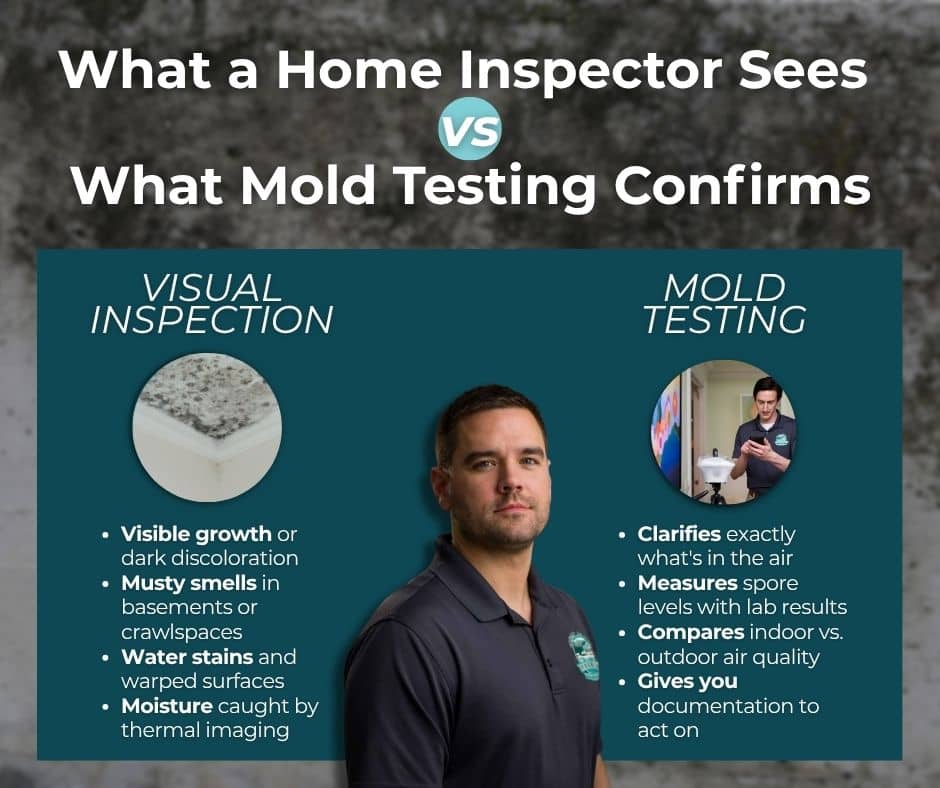
An infographic titled "What a Home Inspector Sees vs What Mold Testing Confirms" comparing visual observations like visible growth and musty smells with lab-verified mold testing. The graphic features a professional home inspector and explains how do home inspectors check for mold through both physical inspection and air quality sampling for actionable documentation.

Signs of Mold a Home Inspector Will Notice

Even without running lab samples, a thorough inspector picks up on a lot of mold-related clues throughout a home. Common red flags include:

  • Visible dark staining or microbial growth on walls, ceilings, or framing
  • Water stains on drywall, ceilings, or around windows
  • Musty or damp odors in basements, crawlspaces, or closets
  • Warped wood, rusted metal, or bubbling paint
  • Standing water or active leaks at plumbing fixtures
  • Elevated humidity readings inside the home
  • Poor grading or drainage around the foundation
  • Missing or inadequate attic ventilation
  • Signs of past or current roof leaks

Any of these findings would typically be documented with photos in the inspection report, along with a recommendation to have the area evaluated further.

How Thermal Imaging Helps Spot Moisture

One of the most useful tools during a home inspection is infrared thermal imaging. Thermal cameras reveal temperature differences behind walls, ceilings, and floors that the naked eye cannot see.

Because moisture behaves differently than dry building materials, it shows up as cooler patches on the thermal image.

Infrared thermal imaging can help reveal:

  • Active plumbing leaks behind walls
  • Water intrusion around windows and door frames
  • Missing insulation, allowing condensation to form
  • Moisture lingering in the ceilings below the bathrooms
  • Dampness in basements and crawlspaces

Thermal imaging does not confirm mold, but it does help identify the moisture conditions that cause it. If a cool patch shows up where it should not, that is a strong signal that something deserves a closer look, possibly with a mold and air quality test.

When to Ask for a Dedicated Mold & Air Quality Test

A separate mold and air quality test is worth considering when the standard inspection raises questions or the home has known risk factors. Good times to add the service include:

  • The home has musty or damp odors, even without visible growth
  • There are water stains, past leaks, or recent water intrusion
  • Finished basements or crawlspaces where walls hide moisture
  • Homes that have sat vacant for several months
  • Someone in the household has asthma, allergies, or respiratory sensitivities
  • Visible microbial growth is already present
  • Thermal imaging reveals unexplained moisture patterns
  • A buyer, seller, or agent wants lab-verified documentation

Mold testing uses air samples (and sometimes surface samples) analyzed by a certified lab to measure spore types and concentrations inside the home compared to outside.

That data is what turns a concern into something you can actually evaluate.

Why Atlanta Homes Face Higher Mold Risk

Atlanta’s warm, humid climate creates ideal conditions for mold growth. Long summers, frequent afternoon thunderstorms, and mild winters mean outdoor humidity rarely drops for long.

That moisture pushes into homes through crawlspaces, basements, attics, and HVAC systems, especially in older neighborhoods across Fulton, Gwinnett, DeKalb, and Cobb counties.

Common local conditions that raise mold risk include:

  • Older homes with ventilated crawlspaces that trap humidity
  • Finished basements in areas like Sandy Springs, Marietta, and Decatur
  • Partially sealed attics where insulation gets damp
  • Air conditioning systems that run constantly in summer, condensing moisture on the ductwork
  • Heavy tree coverage that keeps exterior walls shaded and slow to dry

A home that looks picture-perfect during a dry spring showing can still have hidden moisture issues waiting to surface after the next big rain.

Common Areas Where Mold Hides

Mold tends to show up in predictable places. During an inspection, extra attention usually goes to:

AreaWhat to Watch For
BasementWater staining on walls, musty odor, efflorescence
CrawlspaceStanding water, damp insulation, and vapor barrier issues
AtticStained roof sheathing, poor ventilation, bathroom fans vented inside
BathroomsPeeling paint, grout damage, and ceiling stains
KitchenUnder-sink leaks, dishwasher seepage, fridge condensation
HVAC systemDirty coils, wet drain pans, dust buildup in ducts
Laundry roomDryer vent issues, washer connection leaks
WindowsCondensation, swollen trim, stained drywall below

An experienced Atlanta inspector knows where to look first based on the age, construction, and style of the home.

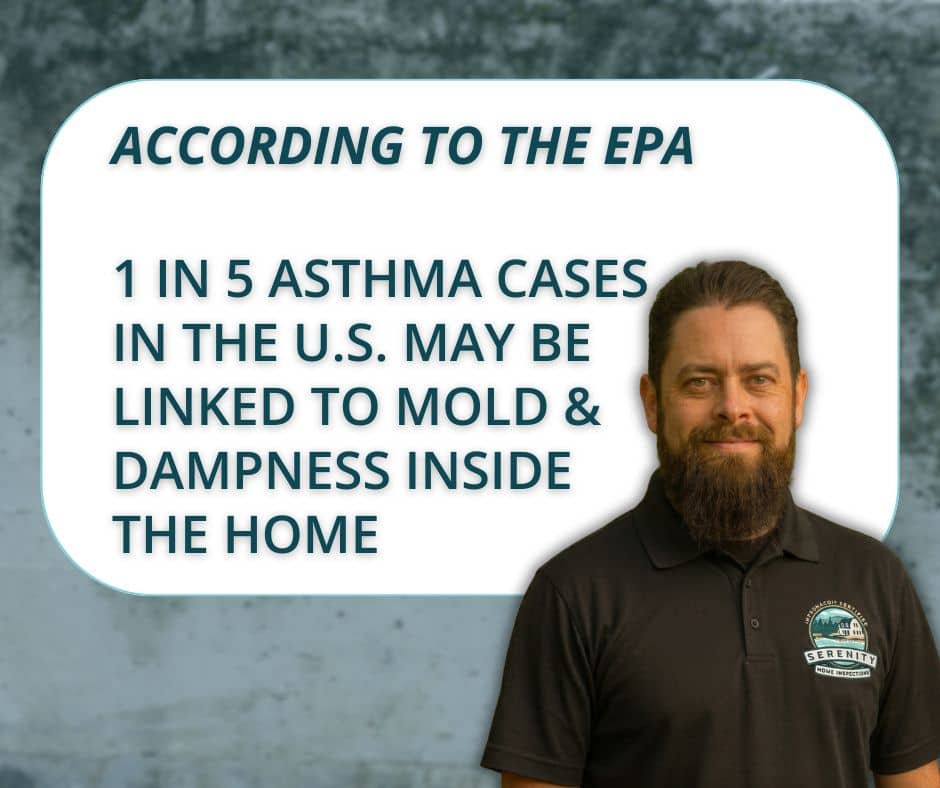
An infographic combining a prominent text panel and a portrait. A light-blue rounded panel on the left displays text stating: 'ACCORDING TO THE EPA, 1 IN 5 ASTHMA CASES IN THE U.S. MAY BE LINKED TO MOLD & DAMPNESS INSIDE THE HOME'. To the right stands a smiling bearded man wearing a black polo shirt with the Serenity Home Inspections logo. The background is blurred mottled concrete.

What Inspection Reports Typically Say About Mold

Because mold identification legally requires lab testing, most inspectors avoid calling something “mold” in a report. Instead, you will often see phrases like:

  • “Suspected microbial growth observed”
  • “Conditions conducive to mold growth”
  • “Elevated moisture detected”
  • “Recommend further evaluation by a mold assessment professional”

That wording is intentional and protective for everyone involved. It still signals that something was observed and that follow-up is a smart next step, usually with a dedicated mold and air quality test.

Related Questions to Explore

What is the difference between a mold inspection and an air quality test? A mold inspection focuses on visible growth and moisture conditions throughout the home. An air quality test collects air samples for lab analysis to measure mold spore levels inside versus outside. They are often performed together.

Can a home inspector recommend a mold specialist? Yes. Most inspectors will either offer mold and air quality testing directly as an add-on or recommend a trusted mold assessment professional if additional testing is needed.

Should sellers get a mold inspection before listing? For older homes or homes with any history of water issues, a pre-listing inspection with mold testing can reduce surprises during buyer negotiations and give sellers a stronger starting position.

Do new construction homes need mold checks, too? They can. New construction homes that sat open during rainy weather or had plumbing issues during the build can trap moisture in framing or insulation. A new construction inspection with thermal imaging can flag problems early.

What other hidden issues are worth testing for alongside mold? Radon, sewer line condition, and termite or wood-destroying organism (WDO) presence are common add-ons buyers consider. All three involve conditions that visual inspections cannot fully evaluate.

When to Call a Professional

Some moisture and mold concerns need more than a quick glance. Consider scheduling a home inspection with added mold and air quality testing if:

  • You notice musty odors, stains, or visible growth during showings
  • You are buying an older home, a home with a finished basement, or a home with a vented crawlspace
  • The home has a history of leaks, flooding, or long vacancy
  • Anyone in the household has asthma, allergies, or respiratory sensitivities
  • You want lab-verified documentation before closing

Serenity Home Inspections offers general home inspections, mold and air quality testing, infrared thermal imaging, radon testing, sewer scope inspections, WDO and pest inspections, and more across the greater Atlanta area.

Having every one of those services available through one trusted team makes it easier to get a complete picture of the home without juggling multiple vendors during a time-sensitive transaction.

Conclusion

Home inspectors check for visible signs of mold and the moisture conditions that cause it, but a standard inspection is not a substitute for dedicated mold testing.

Knowing the difference helps buyers and sellers decide when a thermal imaging scan is enough and when lab-verified air quality testing is worth adding to protect both health and investment.

If you are buying, selling, or maintaining a home anywhere in the Atlanta area and want to be sure mold is not a hidden issue, the team at Serenity Home Inspections is ready to help.

Reach out to schedule an inspection and get a clear, documented picture of the home before closing.

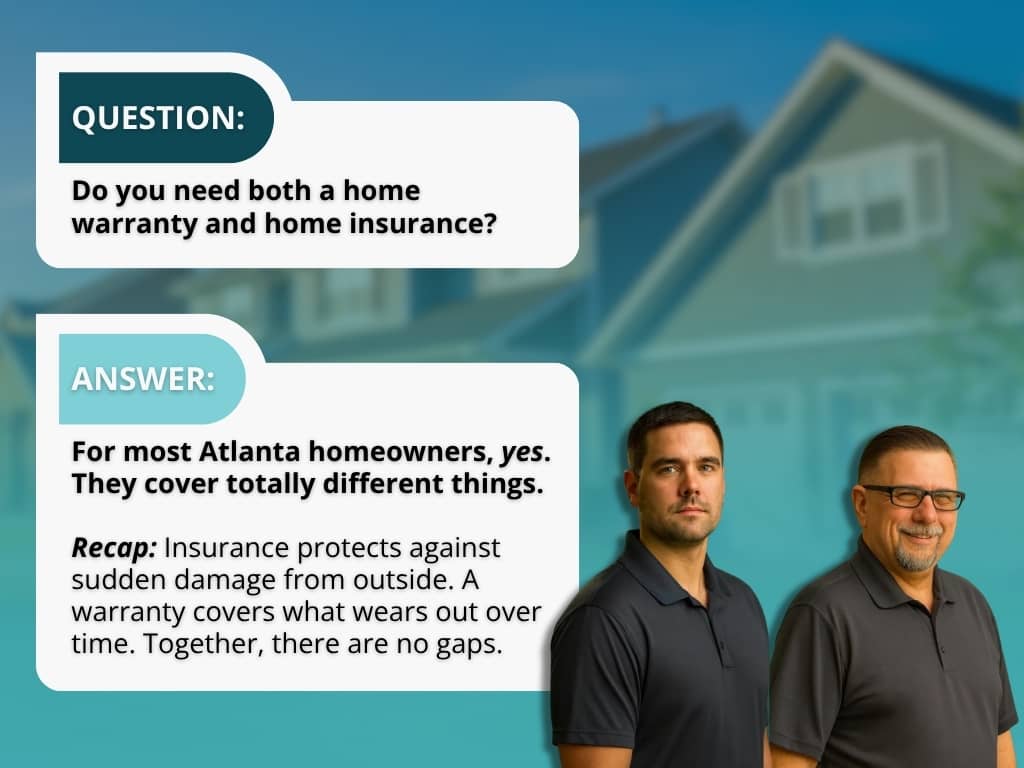
Home Warranty vs Home Insurance: What Actually Covers What?

If you are buying a home in the Atlanta area (or anywhere, really), you will likely hear two terms before you close, and it’s important to know the difference: home warranty vs home insurance.

They sound similar, and both involve some kind of protection for your home, but they cover very different things. Mixing them up can leave you with a gap you did not know existed until something goes wrong.

You could have one without the other, but most homeowners in Metro Atlanta benefit from understanding both before making that call.

What Is Home Insurance?

Home insurance is a policy that protects your home and belongings from sudden, unexpected damage. It is not optional if you have a mortgage. Your lender will require it, and going without it, even on a paid-off home, is a significant financial risk.

A standard policy typically covers:

  • Dwelling coverage: Repairs or rebuilding costs from covered events like fire, lightning, wind, or hail
  • Personal property: Replacement of belongings that are stolen or destroyed
  • Liability protection: Legal and medical costs if someone is injured on your property
  • Additional living expenses: Temporary housing if your home becomes uninhabitable after a covered loss

What home insurance does not cover matters just as much. Most standard policies exclude flooding, earthquake damage, and normal wear and tear.

In Georgia, flood coverage requires a separate policy, which is worth keeping in mind for homeowners near the Chattahoochee or in lower-lying parts of Metro Atlanta.

home warranty vs home insurance

What Is a Home Warranty?

A home warranty is a service contract that covers the repair or replacement of home systems and appliances that break down due to normal use over time.

It is separate from your insurance policy, not required by lenders, and often negotiated as part of a real estate transaction.

A standard home warranty typically covers:

  • Major systems: HVAC, electrical, plumbing
  • Kitchen appliances: Refrigerator, dishwasher, oven, microwave
  • Other appliances: Washer, dryer, garbage disposal, water heater

Coverage varies by provider and plan, and add-ons are often available for pools, septic systems, and other specialty items.

What a warranty does not cover is equally important. Warranties exclude pre-existing conditions, improper installation, cosmetic damage, and anything caused by a sudden event rather than gradual wear.

That leaky roof after a storm? That is insurance. The HVAC that finally quits after 15 Atlanta summers? That is a warranty claim.

Side-by-Side Comparison

CriteriaHome InsuranceHome Warranty
Required by lenders?YesNo
Covers fire, storm, theft?YesNo
Covers system breakdowns?NoYes
Covers appliance failure?NoYes
Covers pre-existing conditions?NoNo
Covers flooding?No (separate policy)No
Typical annual cost$1,200 to $2,500+$400 to $700+

Where They Overlap and Where They Do Not

The most common point of confusion is water damage. Home insurance covers sudden, accidental water damage, like a pipe that bursts overnight and floods your kitchen.

A home warranty may cover the repair of the pipe itself if the failure is due to wear, but it typically does not cover the resulting damage to walls, floors, or cabinetry. That part is insurance territory.

The clearest way to think about it: insurance protects you from what happens to your home. A warranty protects you from what wears out inside it over time.

Do You Need Both?

For most homeowners in the Atlanta area, having both makes sense, especially when buying a resale home with older systems.

Georgia weather puts real stress on HVAC equipment. Hot, humid summers mean air conditioners run hard from May through September. A system that is eight to ten years old when you buy it may hold up for several more years, or it may not. A home warranty transfers that risk to the warranty provider for a relatively low annual cost.

At the same time, hailstorms, fallen trees, and severe weather are a regular part of life across Metro Atlanta. Homeowners without adequate insurance are one bad storm away from a serious financial hit.

Together, both policies give you coverage for what comes from outside and what wears out from within.

What a Home Inspection Tells You That Neither Policy Will

Here is where many buyers miss an important step. Both home insurance and a home warranty exclude pre-existing conditions. If a system or component was already failing when you took ownership, neither policy is likely to cover it.

A thorough home inspection before closing gives you a clear picture of what is already in marginal condition. Knowing the HVAC is aging, the water heater is near the end of life, or the electrical panel has concerns lets you negotiate repairs or credits before you close, rather than inheriting those problems after the fact.

Serenity’s inspectors use infrared thermal imaging to detect moisture intrusion, heat loss, and hidden issues that a visual inspection alone can miss. In Atlanta’s humidity, those conditions escalate quickly. Catching them before closing is far better than discovering them after.

Home Warranties and New Construction

If you are buying a new build in a community like Alpharetta, Suwanee, or Peachtree Corners, your builder likely provides some form of warranty.

Georgia law requires builders to provide a written warranty on new home construction. Most builders structure that coverage in three tiers: one year for workmanship, two years for major systems like electrical, plumbing, and HVAC, and ten years for structural defects.

These builder warranties are separate from both home insurance and a third-party home warranty. Knowing what your builder’s warranty covers and when it expires is important.

A builder’s warranty inspection in the months before coverage lapses is a smart way to document any issues while you still have recourse.

do you need a warranty and home insurance

What to Ask Before Buying a Home Warranty

Not all home warranty providers are equal. Before signing a contract, it is worth asking:

  • What systems and appliances are covered, and what is explicitly excluded?
  • Is there a waiting period before coverage begins?
  • What is the service call fee per claim?
  • Does the contract cover replacement or only repair?
  • Are there coverage caps per system or per year?
  • How are pre-existing conditions defined and handled?

In Georgia, home warranty companies are not regulated the same way insurance companies are, so reading the contract carefully matters more than it might elsewhere.

Related Questions to Explore

How does infrared thermal imaging add to what a standard inspection finds?
Thermal imaging detects temperature differences behind walls, ceilings, and floors that can indicate moisture intrusion, insulation gaps, or electrical hot spots. Thermal imaging catches those conditions at the earliest possible stage.

Does the condition of my HVAC system affect my home inspection report?
Yes. Inspectors evaluate HVAC equipment for age, condition, and visible deficiencies. An aging or poorly maintained system will show up in the inspection report, which is relevant both for negotiating with a seller and for understanding what you may be relying on a home warranty to cover in the near term.

Are there inspection services specifically for investment properties?
Yes. An investor property review is a streamlined inspection designed for buyers who need to quickly assess a property’s condition and estimate repair costs without the full scope of a standard buyer’s inspection. It is useful for identifying deferred maintenance and capital expenses before committing to a purchase.

When to Contact a Professional

Understanding what your policies cover is important, but knowing the actual condition of the systems those policies are meant to protect is just as critical.

Reach out to Serenity Home Inspections if you are in any of these situations:

  • You are under contract and want to know what condition you are actually buying
  • You are approaching the end of your builder’s warranty and want to document issues before coverage lapses
  • You are an existing homeowner who wants a clear picture of your home’s systems
  • You are buying a home with a pool, septic system, or other specialty component
  • You want thermal imaging included to catch moisture or insulation issues that a standard visual inspection may miss

Conclusion

Home insurance vs home warranty can be a tricky distinction. However, they both serve different purposes, and most Atlanta homeowners benefit from having both. Insurance protects your home from sudden, unexpected events. A warranty handles the gradual wear that every system and appliance goes through over time.

Neither one replaces a thorough home inspection, which is how you find out what condition everything is in before the policies you are counting on are put to the test.

At Serenity Home Inspections, our goal is to give you the clarity you need to make confident decisions about your home. With over 12,000 inspections completed across Metro Atlanta, we know what to look for and how to explain it clearly. Schedule your inspection today.

What Happens to Swimming Pools Without Proper Maintenance?


A swimming pool is one of the most appealing features a home in the Atlanta area can have. It extends the outdoor season, adds real value to the property, and gives families a reason to stay home. But swimming pools without proper maintenance tell a very different story, and it’s one that shows up clearly during a home inspection.

Whether you’re a homeowner trying to stay ahead of repairs, a buyer evaluating a property with a pool, or a seller wondering whether your pool could affect your sale, understanding what neglect actually does is worth your time.

Why Atlanta Pools Need Consistent Attention

Georgia’s climate means pools here get used longer than in most of the country. That extended season is one reason pool ownership is so common throughout suburbs like Marietta, Alpharetta, Smyrna, and Sandy Springs. It also means pools face heat, rain, pollen, and debris across more of the calendar year than pools in cooler climates.

Maintenance tasks that seem minor on their own add up when they’re skipped consistently. What starts as a water chemistry issue becomes an equipment problem.

A small surface crack becomes a structural concern. And by the time any of it becomes visible from the outside, the damage is usually already significant.

What Happens If Swimming Pools Go Without Maintenance?

Neglected pool maintenance doesn’t just create cosmetic problems. It triggers a chain reaction that affects water safety, equipment lifespan, structural integrity, and ultimately the value of the home.
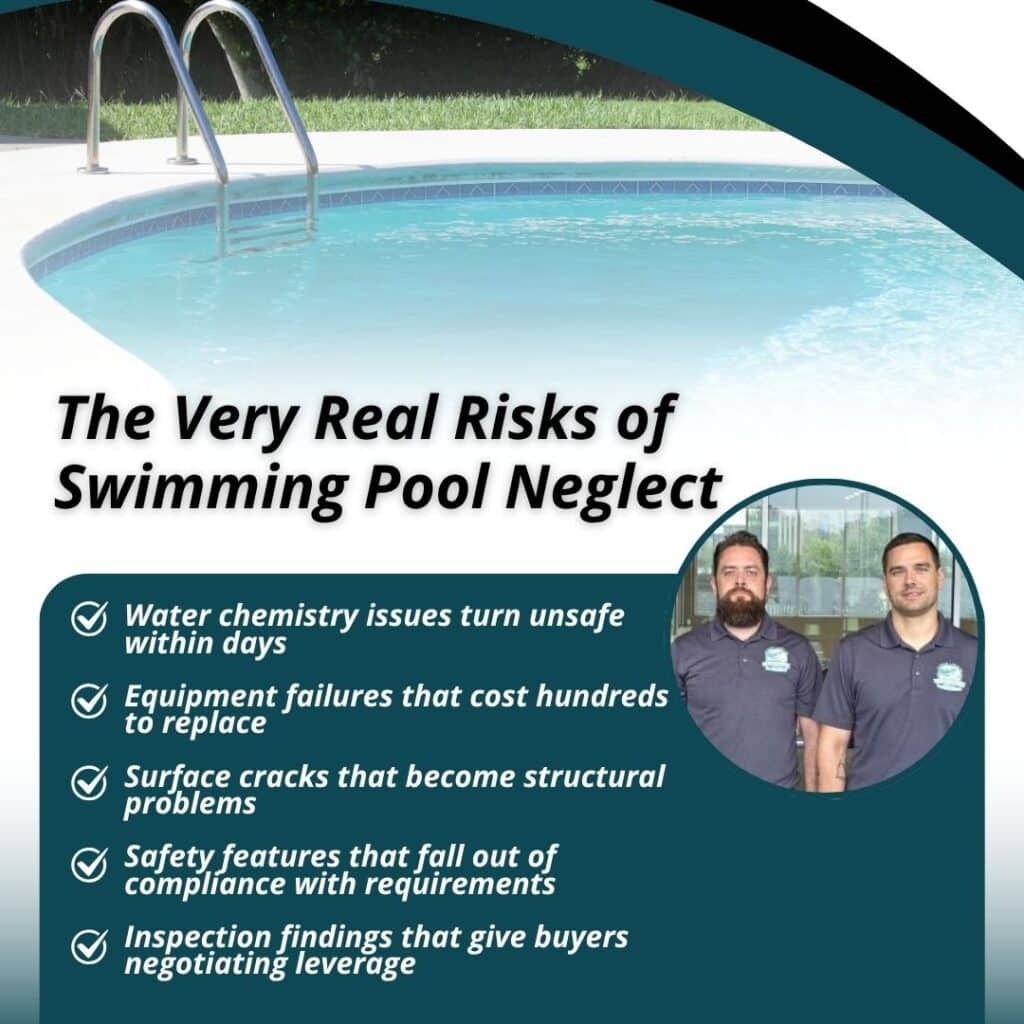
risks of neglecting maintenance for swimming pools

Water Quality Deteriorates Fast

Pool water chemistry requires consistent balancing. When pH, chlorine, alkalinity, and calcium hardness fall out of range, the water becomes unsafe quickly.

Algae blooms can turn water green, brown, or black within days. Bacteria thrive in improperly treated water and create real health risks for anyone who swims in it.

Imbalanced chemistry also damages the pool itself. High acidity erodes surfaces and corrodes metal components. High alkalinity causes scale buildup that clogs filtration systems.

Either way, the longer it goes unaddressed, the harder and more expensive it becomes to reverse.

Equipment Fails Sooner Than It Should

The pump, filter, and heater are the mechanical heart of a pool system. All three depend on consistent maintenance to function properly.

When filters aren’t cleaned regularly, debris restricts water flow and forces the pump to work harder. That added strain accelerates motor wear and leads to premature failure.

A pump replacement in the Atlanta area can run anywhere from several hundred to over a thousand dollars. A heater running with poor water chemistry corrodes internally long before its expected end of life.

These are exactly the kinds of findings that come up during a pool inspection. Equipment condition, pump performance, filtration efficiency, and heater function are all evaluated, and deferred maintenance on any of them shows clearly in the report.

Surfaces Crack, Stain, and Break Down

Without regular brushing and chemical maintenance, algae and minerals bond to pool surfaces and cause staining that becomes permanent over time. Surface cracks allow water to seep into the underlying structure, where damage accelerates quickly.

What starts as a minor repair becomes a full resurfacing job or, in serious cases, a structural issue that compromises the pool’s ability to hold water.

Deteriorated surfaces are also a safety concern. Sharp edges, uneven finishes, and slippery buildup on the pool deck or surfaces increase the risk of injury for everyone who uses the pool, and that carries real liability implications for homeowners and sellers in Georgia.

Safety Features Degrade Without Attention

Georgia law sets specific requirements for residential pool fencing, including minimum height standards and self-closing, self-latching gates.

These requirements exist because pools are considered an attractive nuisance under state law, meaning property owners carry responsibility for preventing unauthorized access, especially by children.

Beyond fencing, anti-entrapment drain covers, GFCI-protected electrical components, handrails, and depth markings all need to be in working condition.

When regular maintenance isn’t happening, these safety features can fall out of compliance without the homeowner realizing it. Every one of these components is evaluated during a professional pool inspection.

What Neglected Pools Look Like at Inspection Time

For buyers in the Atlanta market, a home with a pool warrants a dedicated pool inspection in addition to a standard home inspection.

A general inspection covers the main structure and systems of the home. A pool has its own equipment, surfaces, and safety requirements that need their own evaluation.

Common findings on pool inspection reports in this area:

FindingLikely Cause
Green or cloudy waterImbalanced chemistry, algae growth
Stained or etched surfacesProlonged chemical imbalance
Cracked coping or tileDeferred maintenance, temperature stress
Pump running loudly or poorlyClogged filter, motor wear
Missing or non-functioning drain coversSafety component neglect
Deteriorated fencing or gate hardwareDeferred safety maintenance
Corroded electrical componentsAge combined with neglect

For sellers, a pool in poor condition invites repair negotiations and can slow or kill a sale.

Getting a pre-listing inspection done before buyers see the property is the most effective way to know where things stand and address issues on your own terms.

swimming pool maintenance schedule

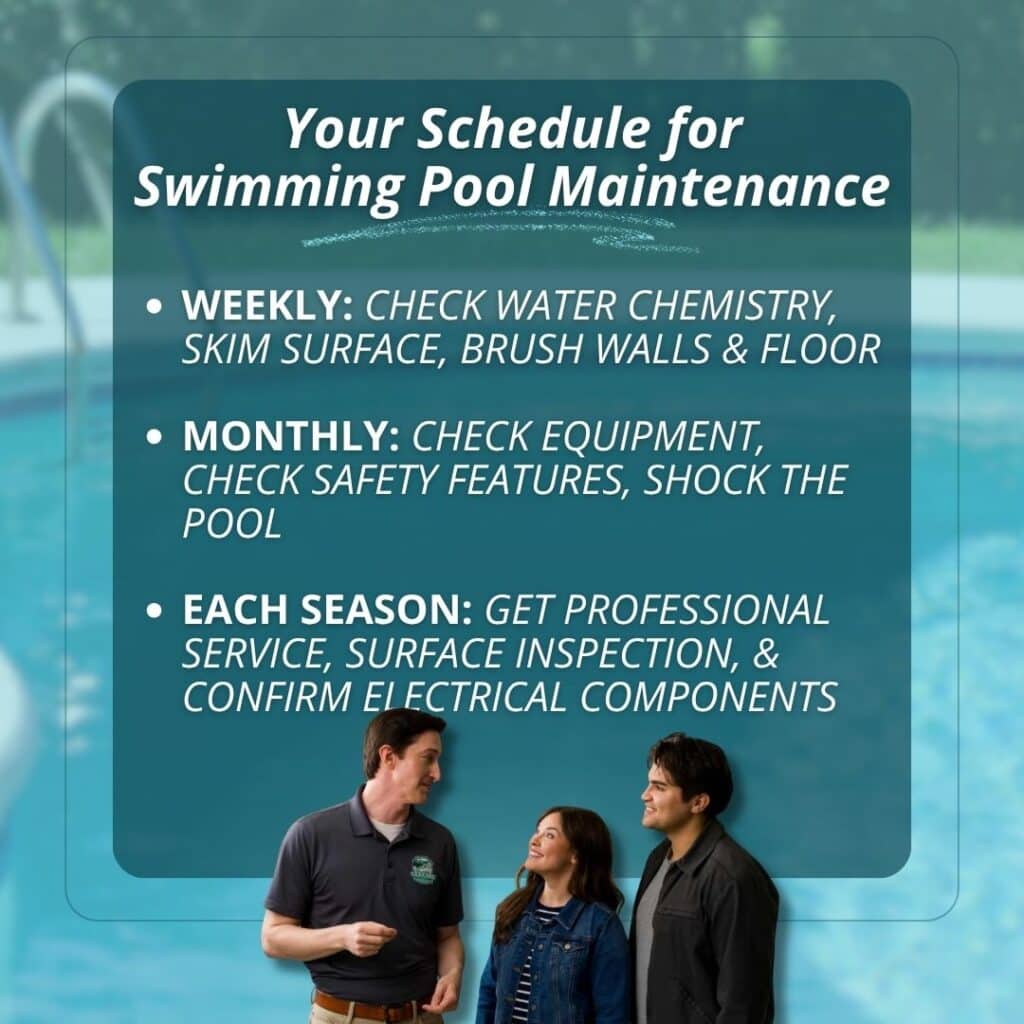
A Basic Maintenance Rhythm for Atlanta Pool Owners

Georgia’s long swimming season means pools here need attention across more of the calendar than homeowners sometimes expect. Staying consistent with these tasks prevents most of the problems above.

Weekly tasks:

  • Test and adjust water chemistry, including pH, chlorine, and alkalinity
  • Skim the surface and clean the skimmer and pump baskets
  • Brush walls, steps, and floor surfaces to prevent algae adhesion

Monthly tasks:

  • Inspect the pump, filter, and heater for unusual performance or wear
  • Check all safety features, including drain covers, fencing, and gate hardware
  • Shock the pool to address any buildup that routine chlorination hasn’t cleared up

Each season:

  • Have equipment professionally serviced before peak swimming season
  • Inspect surfaces for cracks, staining, or early deterioration
  • Confirm electrical components, including lighting and GFCI protection, are functioning correctly

Even homeowners who handle most of their own maintenance benefit from a professional pool evaluation at least once a year. Problems caught early almost always cost significantly less to fix.
Related Questions

Can a neglected pool affect a home’s sale price in Atlanta?
Yes, and significantly. Buyers factor pool condition into their offers, and visible signs of neglect give them direct leverage to negotiate price reductions or request repairs.

Sellers who address pool issues before listing are in a much stronger position going into the transaction.

Do wood structures around a pool need to be inspected, too?
Yes. Decks, fencing, pergolas, and other wood structures surrounding a pool are exposed to consistent moisture and are prime targets for wood-destroying organisms. A WDO and pest inspection is worth adding any time a pool property is being bought or sold in the Atlanta area.

What is infrared thermal imaging, and how does it apply to a home with a pool?
Thermal imaging uses temperature differences to detect issues not visible to the naked eye, including moisture intrusion behind walls and heat irregularities in mechanical systems.

For homes with pools and adjacent enclosed spaces, it can reveal moisture-related concerns that a standard visual inspection would miss.

What should buyers know about mold near pool areas?
Enclosed pool areas, pool houses, and adjacent basement or crawlspace spaces often have elevated humidity. That humidity creates conditions where mold can develop without being visible.

A mold and air quality test is worth considering any time a pool property has enclosed spaces that show signs of moisture exposure.

When to Call a Professional

A pool that looks fine on the surface can be hiding problems that only a trained inspector will catch. Reach out to Serenity Home Inspections if:

  • You’re buying a home with a pool and want a full picture of its condition before closing
  • You’re preparing to sell and want to identify pool issues before buyers find them first
  • You haven’t had a professional pool evaluation in more than a year
  • You’re unsure whether the pool’s safety features meet current Georgia requirements
  • You want a complete property evaluation that covers the home, pool, and any ancillary systems together

Serenity’s pool inspection service covers every component from surface condition to equipment performance to safety features.

Combined with our full suite of services, including infrared thermal imaging, WDO and pest inspections, mold and air quality testing, and sewer scope inspections, Atlanta-area buyers and sellers get the most complete picture possible before any transaction.

Conclusion

A well-maintained pool adds real value to a home in the Atlanta area. A neglected one does the opposite. Water quality problems, equipment failures, surface damage, and compromised safety features don’t stay small for long, and by the time they become obvious, they’re usually expensive.

Whether you’re maintaining a pool you already own, buying a home with one, or preparing to sell, staying consistent with maintenance and getting a professional inspection at the right time protects your investment and keeps everyone who uses it safe.

Serenity Home Inspections is here to help. Schedule your inspection today.
What Can an Infrared Thermal Imaging Camera Really Detect?

When you walk through a home, you’re only seeing part of the picture. Walls, ceilings, and floors hide a lot, and some of the most costly problems a home can have, including moisture intrusion, failing insulation, and electrical hot spots, are completely invisible to the naked eye.

That’s exactly where an infrared thermal imaging camera earns its place in a home inspection. Rather than replacing what a trained inspector can see, it extends what’s possible, picking up heat variations that signal hidden problems before they show up as water stains, mold, high utility bills, or something worse.

If you’re buying or selling a home in the Atlanta area and wondering whether thermal imaging is worth including in your inspection, here’s a clear look at what it actually detects and why it matters.

How an Infrared Thermal Imaging Camera Works

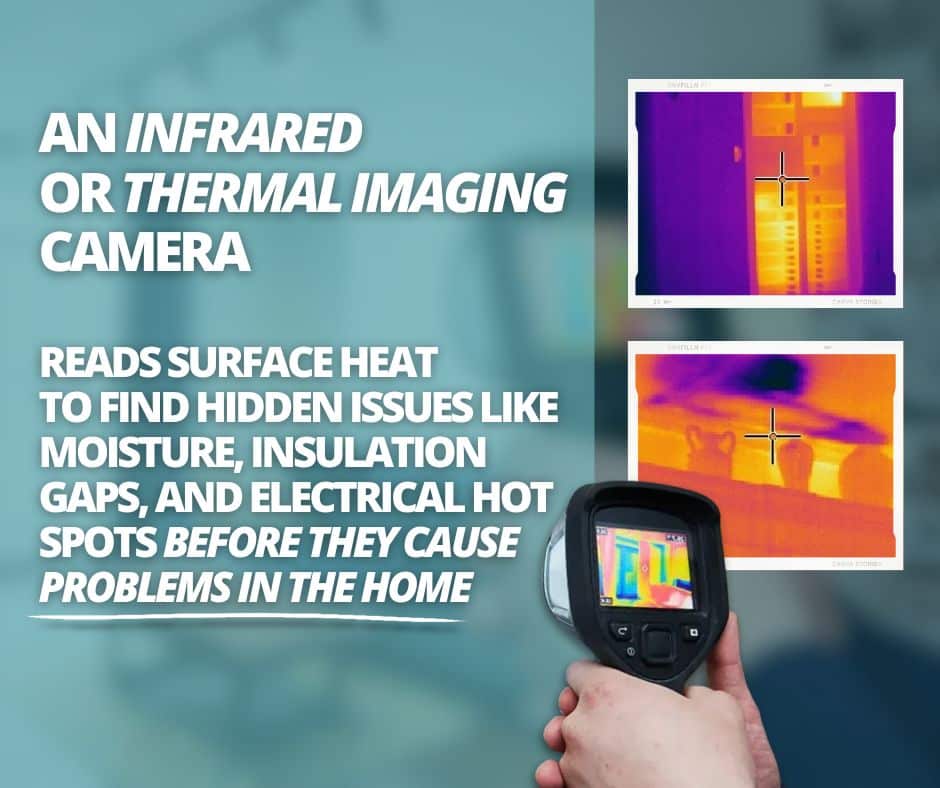
An infrared thermal imaging camera doesn’t see through walls. It reads surface heat.

Every object gives off thermal energy. When something behind a surface is going wrong, whether that’s trapped moisture, a leaking pipe, or an overheating electrical component, it creates a temperature difference that shows up in the camera’s image as a color variation.

The camera translates those differences into a visual gradient, with warmer areas appearing in lighter tones and cooler or wetter areas appearing darker.

A trained inspector reads thermal images alongside the visible inspection to identify anomalies worth investigating further. The result is a more complete picture of a home’s condition, particularly in the areas where problems tend to hide the longest.

what a thermal imaging camera can detect

What Thermal Imaging Can Detect

Thermal imaging picks up on a wider range of hidden issues than most homeowners expect. Here are the most common and consequential things it can identify during a professional home inspection.

Moisture Intrusion and Hidden Leaks

Moisture is one of the most damaging and hardest-to-spot problems in a home. It can enter through a compromised roof, a slow plumbing leak, a failing window seal, or a foundation crack, and sit inside walls or ceilings for months before visible damage appears.

Because water absorbs and releases heat differently than surrounding building materials, it shows up in thermal imaging as a cool, irregular spot on an otherwise uniform surface. This makes it possible to identify active moisture issues or areas of prior water damage behind drywall, under flooring, or above ceilings without any destructive investigation.

In the Atlanta metro area, where summer humidity is high and heavy rain is common, moisture intrusion is one of the most frequent findings during a thermal imaging inspection.

Insulation Deficiencies

Missing, compressed, or improperly installed insulation rarely announces itself until you’re looking at an unusually high utility bill. Thermal imaging makes those gaps visible by showing where heat is escaping or entering through under-insulated walls, ceilings, and floors.

For buyers in older Atlanta-area neighborhoods like Decatur, Smyrna, or East Cobb, this finding is especially relevant. Insulation in older homes may have settled over time, been disturbed during a renovation, or never been adequately installed to begin with.

Electrical Hot Spots

Overloaded circuits, loose connections, and failing components generate heat before they cause visible damage or trip a breaker. Thermal imaging can identify these hot spots during a home inspection, flagging electrical anomalies that warrant closer attention from a licensed electrician.

This is one of the most safety-critical applications of the technology. Electrical issues are among the leading causes of house fires in the U.S., and catching an overheating component early is exactly the kind of finding that makes a real difference.

HVAC Performance Issues

Rooms that run noticeably warmer or cooler than the rest of the house can point to duct leaks, airflow problems, or system deficiencies.

Thermal imaging helps identify whether the issue is structural, an insulation gap, or a performance problem with the HVAC system itself, rather than guessing.

Pest Activity

While thermal imaging is not a substitute for a dedicated WDO inspection, warm-blooded pests like rodents can create detectable heat signatures inside walls and concealed spaces.

An experienced inspector may flag areas of unusual thermal activity that warrant further investigation for pest presence.

Roof and Ceiling Moisture

Roof leaks don’t always show up where you’d expect them. Water can travel along roof decking or framing before collecting in a different area entirely, making the entry point and the visible damage appear in completely separate locations.

Thermal imaging of ceilings can reveal moisture that has accumulated above a surface before it causes a visible stain or structural damage below.

What Thermal Imaging DetectsWhat It May Indicate
Cool, irregular spots on walls or ceilingsMoisture intrusion or hidden leak
Uneven heat distribution in walls or floorsMissing or compromised insulation
Hot spots in electrical panels or outletsOverloaded circuit or failing component
Temperature inconsistencies room to roomDuct leak or HVAC performance issue
Unexplained warm areas inside the wallsPossible pest activity
Moisture above ceiling surfaceRoof leak that hasn’t surfaced yet

What Thermal Imaging Cannot Do

Thermal imaging is a powerful tool, but it has real limitations worth understanding upfront.

It reads surface temperatures, but doesn’t see through walls, pinpoint the exact source of a leak, or confirm the presence of mold.

It detects anomalies that indicate a potential problem, not a definitive diagnosis. A thermal image finding always needs to be interpreted by a trained inspector who can put it in context with the rest of what they observed.

Conditions matter too. The most accurate results occur when there is a meaningful temperature difference between the interior and exterior of the home, typically at least 15 to 20 degrees Fahrenheit. On mild days, some anomalies may be less apparent.

This is why thermal imaging is most valuable as part of a full professional inspection, not a standalone service.

purpose of thermal imaging camera inspection

How Serenity Incorporates Thermal Imaging

At Serenity Home Inspections, infrared thermal imaging is included as part of our inspection packages, not an expensive add-on. Here’s a quick look at what every package includes:

  • Full residential inspection
  • Infrared thermal imaging
  • Visual mold inspection
  • Drone inspection
  • Complimentary home warranty
  • Concierge service

Whether you’re purchasing in Marietta, Alpharetta, Sandy Springs, or anywhere else in the greater Atlanta metro, thermal imaging means fewer surprises after closing.

For sellers, it can surface issues worth addressing before listing, helping avoid last-minute renegotiations on the buyer’s terms.

Related Questions

Is thermal imaging the same as a mold inspection?
No. Thermal imaging can detect moisture conditions where mold is likely to develop, but it does not identify or confirm mold itself. A dedicated mold and air quality test is the right next step when thermal imaging reveals significant moisture concerns.

Does thermal imaging apply to commercial properties?
Yes. It’s just as applicable to commercial inspections as residential ones, often more so given larger roof areas, more complex electrical systems, and greater potential for concealed moisture issues.

Can thermal imaging find issues a standard inspection would miss?
It can surface anomalies that aren’t visible during a standard visual inspection, particularly moisture behind walls, insulation gaps, and electrical hot spots. It works best as a complement to a thorough inspection, not a replacement for one.

What should I do if thermal imaging reveals a potential issue?
Your inspection report will note any thermal anomalies with context from the inspection. From there, the right specialist can evaluate the specific concern in more detail.

When to Call a Professional

If you’re buying a home in the Atlanta area, scheduling an inspection that includes infrared thermal imaging is one of the most effective ways to reduce your risk before closing.

Problems that are invisible during a walkthrough, such as active moisture intrusion, insulation gaps, or an electrical component running hotter than it should, are exactly what this technology is built to surface.

For sellers preparing to list, a pre-listing inspection with thermal imaging can identify concerns worth addressing on your own terms, before a buyer’s inspector finds them first.

Conclusion

An infrared thermal imaging camera doesn’t change what a home inspection is. It extends how far it can see. Moisture behind drywall, insulation gaps inside walls, electrical hot spots, roof leaks that haven’t surfaced yet: these are real problems that affect real purchase decisions, and a standard visual inspection can’t catch all of them.

At Serenity Home Inspections, thermal imaging is built into the process because Atlanta-area buyers and sellers deserve a complete picture of a home’s condition, not just the parts that are easy to see.

Ready to schedule? Reach out to the Serenity team today.

How Do I Test for Mold in My House and Prevent Growth?

Whether you’ve noticed a musty smell, seen visible growth, or experienced unexplained health symptoms, understanding when to test for mold and how it works gives you the information you need to protect your house and family.

Mold growing in your home creates health concerns and property damage that get worse the longer it goes unaddressed. Testing for mold helps you identify problems early and take action before mold spreads.

Atlanta’s humid climate creates ideal conditions for mold growth. Between summer humidity, afternoon thunderstorms, and occasional flooding, homes across metro Atlanta face constant moisture challenges.

Signs You Might Need to Test for Mold in the House

Mold doesn’t always announce itself with obvious visible growth. Many homeowners discover mold problems through indirect signs that indicate hidden growth behind walls, under floors, or in concealed spaces.

Common indicators of mold problems:

  • Musty odors that smell earthy, damp, or like rotting wood
  • Health symptoms, including respiratory issues, headaches, eye irritation, or allergy-like reactions that improve when you leave the house
  • Visible discoloration on walls, ceilings, or around windows
  • Water damage history from leaks, floods, or plumbing issues
  • Condensation regularly appearing on windows or walls
  • Peeling paint or wallpaper that bubbles or separates from the wall

Atlanta homes are particularly susceptible to mold in bathrooms, basements, attics, and crawl spaces where humidity accumulates. If you notice these signs, testing helps confirm whether mold is present and identifies the type and extent of contamination.

signs you need to test for mold in your indoor air

Visual Inspection Comes First

Before calling a professional for testing, conduct a thorough visual inspection of your home to locate obvious mold growth or moisture problems.

Check these high-risk areas:

  • Bathrooms: Around tubs, showers, under sinks, behind toilets
  • Kitchen: Under sinks, around dishwashers, behind refrigerators
  • Basements: On walls, around windows, near sump pumps
  • Attics: On roof decking, around vents, near insulation
  • Crawl spaces: On floor joists, subfloors, foundation walls
  • HVAC systems: Inside ductwork, on coils, in drain pans

Look for discoloration, fuzzy or slimy growth, water stains, and dampness. Mold appears in various colors, including black, green, white, orange, and brown.

Use a flashlight to inspect dark areas thoroughly. Pay attention to corners, seams, and anywhere two materials meet. Visual inspection identifies obvious problems and helps you decide whether professional testing is necessary.

DIY Mold Test Kits: What They Tell You

Hardware stores sell DIY mold test kits ranging from $10 to $50, but these kits have significant limitations that often leave homeowners with incomplete or misleading information.

Why DIY kits fall short:

  • Limited sampling: You’re guessing where to test instead of using systematic inspection protocols
  • No moisture detection: Kits don’t locate the water source causing mold growth
  • Inconsistent results: Air sampling varies wildly by time of day, weather, and air movement
  • No baseline comparison: You can’t tell if spore levels are elevated without outdoor samples
  • Species identification only: Knowing what type of mold you have doesn’t tell you concentration levels or health risks
  • No expert interpretation: Lab results arrive without guidance on what they mean or what actions to take

The biggest problem with DIY testing is that it doesn’t identify the moisture source. Without a professional’s assessment to find the water problem, mold keeps returning, no matter how many times you test or clean.

Professional Mold Testing Provides Comprehensive Results

Professional mold testing and air quality assessment deliver detailed, reliable information that DIY kits can’t match. Certified inspectors use calibrated equipment, proper sampling protocols, and accredited laboratories to analyze samples.

What professional testing includes:

  • Visual inspection of the entire property to locate moisture sources and visible mold
  • Moisture mapping using specialized meters to find hidden water problems
  • Thermal imaging to detect moisture behind walls, under floors, and in other concealed areas without invasive testing
  • Air sampling that captures airborne mold spore concentrations in multiple locations
  • Surface sampling from suspected mold growth areas for species identification
  • Lab analysis by accredited mycologists who identify mold types and concentration levels
  • Detailed report explaining findings, health risks, and remediation recommendations

Professional testing identifies not just whether mold is present, but what species, how much, where it’s concentrated, and what’s causing the moisture problem. This information guides effective remediation.

Thermal imaging technology is particularly valuable because it reveals temperature differences that indicate moisture intrusion you can’t see. Cold spots on walls often signal water problems that lead to mold growth. This non-invasive approach identifies issues without cutting into walls or ceilings.

Air quality testing compares indoor spore levels to outdoor baseline samples. Elevated indoor levels indicate active mold growth even when you can’t see it.

Understanding Your Mold Test Results

Mold test results include species identification and concentration levels in the house. Not all mold is equally problematic, so understanding what you’re dealing with helps you respond appropriately.

Common mold types found in homes:

Mold TypeWhere It GrowsHealth Concerns
CladosporiumSurfaces, fabrics, woodGenerally low risk, allergenic
PenicilliumWater-damaged materialsAllergenic, some species produce toxins
AspergillusDust, HVAC systems, insulationCan cause respiratory issues
Produces mycotoxins, a serious health riskWet cellulose materialsProduces mycotoxins, serious health risk
AlternariaDamp areas, showersCommon allergen

Concentration levels matter as much as species. Even benign molds cause problems at high concentrations. Professional reports compare your indoor levels to acceptable standards and outdoor baseline levels.

Results also identify moisture sources. Fixing the water problem is essential because, without addressing moisture, mold returns even after remediation.

Testing During Real Estate Transactions

Mold testing plays an important role when buying or selling Atlanta homes. Many buyers request mold inspections, especially for older homes or properties with a water damage history.

Sellers benefit from proactive mold testing before listing. Identifying and addressing mold problems upfront prevents inspection surprises that derail sales or lead to price reductions.

Buyers should consider mold testing when:

  • The home has a musty smell
  • There’s visible water damage or staining
  • The property has basement moisture or crawl space issues
  • Previous inspection reports mention moisture concerns
having a professional mold test helps prevent health issues and future growth

Professional mold assessment during the inspection period gives you leverage to negotiate repairs or credits. It also provides documentation of the home’s condition at purchase.

How to Prevent Mold Growth in Your Home

Once you’ve tested for and addressed existing mold, prevention strategies keep mold from returning. Most prevention focuses on controlling moisture since mold can’t grow without water.

Effective mold prevention:

  • Keep indoor humidity below 50% using dehumidifiers or AC
  • Run bathroom exhaust fans during and 30 minutes after showers
  • Vent dryers outside, not into attics or crawl spaces
  • Fix leaks immediately in roofs, plumbing, and around windows
  • Clean gutters and ensure proper drainage away from your foundation
  • Use mold-resistant products in bathrooms and basements

In Atlanta’s humid climate, whole-house dehumidification systems work better than portable units for maintaining healthy humidity levels year-round. Proper attic ventilation prevents moisture buildup that leads to roof deck mold.

Address any water intrusion within 24 to 48 hours. Mold starts growing quickly once materials get wet. A quick response to water problems prevents mold from establishing.

Related Questions

What’s the difference between mold inspection and mold testing?
Mold inspection involves visual assessment and moisture evaluation to locate problems. Mold testing includes lab analysis of samples to identify species and concentration levels. A comprehensive mold assessment includes both inspection and testing.

When should I schedule a home inspection?
Home inspections are essential when buying property, but current homeowners benefit from periodic inspections every few years or after significant weather events. Regular inspections identify developing problems with moisture, ventilation, and building systems before they cause serious damage.

What other environmental concerns should homeowners test for?
Beyond mold, homes may have radon, carbon monoxide, VOCs from building materials, or poor ventilation. Comprehensive air quality testing evaluates multiple factors that affect indoor environmental health.

When to Call Professionals

Mold problems require expertise for accurate assessment and safe remediation. Different professionals handle different aspects of mold issues.

Call a professional for mold and air quality testing when:

  • You suspect mold, but can’t locate the source
  • You need comprehensive testing to identify mold types and concentration levels
  • You’re buying or selling a home and want professional documentation
  • You’ve had water damage and want to verifythat mold hasn’t developed
  • You want thermal imaging to detect hidden moisture problems

Call a mold remediation specialist when:

  • Testing confirms mold that needs professional removal
  • You have mold growth larger than 10 square feet
  • Mold is in HVAC systems or behind walls

Serenity Home Inspection provides comprehensive mold and air quality testing throughout Atlanta and the surrounding areas.

Professional testing gives you reliable information about your home’s mold situation and indoor air quality so you can make informed decisions about remediation and prevention.

Conclusion

Testing for mold in your house starts with visual inspection and recognizing warning signs like musty odors or unexplained health symptoms.

Professional mold and air quality testing provides accurate, comprehensive results that DIY kits can’t deliver, identifying mold species, concentration levels, and moisture sources.

Contact Serenity Home Inspection for a thorough mold and air quality assessment that gives you the information you need to protect your property and family.

How a Strong Inspection Contingency Protects Homebuyers

Buying a home is one of the most significant financial moves you will ever make. Whether you are looking at a historic bungalow in Kirkwood or a modern build in Alpharetta, the process moves fast. Rule number one as a home buyer is that you should never overlook the inspection contingency.

In a competitive market, you might feel pressured to waive your rights just to get an offer accepted. But this clause is your primary safety net. At Serenity Home Inspection, we have protected over 12,000 families across the Atlanta area.

We know the due diligence period is stressful, but understanding your contract rights is the only way to protect your earnest money and your future.

The Role of the Inspection Contingency

In a Georgia real estate contract, the inspection contingency gives you a specific window of time to evaluate the property. This is commonly known as the Due Diligence Period.

During this time, you have the legal right to hire professionals to inspect every inch of the home. This clause is designed to put the power back in your hands. If your inspection report notes a major defect, you generally have three options.

  1. Request Repairs: Ask the seller to fix the problems before closing.
  2. Request a Credit: Ask the seller to reduce the price so you can handle repairs later.
  3. Walk Away: Cancel the contract entirely.

Protecting Your Earnest Money

If you cancel the contract within the agreed timeframe for any reason, you are legally entitled to get your earnest money back. This prevents you from being forced into a deal that no longer makes sense for your family.

Earnest Money is the deposit you provide when you make an offer to show the seller you are a serious buyer.

It is usually held in an escrow account. If you back out of a deal without a valid contingency, the seller might be able to keep that money. A strong inspection contingency ensures that if the house is a “lemon,” you can walk away with your deposit intact.

understanding the inspection contingency

Why Timing is Everything

In the Atlanta market, due diligence periods are often short. It is common to see windows of only five to seven days. You have to move fast.

Once that clock runs out, your ability to negotiate for repairs or exit the contract without losing your deposit disappears.

  • Schedule Early: Contact Serenity Home Inspection the moment you go under contract.
  • Review Fast: We provide same-day or next-day reports, so you have time to digest the facts.
  • Negotiate Hard: Use the remaining days of your contingency to get repair quotes or second opinions.

Strengthen Your Contingency With Specialized Testing

A standard home inspection is a great start, but it is primarily a visual check. To truly protect your investment, you should look for specific Georgia risks that hide beneath the surface.

At Serenity Home Inspection, we use specialized services as diagnostic tools to uncover what the eyes cannot see. These results provide the hard data needed to win a negotiation.

Sewer Scope Inspections

Many older Atlanta neighborhoods still have clay or cast-iron sewer lines. Tree roots love to break into these pipes. A standard inspection only checks if the toilets flush. It does not check the health of the underground pipe.

  • The Risk: A collapsed sewer line can cost 10,000 dollars or more to replace.
  • The Strategy: A sewer scope inspection identifies these breaks before you own them. Finding this during the due diligence window allows you to make the seller foot the bill before your contingency expires.

Radon and Air Quality Testing

Atlanta soil contains uranium that naturally decays into radon gas. This odorless, radioactive gas is a serious health concern in North Georgia.

Radon and moisture often enter through the same foundation gaps, so a high radon reading is often a leading indicator for air quality issues.

  • Where it hides: Basements and crawl spaces.
  • The Strategy: Include radon testing in your contingency. Pairing this with mold and air quality testing verifies if the home’s “envelope” is sealed. If we find elevated levels, you use your contingency to negotiate for a mitigation system or professional remediation.

Investor Property Review

For those looking at rental opportunities in Metro Atlanta, an investor property review helps you quantify “hidden” costs.

  • Deferred Maintenance: We find the structural or mechanical issues that could eat your margins.
  • Strategic Value: This data is essential for re-negotiating the purchase price during the contingency window to ensure the numbers still work for your portfolio.

Common Misconceptions About Inspection Rights

Many buyers get bad advice during the search process. Here are the facts for the Georgia market.

As-Is Sales

Even if a home is sold as-is, you should still keep your inspection contingency. You need to know what you are getting into. If the repair costs are more than you can handle, you can still cancel the contract.

The term “as-is” usually means the seller will not make repairs, but it does not mean you have to skip the inspection.

Appraisals vs. Inspections

An appraiser works for the bank to check the value of the home. A home inspector works for you to check the safety and condition of the home. You need both to be fully protected.

An appraisal will not tell you if there is mold in the crawl space or if the sewer line is collapsed.

New Construction

Never skip an inspection on a new home. We frequently find missing insulation, reversed wiring, and plumbing leaks in brand-new houses. A strong contingency allows you to get these items fixed by the builder before you move in.

What if the Report Finds Defects?

Most homes have defects. The goal of the inspection contingency is not to find a perfect house. It is to avoid deal breakers. When the report shows significant issues, you and your agent will create a negotiation plan.

The Negotiation Process

  1. Review the Report: Look for structural, safety, or high-cost items.
  2. Draft a Repair Amendment: Your agent will list the items you want the seller to address.
  3. Hold Your Ground: If the seller refuses to fix a major safety issue, your contingency allows you to walk away safely.
inspection contingency importance stat

The Final Walkthrough: Your Last Safety Check

The final walkthrough is the closing act of your inspection contingency. This is your last chance to verify that the seller fulfilled their end of the Repair Amendment before you sign the final papers.

  • Verify the Work: Bring your inspection report to confirm that the agreed-upon repairs were completed by licensed professionals. If the seller was supposed to fix the electrical panel, check for the invoice, and perform the physical repair.
  • Confirm Condition: Ensure no new damage occurred during the seller’s move-out process. It is common for movers to ding walls or scratch floors.
  • Final Leverage: This is the moment you confirm you are getting the exact value you negotiated for during the due diligence period. If the repairs are not done, you can often delay the closing until they are finished.

Common Questions to Explore

Can I cancel for any reason during due diligence?
In most standard Georgia contracts, yes. The due diligence period is a “making sure” period. If you decide the house is not right for you, whether it’s due to something from your report or a non-repair reason, you can usually terminate within the timeframe.

What if the seller will not fix anything?
The seller is not required to fix anything. However, the inspection contingency gives you the leverage. If they will not budge on a major repair, you have the right to keep your earnest money and find a different house.

How do I know if I need a Sewer Scope?
If the home was built before 1990 or has large trees near the sewer line, we highly recommend it. It is the only way to verify the condition of the underground plumbing before you own it.

When to Contact Serenity Home Inspection

You should have an inspector ready before you even make an offer. In the fast-moving Atlanta market, timing is your best friend. Reach out to us if you are in any of the following situations.

  • First Time Homebuyers: We will walk you through the home and explain how everything works. We help you understand which items are safety issues and which are simple maintenance.
  • Investor Property Review: If you are an investor, you need to know your exact repair costs to calculate your return. Our review helps you identify deferred maintenance that could eat your profits.
  • Buying a Historic Atlanta Home: Houses in areas like Grant Park or Virginia Highland have great character but unique problems. We know what to look for in aging electrical or plumbing systems.
  • Relocating to Georgia: We understand the local soil and humidity issues that out-of-state buyers might miss. We help you navigate the specific building codes found in Metro Atlanta.

Conclusion

The inspection contingency is the most powerful tool an Atlanta buyer has. It gives you the time to verify the home condition and negotiate from a position of strength.

By using this period for a thorough general inspection and specialized tests like sewer scopes and radon checks, you protect your family and your wallet.

At Serenity Home Inspection, our goal is to provide the clarity you need to move forward. Our easy-to-read reports and 5-star service have made us a trusted partner for thousands of Atlanta residents.