
Most roofs do not fail all at once. They fail at the edges, at the penetrations, and at the places where someone made a repair in a hurry. Those are the spots that show up in inspection reports again and again.
If you are buying a home in metro Atlanta, the roof is often the single most expensive item on the report. Knowing what inspectors actually find, and which findings matter, puts you in a better position before you ever get to the negotiating table.
What an Inspector Actually Looks At on a Roof
A home inspection is a visual assessment, and the roof section has a defined scope.
Under the InterNACHI Standards of Practice, an inspector must inspect the roof-covering materials, the gutters, the downspouts, the vents, the flashing, skylights, chimney, and other roof penetrations, plus the general structure of the roof from readily accessible points.
Serenity’s own inspection scope puts it plainly: “We inspect the entire roof including all shingle types and chimney caps. We perform a conditional assessment of all roof penetrations and roof coverings. We look for wind and hail damage, cracks, tears, granular displacement, and missing flashing or shingles.”
That is the frame for everything below.
The Roofing Problems We Find Most Often
Six findings account for most of what ends up in the roof section of a report. They run roughly in the order an inspector works, starting with what is visible from the ground and ending with what only shows up in the attic.
Missing, Curled, or Cracked Shingles
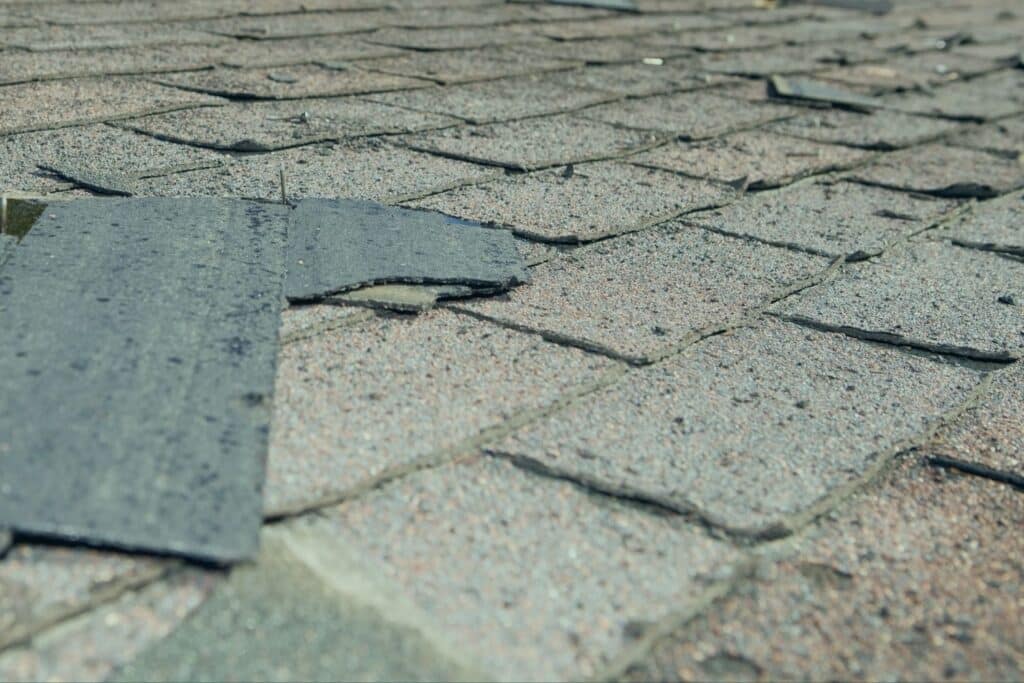
The most common finding, and usually the easiest to see. Curling at the edges means the shingle is at the end of its service life. Cracking usually means age plus thermal cycling. Missing shingles mean wind got underneath them.
A handful of damaged shingles is a repair. Widespread curling across a slope is a replacement conversation.
Granule Loss
A layer of mineral granules protects asphalt shingles. When those wear off, UV hits the asphalt directly, and the shingle deteriorates fast.
Look for:
- Bald or shiny patches on the shingle surface
- Granules collecting in gutters and at downspout outlets
- Dark, uneven coloring across a slope
Some granule loss on a new roof is normal. Piles of granules in the gutters on a fifteen-year-old roof are not.
Damaged or Missing Flashing
Flashing is the metal that seals the joints: around chimneys, in valleys, at wall intersections, and around vent pipes. It is where most roof leaks actually start.
Common findings include rusted or lifted step flashing, caulk used where metal should be, and missing kickout flashing where a roof edge meets a wall. That last one sends water directly into the wall assembly, and the damage often shows up inside long before anyone looks at the roof.
Chimneys deserve their own attention here, which is why a Level 1 chimney inspection is worth pairing with the roof when there is a fireplace.
Improper or Failed Repairs
This is the finding that tells you the most about a house.
Roofing cement smeared over a problem area. Mismatched shingles patched into a slope. A vent boot wrapped in tape. None of these are permanent fixes, and all of them suggest an ongoing leak somebody chose to cover rather than solve.
Multiple layers of shingles are another one. A second layer laid over an existing roof hides the decking underneath, adds weight, and makes future work more expensive.
Clogged Gutters and Drainage Problems
Gutters are part of the roof system, and in Atlanta they take a beating.
When gutters clog, water backs up under the shingle edge, saturates the fascia, and runs down the exterior wall. What starts as a maintenance issue becomes rot in the trim and, eventually, water in the crawlspace or basement.
Attic Ventilation Problems
An under-ventilated attic bakes the underside of the roof deck all summer. That shortens shingle life from below, where nobody is looking.
Signs an inspector will note include blocked soffit vents, bathroom exhaust fans venting into the attic instead of outside, and heat or moisture staining on the underside of the decking. Infrared thermal imaging can reveal moisture patterns in the attic that are not visible to the eye.
What Georgia Weather and Tree Cover Do to Roofs
Metro Atlanta puts a specific set of stresses on a roof, and they show up in predictable ways.
Tree canopy: Atlanta is one of the most heavily wooded metros in the country, and that shade is a mixed blessing. Overhanging limbs abrade shingle surfaces every time the wind blows. Leaves and pine straw pack into valleys and gutters. Slopes that stay shaded hold moisture far longer after rain.
Algae streaking: Those dark vertical streaks on north-facing slopes are algae, not dirt, and they thrive in warm, humid conditions. They are mostly cosmetic, and an honest report will say so rather than treat them as damage.
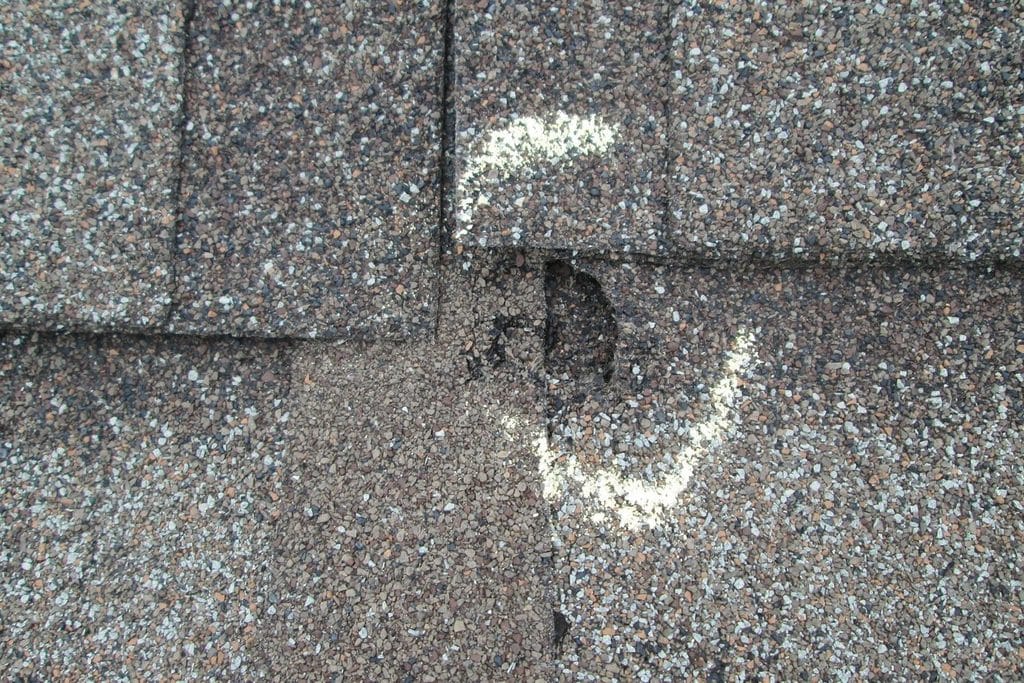
Spring and summer storms: Wind and hail are the two events that put a roof on the report. Hail bruising in particular is easy to miss because it does not always break the shingle surface. It knocks granules loose and shortens the life of the roof without leaving an obvious hole.
Summer heat: Attic temperatures in a Georgia July are punishing. Poor ventilation plus that heat load is why shingles here often do not reach their rated lifespan.
Older housing stock: Intown neighborhoods have plenty of homes on their third or fourth roof. Layered roofs, aging decking, and decades of accumulated repairs are all common in that inventory.
Which Problems Actually Matter
Not everything on the roof section of a report is a negotiating point. Sorting them roughly:
Address before closing:
- Active leaks or evidence of current water intrusion
- Missing or failed flashing at chimneys, valleys, and wall intersections
- Widespread granule loss or curling across full slopes
- Structural sagging in the roof line
- Exhaust fans venting into the attic
Plan for, but not usually a deal issue:
- Isolated damaged shingles
- Clogged gutters and minor drainage corrections
- Algae streaking
- Aging but functional roof with life left in it
Our home inspection checklist covers how the roof fits alongside everything else you should be tracking, and how to read your inspection report helps with the sorting.
What an Inspection Cannot Tell You About Your Roof
Being clear about the limits is what makes the rest of the report trustworthy.
The InterNACHI standards are explicit that an inspector is not required to walk on the roof surface, predict its remaining service life, perform water tests, or warrant the roof in any way. Safety and the risk of causing damage govern whether a roof gets walked at all.
So an inspector can tell you what is visible, what is installed incorrectly, and what shows evidence of a problem. What no inspector can tell you is exactly how many years you have left. Anyone who gives you a precise number on that is guessing.
Related Questions to Explore
How long should a roof last in Georgia?
Three-tab asphalt shingles generally run shorter than architectural shingles, and both tend to underperform their rated lifespan in the Southeast because of heat and humidity. Ventilation quality matters more than the number printed on the wrapper.
Will the inspector walk on my roof?
Sometimes. It depends on pitch, roof-covering condition, height, and weather. When walking a roof is unsafe or risks damaging the covering, the inspector assesses it from a ladder at the eave, from the ground with optics, or from a drone where available. The standards do not require walking it.
Does a roof problem mean the sale falls through?
Rarely, on its own. Most roof findings become a repair request, a credit, or a price adjustment. What complicates a deal is an active leak with unknown interior damage, because the scope is unclear until someone opens it up.
Should I get a roofer’s opinion after the inspection?
For anything significant, yes. An inspector identifies and documents. A licensed roofing contractor scopes and prices the repair. Those are different jobs, and getting both perspectives is normal.
What if the seller already repaired the roof?
Have the work verified. A repair that was never inspected is just a claim on a receipt, and confirming repairs were done correctly is a standard part of the process.
When to Call a Professional
Call a roofing contractor when you need work scoped, priced, or performed. Call us when you need to know what condition the roof is actually in.
Serenity Home Inspections has completed more than 12,000 inspections across metro Atlanta, and every inspector on the team is InterNACHI certified. We serve Fulton, Gwinnett, Cobb, and the surrounding counties.
The roof is one section of a report that covers the whole house. A general home inspection documents it alongside the structure, plumbing, electrical, and HVAC, so you are making decisions with the full picture rather than one slope of shingles.
Conclusion
- The edges and penetrations fail first. Flashing, valleys, and vent boots cause more leaks than the open field of a roof ever will.
- Past repairs tell you the most. Roofing cement, mismatched patches, and taped vent boots all point at a problem somebody covered instead of fixing.
- Georgia is hard on roofs. Tree canopy, storm activity, and attic heat mean shingles here often fall short of their rated life.
Buying in metro Atlanta and want to know what you are inheriting? Schedule your inspection with Serenity and get the roof documented in writing before you close.