Do Home Inspectors Check for Mold During Your Inspection?


Mold is one of the first things buyers worry about when touring a home, especially in the humid Atlanta climate, where moisture and mildew come with the territory. A musty smell in a basement, a dark patch on a bathroom ceiling, or a waterline on a crawlspace wall is enough to make anyone pause. The natural next question is: Will my home inspector catch this?
The short answer is that home inspectors look for visible signs that might point to mold, but a standard inspection is not a mold test. Understanding what is and is not included helps you know when to ask for an add-on service and how to protect yourself before closing on a home in the Atlanta area.
What a Home Inspector Does and Doesn’t Check For
A general home inspection is a visual, non-invasive evaluation of a home’s major systems and accessible components.
Inspectors look at the roof, foundation, structure, plumbing, electrical, HVAC, attic, crawlspace, interior finishes, and more. They report on what they can see and safely access at the time of the inspection.
Mold falls into a tricky middle ground. Inspectors do not perform mold testing during a standard home inspection, but they are absolutely looking for conditions that often point to mold or moisture concerns. If something visible or suspicious shows up, a good inspector will note it in the report and recommend further evaluation.
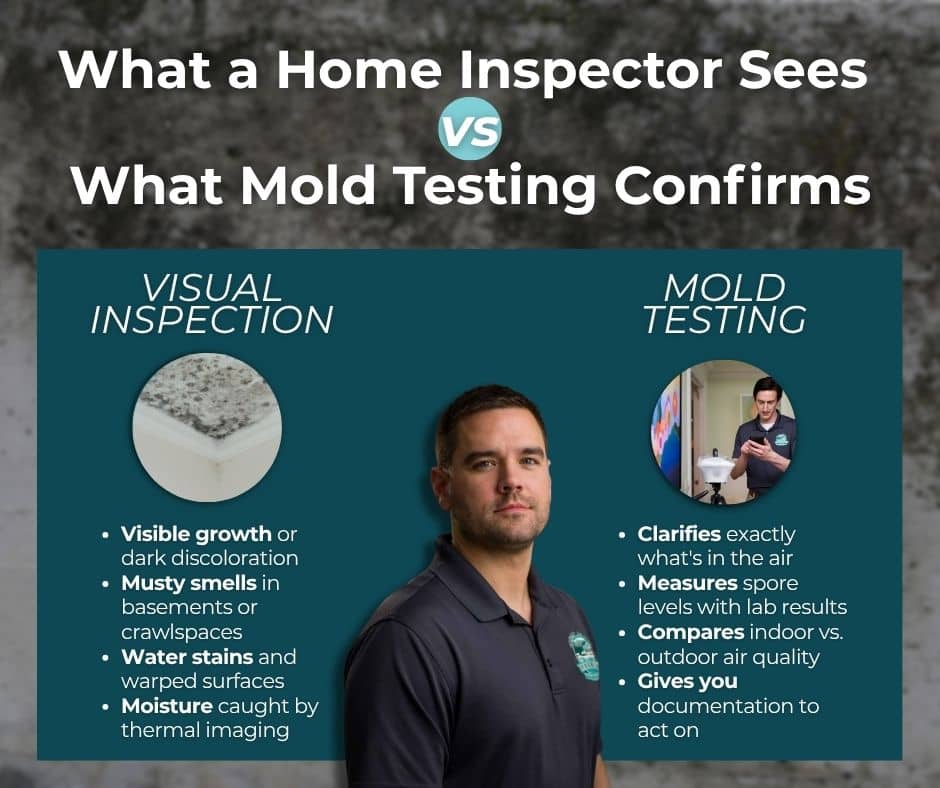
That distinction matters. A standard inspection flags the warning signs. A mold and air quality test confirms what is actually present and at what concentration.
Signs of Mold a Home Inspector Will Notice
Even without running lab samples, a thorough inspector picks up on a lot of mold-related clues throughout a home. Common red flags include:
- Visible dark staining or microbial growth on walls, ceilings, or framing
- Water stains on drywall, ceilings, or around windows
- Musty or damp odors in basements, crawlspaces, or closets
- Warped wood, rusted metal, or bubbling paint
- Standing water or active leaks at plumbing fixtures
- Elevated humidity readings inside the home
- Poor grading or drainage around the foundation
- Missing or inadequate attic ventilation
- Signs of past or current roof leaks
Any of these findings would typically be documented with photos in the inspection report, along with a recommendation to have the area evaluated further.
How Thermal Imaging Helps Spot Moisture
One of the most useful tools during a home inspection is infrared thermal imaging. Thermal cameras reveal temperature differences behind walls, ceilings, and floors that the naked eye cannot see.
Because moisture behaves differently than dry building materials, it shows up as cooler patches on the thermal image.
Infrared thermal imaging can help reveal:
- Active plumbing leaks behind walls
- Water intrusion around windows and door frames
- Missing insulation, allowing condensation to form
- Moisture lingering in the ceilings below the bathrooms
- Dampness in basements and crawlspaces
Thermal imaging does not confirm mold, but it does help identify the moisture conditions that cause it. If a cool patch shows up where it should not, that is a strong signal that something deserves a closer look, possibly with a mold and air quality test.
When to Ask for a Dedicated Mold & Air Quality Test
A separate mold and air quality test is worth considering when the standard inspection raises questions or the home has known risk factors. Good times to add the service include:
- The home has musty or damp odors, even without visible growth
- There are water stains, past leaks, or recent water intrusion
- Finished basements or crawlspaces where walls hide moisture
- Homes that have sat vacant for several months
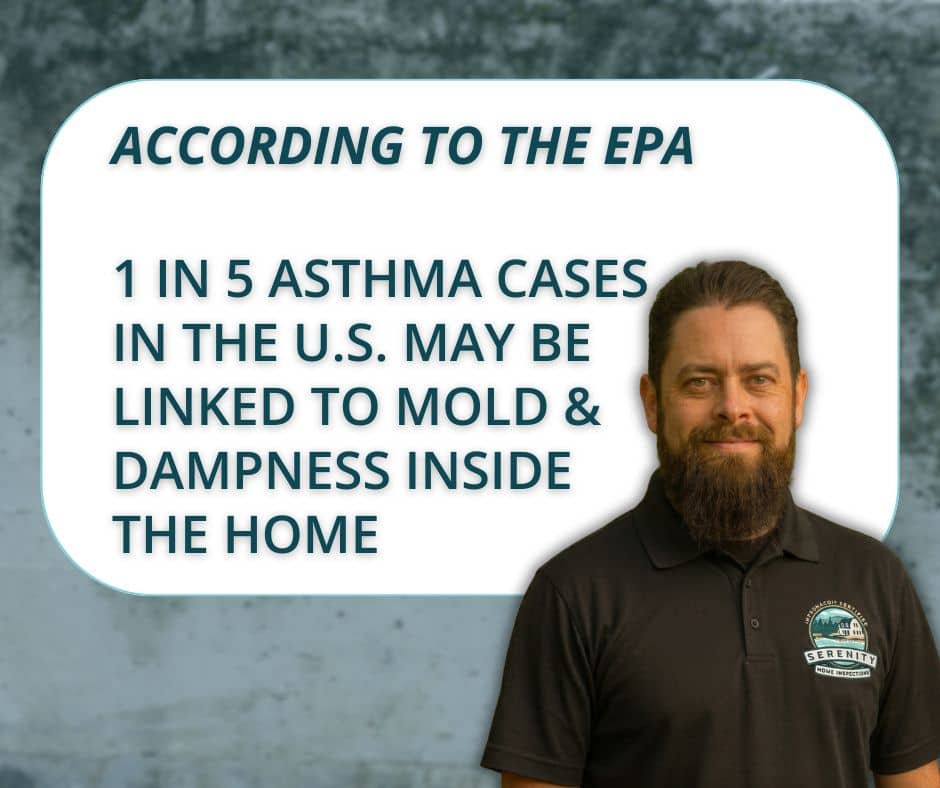
- Someone in the household has asthma, allergies, or respiratory sensitivities
- Visible microbial growth is already present
- Thermal imaging reveals unexplained moisture patterns
- A buyer, seller, or agent wants lab-verified documentation
Mold testing uses air samples (and sometimes surface samples) analyzed by a certified lab to measure spore types and concentrations inside the home compared to outside.
That data is what turns a concern into something you can actually evaluate.
Why Atlanta Homes Face Higher Mold Risk
Atlanta’s warm, humid climate creates ideal conditions for mold growth. Long summers, frequent afternoon thunderstorms, and mild winters mean outdoor humidity rarely drops for long.
That moisture pushes into homes through crawlspaces, basements, attics, and HVAC systems, especially in older neighborhoods across Fulton, Gwinnett, DeKalb, and Cobb counties.
Common local conditions that raise mold risk include:
- Older homes with ventilated crawlspaces that trap humidity
- Finished basements in areas like Sandy Springs, Marietta, and Decatur
- Partially sealed attics where insulation gets damp
- Air conditioning systems that run constantly in summer, condensing moisture on the ductwork
- Heavy tree coverage that keeps exterior walls shaded and slow to dry
A home that looks picture-perfect during a dry spring showing can still have hidden moisture issues waiting to surface after the next big rain.
Common Areas Where Mold Hides
Mold tends to show up in predictable places. During an inspection, extra attention usually goes to:
| Area | What to Watch For |
| Basement | Water staining on walls, musty odor, efflorescence |
| Crawlspace | Standing water, damp insulation, and vapor barrier issues |
| Attic | Stained roof sheathing, poor ventilation, bathroom fans vented inside |
| Bathrooms | Peeling paint, grout damage, and ceiling stains |
| Kitchen | Under-sink leaks, dishwasher seepage, fridge condensation |
| HVAC system | Dirty coils, wet drain pans, dust buildup in ducts |
| Laundry room | Dryer vent issues, washer connection leaks |
| Windows | Condensation, swollen trim, stained drywall below |
An experienced Atlanta inspector knows where to look first based on the age, construction, and style of the home.
What Inspection Reports Typically Say About Mold
Because mold identification legally requires lab testing, most inspectors avoid calling something “mold” in a report. Instead, you will often see phrases like:
- “Suspected microbial growth observed”
- “Conditions conducive to mold growth”
- “Elevated moisture detected”
- “Recommend further evaluation by a mold assessment professional”
That wording is intentional and protective for everyone involved. It still signals that something was observed and that follow-up is a smart next step, usually with a dedicated mold and air quality test.
Related Questions to Explore
What is the difference between a mold inspection and an air quality test? A mold inspection focuses on visible growth and moisture conditions throughout the home. An air quality test collects air samples for lab analysis to measure mold spore levels inside versus outside. They are often performed together.
Can a home inspector recommend a mold specialist? Yes. Most inspectors will either offer mold and air quality testing directly as an add-on or recommend a trusted mold assessment professional if additional testing is needed.
Should sellers get a mold inspection before listing? For older homes or homes with any history of water issues, a pre-listing inspection with mold testing can reduce surprises during buyer negotiations and give sellers a stronger starting position.
Do new construction homes need mold checks, too? They can. New construction homes that sat open during rainy weather or had plumbing issues during the build can trap moisture in framing or insulation. A new construction inspection with thermal imaging can flag problems early.
What other hidden issues are worth testing for alongside mold? Radon, sewer line condition, and termite or wood-destroying organism (WDO) presence are common add-ons buyers consider. All three involve conditions that visual inspections cannot fully evaluate.
When to Call a Professional
Some moisture and mold concerns need more than a quick glance. Consider scheduling a home inspection with added mold and air quality testing if:
- You notice musty odors, stains, or visible growth during showings
- You are buying an older home, a home with a finished basement, or a home with a vented crawlspace
- The home has a history of leaks, flooding, or long vacancy
- Anyone in the household has asthma, allergies, or respiratory sensitivities
- You want lab-verified documentation before closing
Serenity Home Inspections offers general home inspections, mold and air quality testing, infrared thermal imaging, radon testing, sewer scope inspections, WDO and pest inspections, and more across the greater Atlanta area.
Having every one of those services available through one trusted team makes it easier to get a complete picture of the home without juggling multiple vendors during a time-sensitive transaction.
Conclusion
Home inspectors check for visible signs of mold and the moisture conditions that cause it, but a standard inspection is not a substitute for dedicated mold testing.
Knowing the difference helps buyers and sellers decide when a thermal imaging scan is enough and when lab-verified air quality testing is worth adding to protect both health and investment.
If you are buying, selling, or maintaining a home anywhere in the Atlanta area and want to be sure mold is not a hidden issue, the team at Serenity Home Inspections is ready to help.
Reach out to schedule an inspection and get a clear, documented picture of the home before closing.