
What Happens to Swimming Pools Without Proper Maintenance?

A swimming pool is one of the most appealing features a home in the Atlanta area can have. It extends the outdoor season, adds real value to the property, and gives families a reason to stay home. But swimming pools without proper maintenance tell a very different story, and it’s one that shows up clearly during a home inspection.
Whether you’re a homeowner trying to stay ahead of repairs, a buyer evaluating a property with a pool, or a seller wondering whether your pool could affect your sale, understanding what neglect actually does is worth your time.
Why Atlanta Pools Need Consistent Attention
Georgia’s climate means pools here get used longer than in most of the country. That extended season is one reason pool ownership is so common throughout suburbs like Marietta, Alpharetta, Smyrna, and Sandy Springs. It also means pools face heat, rain, pollen, and debris across more of the calendar year than pools in cooler climates.
Maintenance tasks that seem minor on their own add up when they’re skipped consistently. What starts as a water chemistry issue becomes an equipment problem.
A small surface crack becomes a structural concern. And by the time any of it becomes visible from the outside, the damage is usually already significant.
What Happens If Swimming Pools Go Without Maintenance?
Neglected pool maintenance doesn’t just create cosmetic problems. It triggers a chain reaction that affects water safety, equipment lifespan, structural integrity, and ultimately the value of the home.
Water Quality Deteriorates Fast
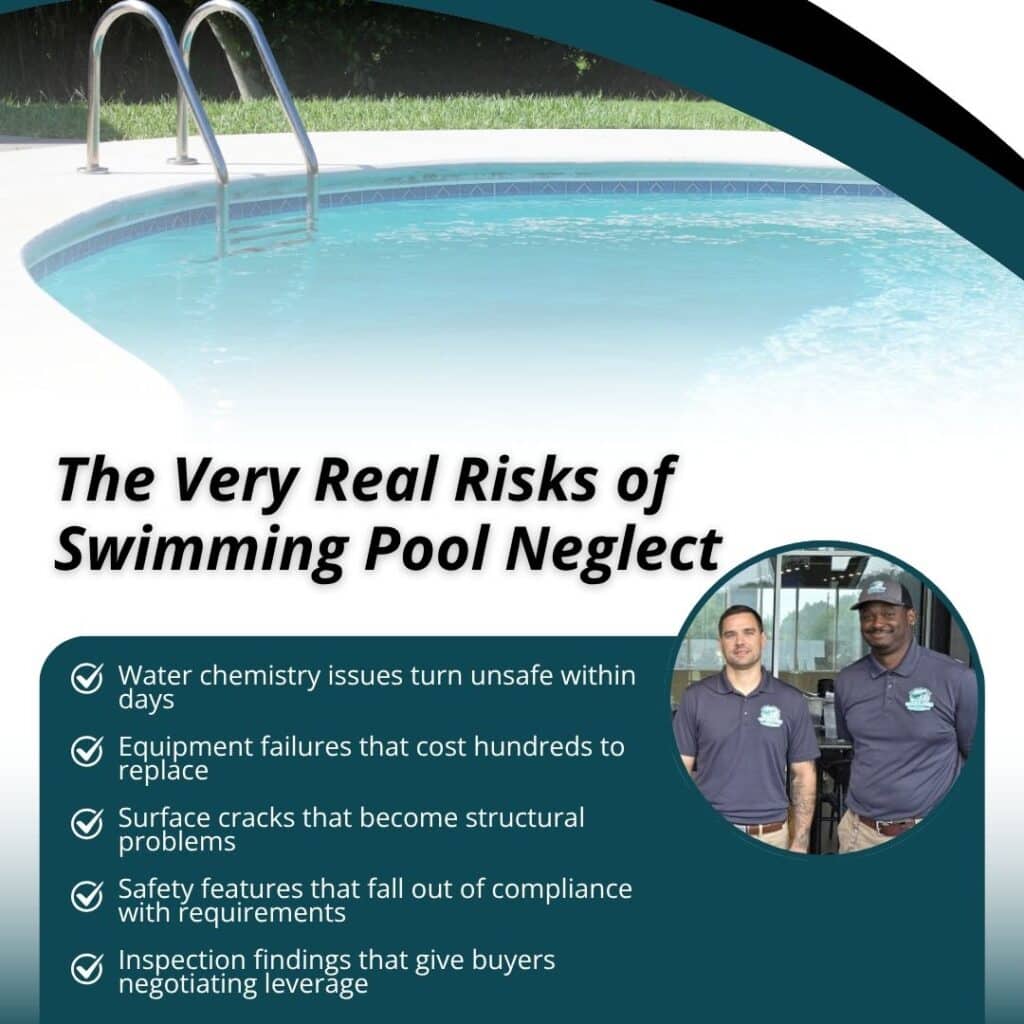
Pool water chemistry requires consistent balancing. When pH, chlorine, alkalinity, and calcium hardness fall out of range, the water becomes unsafe quickly.
Algae blooms can turn water green, brown, or black within days. Bacteria thrive in improperly treated water and create real health risks for anyone who swims in it.
Imbalanced chemistry also damages the pool itself. High acidity erodes surfaces and corrodes metal components. High alkalinity causes scale buildup that clogs filtration systems.
Either way, the longer it goes unaddressed, the harder and more expensive it becomes to reverse.
Equipment Fails Sooner Than It Should
The pump, filter, and heater are the mechanical heart of a pool system. All three depend on consistent maintenance to function properly.
When filters aren’t cleaned regularly, debris restricts water flow and forces the pump to work harder. That added strain accelerates motor wear and leads to premature failure.
A pump replacement in the Atlanta area can run anywhere from several hundred to over a thousand dollars. A heater running with poor water chemistry corrodes internally long before its expected end of life.
These are exactly the kinds of findings that come up during a pool inspection. Equipment condition, pump performance, filtration efficiency, and heater function are all evaluated, and deferred maintenance on any of them shows clearly in the report.
Surfaces Crack, Stain, and Break Down
Without regular brushing and chemical maintenance, algae and minerals bond to pool surfaces and cause staining that becomes permanent over time. Surface cracks allow water to seep into the underlying structure, where damage accelerates quickly.
What starts as a minor repair becomes a full resurfacing job or, in serious cases, a structural issue that compromises the pool’s ability to hold water.
Deteriorated surfaces are also a safety concern. Sharp edges, uneven finishes, and slippery buildup on the pool deck or surfaces increase the risk of injury for everyone who uses the pool, and that carries real liability implications for homeowners and sellers in Georgia.
Safety Features Degrade Without Attention
Georgia law sets specific requirements for residential pool fencing, including minimum height standards and self-closing, self-latching gates.
These requirements exist because pools are considered an attractive nuisance under state law, meaning property owners carry responsibility for preventing unauthorized access, especially by children.
Beyond fencing, anti-entrapment drain covers, GFCI-protected electrical components, handrails, and depth markings all need to be in working condition.
When regular maintenance isn’t happening, these safety features can fall out of compliance without the homeowner realizing it. Every one of these components is evaluated during a professional pool inspection.
What Neglected Pools Look Like at Inspection Time
For buyers in the Atlanta market, a home with a pool warrants a dedicated pool inspection in addition to a standard home inspection.
A general inspection covers the main structure and systems of the home. A pool has its own equipment, surfaces, and safety requirements that need their own evaluation.
Common findings on pool inspection reports in this area:
| Finding | Likely Cause |
| Green or cloudy water | Imbalanced chemistry, algae growth |
| Stained or etched surfaces | Prolonged chemical imbalance |
| Cracked coping or tile | Deferred maintenance, temperature stress |
| Pump running loudly or poorly | Clogged filter, motor wear |
| Missing or non-functioning drain covers | Safety component neglect |
| Deteriorated fencing or gate hardware | Deferred safety maintenance |
| Corroded electrical components | Age combined with neglect |
For sellers, a pool in poor condition invites repair negotiations and can slow or kill a sale.
Getting a pre-listing inspection done before buyers see the property is the most effective way to know where things stand and address issues on your own terms.
A Basic Maintenance Rhythm for Atlanta Pool Owners
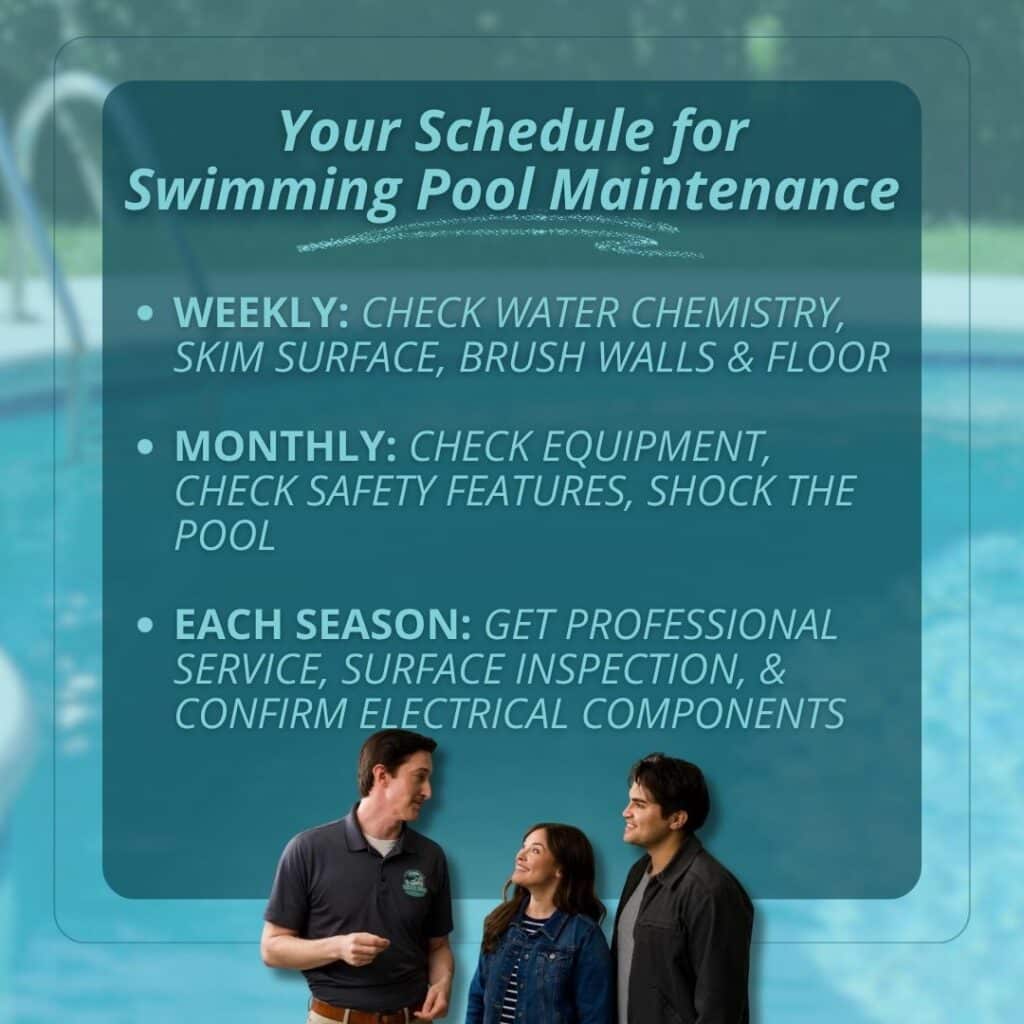
Georgia’s long swimming season means pools here need attention across more of the calendar than homeowners sometimes expect. Staying consistent with these tasks prevents most of the problems above.
Weekly tasks:
- Test and adjust water chemistry, including pH, chlorine, and alkalinity
- Skim the surface and clean the skimmer and pump baskets
- Brush walls, steps, and floor surfaces to prevent algae adhesion
Monthly tasks:
- Inspect the pump, filter, and heater for unusual performance or wear
- Check all safety features, including drain covers, fencing, and gate hardware
- Shock the pool to address any buildup that routine chlorination hasn’t cleared up
Each season:
- Have equipment professionally serviced before peak swimming season
- Inspect surfaces for cracks, staining, or early deterioration
- Confirm electrical components, including lighting and GFCI protection, are functioning correctly
Even homeowners who handle most of their own maintenance benefit from a professional pool evaluation at least once a year. Problems caught early almost always cost significantly less to fix.
Related Questions
Can a neglected pool affect a home’s sale price in Atlanta?
Yes, and significantly. Buyers factor pool condition into their offers, and visible signs of neglect give them direct leverage to negotiate price reductions or request repairs.
Sellers who address pool issues before listing are in a much stronger position going into the transaction.
Do wood structures around a pool need to be inspected, too?
Yes. Decks, fencing, pergolas, and other wood structures surrounding a pool are exposed to consistent moisture and are prime targets for wood-destroying organisms. A WDO and pest inspection is worth adding any time a pool property is being bought or sold in the Atlanta area.
What is infrared thermal imaging, and how does it apply to a home with a pool?
Thermal imaging uses temperature differences to detect issues not visible to the naked eye, including moisture intrusion behind walls and heat irregularities in mechanical systems.
For homes with pools and adjacent enclosed spaces, it can reveal moisture-related concerns that a standard visual inspection would miss.
What should buyers know about mold near pool areas?
Enclosed pool areas, pool houses, and adjacent basement or crawlspace spaces often have elevated humidity. That humidity creates conditions where mold can develop without being visible.
A mold and air quality test is worth considering any time a pool property has enclosed spaces that show signs of moisture exposure.
When to Call a Professional
A pool that looks fine on the surface can be hiding problems that only a trained inspector will catch. Reach out to Serenity Home Inspections if:
- You’re buying a home with a pool and want a full picture of its condition before closing
- You’re preparing to sell and want to identify pool issues before buyers find them first
- You haven’t had a professional pool evaluation in more than a year
- You’re unsure whether the pool’s safety features meet current Georgia requirements
- You want a complete property evaluation that covers the home, pool, and any ancillary systems together
Serenity’s pool inspection service covers every component from surface condition to equipment performance to safety features.
Combined with our full suite of services, including infrared thermal imaging, WDO and pest inspections, mold and air quality testing, and sewer scope inspections, Atlanta-area buyers and sellers get the most complete picture possible before any transaction.
Conclusion
A well-maintained pool adds real value to a home in the Atlanta area. A neglected one does the opposite. Water quality problems, equipment failures, surface damage, and compromised safety features don’t stay small for long, and by the time they become obvious, they’re usually expensive.
Whether you’re maintaining a pool you already own, buying a home with one, or preparing to sell, staying consistent with maintenance and getting a professional inspection at the right time protects your investment and keeps everyone who uses it safe.
Serenity Home Inspections is here to help. Schedule your inspection today.