

In short, yes. If you bought a new construction home, an 11-month home warranty inspection is one of the smartest moves you can make before your first year is up. A licensed inspector checks the home top to bottom and documents any builder defects while your one-year warranty still pays for the repairs.
Wait too long, and those fixes come out of your pocket. At Serenity Home Inspections, we run these inspections across Metro Atlanta, from new subdivisions in Alpharetta and Suwanee to Peachtree Corners. This guide explains what the inspection covers, when to schedule it, and how it differs from a home warranty or home insurance.
What Is an 11 Month Home Warranty Inspection?
An 11-month home warranty inspection is a full home inspection done in the 11th month after you close on a new construction home, right before the builder’s one-year warranty expires.
It is also called a builder’s warranty inspection or a new construction warranty inspection. The goal is simple. Find the defects that have shown up during your first year in the home, put them in writing, and submit them to your builder while they are still responsible for the repairs.
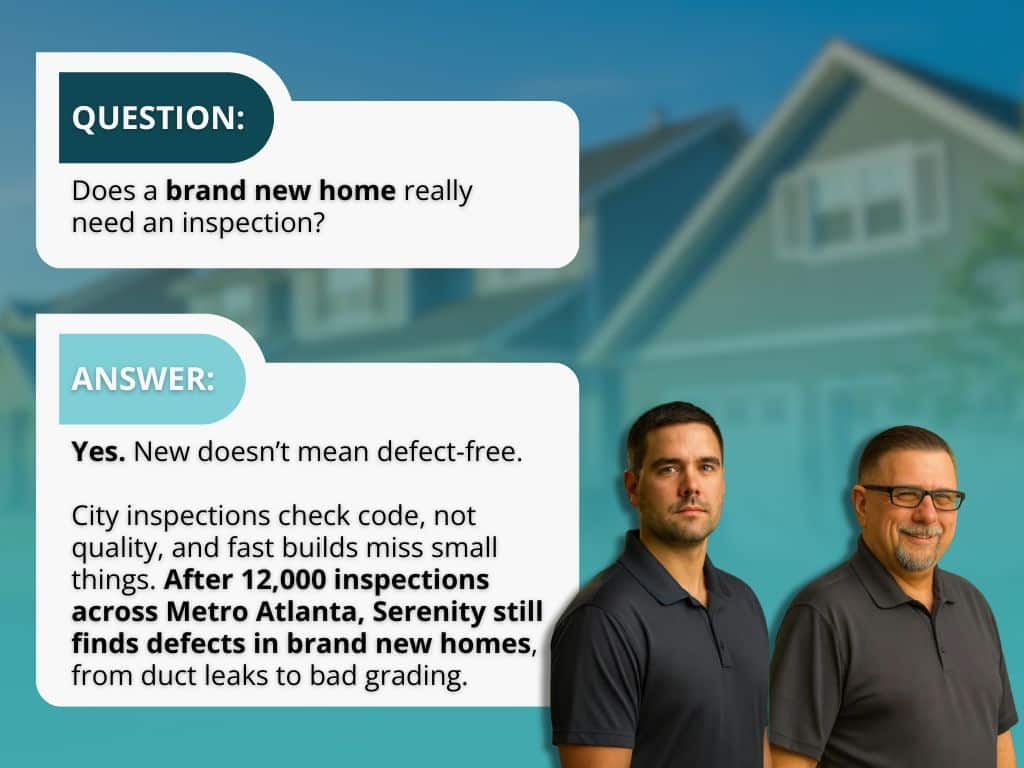
New does not mean flawless. Most homes look perfect on move-in day, but homes settle, systems get used hard, and small mistakes from a fast build start to show after a few seasons. A nail pop here, a hairline crack there, a duct that was never sealed right.
City and county inspections confirm code compliance, but they do not catch every installation error or quality issue. A trained inspector does, and this is your last chance to flag them on the builder’s dime.
At Serenity, this is one of three phases we offer on new construction, alongside the pre-drywall and final walkthrough inspections. You can read more about our builder’s warranty inspection and how it fits into the new construction process.
When Should You Schedule It? (Month 10 or 11)
Schedule your inspection in the 10th or 11th month after closing, at least four to six weeks before your one-year warranty expires. That window is not random. You need enough time to get the report, send your claims to the builder, and let them schedule repairs before the deadline. Cut it too close, and you lose your room to negotiate.
Here is why the 11th month works best:
- It gives the home a full year of real use, so seasonal issues have time to appear.
- It leaves a buffer before the warranty deadline to file claims and get responses.
- It catches problems while the builder is still on the hook, not after.
Many homeowners get busy and miss the window. Set a reminder for 10 months after your closing date. If you are already past that point and the clock is ticking, call your inspector right away and tell them how many days you have left so they can prioritize your report.
What Does an 11 Month Warranty Inspection Cover?
An 11-month warranty inspection covers the same ground as a full home inspection. The inspector reviews your home’s major systems and structure from the roof down to the foundation.
In Georgia’s climate, where hot, humid summers run from May through September and storms roll through every spring, that thorough look matters even more.
A typical inspection checks:
- Roof, attic, flashing, and ventilation
- Exterior, siding, grading, and drainage around the foundation
- Foundation and visible structural components
- HVAC performance and the ductwork
- Plumbing fixtures, water heater, and visible pipes
- Electrical panel, outlets, and wiring
- Windows, doors, and weather sealing
- Interior finishes, drywall cracks, nail pops, and uneven floors
Serenity includes infrared thermal imaging on these inspections to spot moisture, insulation gaps, and electrical hot spots behind walls that a visual check alone would miss.
In Atlanta’s humidity, a small hidden leak can turn into mold or rot fast, so catching it early is worth far more than the cost of the inspection. A good inspector also knows the common new construction mistakes that show up again and again, even in well-built homes, and exactly where to look for them.
Builder’s Warranty vs Home Warranty vs Home Insurance
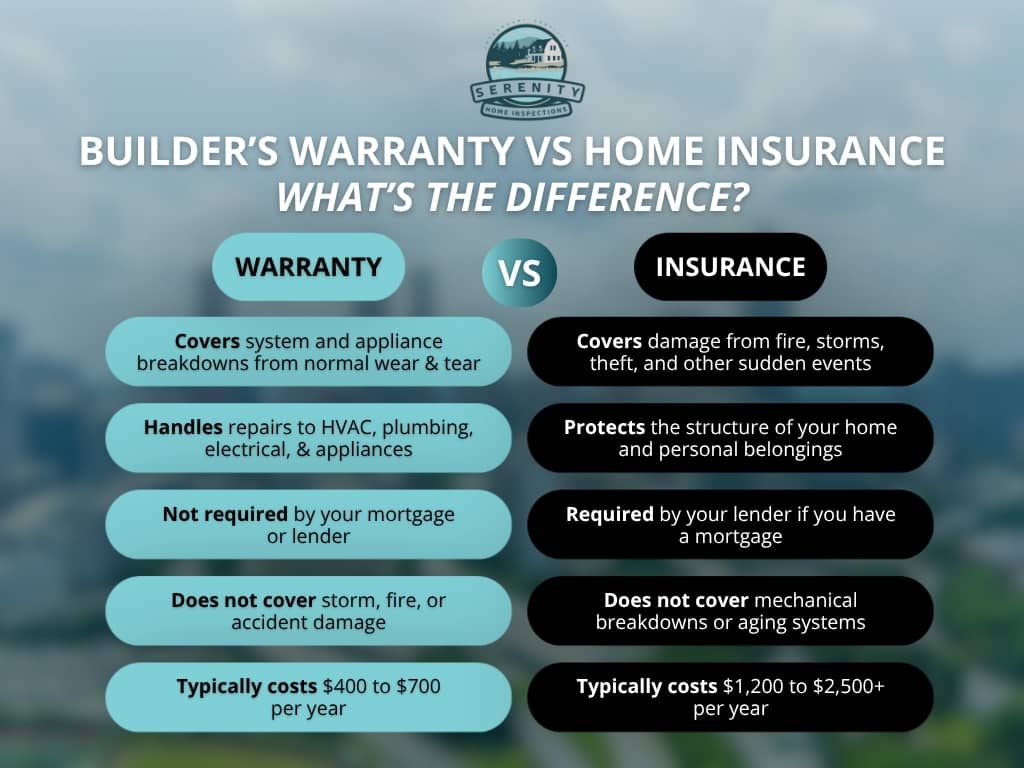
These three terms get mixed up constantly, so here is the plain version. A builder’s warranty comes free with your new home and is provided by the builder. A home warranty is a service contract you choose to buy. Home insurance is a policy your lender requires that covers sudden damage.
The FTC explains that a builder’s warranty comes with new construction and covers items that are a permanent part of the home, like plumbing, electrical, and structural work. A home warranty, by contrast, is really a service contract that costs extra and usually covers appliances and systems in existing homes.
Most builders’ warranties follow a tiered structure. The exact terms depend on your builder’s contract, but a common setup looks like this:
| Coverage | Typical length | What it covers |
|---|---|---|
| Workmanship and materials | 1 year | Most components: drywall, paint, trim, siding, fixtures |
| Major systems | 2 years | Electrical, plumbing, HVAC |
| Structural defects | Up to 10 years | Foundation, framing, load-bearing elements |
The one-year workmanship tier is the broadest and the shortest, which is exactly why the 11-month inspection is timed to it. For a deeper breakdown of how a service contract compares to a policy, see our guide on the difference between a home warranty and home insurance.
One more thing worth clearing up. Every Serenity inspection comes with a free 90-day home warranty that protects covered systems for the first 90 days after your inspection. That is separate from your builder’s warranty and from any service contract you buy on your own.
What to Do After the Inspection
Once you have your report, move quickly. Submit it to your builder in writing as a formal warranty claim before your deadline. A written, photo-rich report is your strongest tool for getting repairs approved. Take these steps:
- Review the report and flag the most serious items first.
- Send the full list to your builder in writing, with photos.
- Prioritize safety and structural issues, then systems, then cosmetic fixes.
- Get repair confirmations in writing, including what was done and when.
- Verify the repairs before your warranty officially ends.
Reputable builders honor these claims, and a clear report makes it easy for them to schedule the work. To get the best results from your coverage, make sure you’re making the most of your builder’s warranty.
Related Questions to Explore
Does a home warranty company require an inspection?
Usually not. Most home warranty providers sell you a service contract without requiring a home inspection first. Getting an independent inspection before you buy one is still smart, because a home warranty will not cover pre-existing problems. Knowing the real condition of your systems helps you decide whether the coverage is worth it.
How long is a builder’s warranty good for?
Most builders’ warranties cover workmanship and materials for one year, major systems for about two years, and structural defects for up to ten years. The exact terms live in your builder’s contract, so read it closely and note the dates. The one-year mark is the deadline that matters most for your 11-month inspection.
Is an 11-month warranty inspection worth it?
For almost every new construction owner, yes. The inspection usually costs a few hundred dollars, while the repairs it uncovers, like a duct leak, a grading problem, or missing attic insulation, can run into the thousands. Catching those while the builder still pays for them is one of the best returns you will get as a new homeowner.
When to Call a Professional
If your new home is coming up on its first birthday, now is the time to book your inspection. Reach out to Serenity Home Inspections if any of these apply to you:
- Your builder’s one-year warranty is within two months of expiring.
- You have noticed cracks, leaks, sticking doors, or HVAC issues since moving in.
- You want thermal imaging included to catch hidden moisture before it spreads.
- You are not sure what your builder’s warranty covers and want a clear punch list.
We serve homeowners across Metro Atlanta, including Alpharetta, Suwanee, and Peachtree Corners, and we deliver same-day reports so you have time to act before your deadline.
Conclusion
An 11-month home warranty inspection is your last clear shot at holding your builder accountable before the one-year warranty closes. The key takeaways:
- Schedule it in month 10 or 11, with four to six weeks of buffer before your warranty expires.
- It is a full inspection of your home’s systems and structure, with a written report for your builder.
- A builder’s warranty, a home warranty, and home insurance are three different things, and none of them replaces a real inspection.
With over 12,000 inspections completed across Metro Atlanta, Serenity’s inspectors know exactly what to look for in a one-year-old home. Schedule your 11-month inspection today.