A home inspector looks for problems with a house’s major systems and safety: the roof, foundation, electrical, plumbing, heating and cooling, and the interior and exterior, plus anything that signals a safety hazard or an expensive repair on the horizon. The job is to give you a clear, honest picture of a home’s true condition before you buy.
At Serenity Home Inspections, we have completed more than 12,000 inspections across Metro Atlanta since 2011, so we know where houses tend to hide their flaws. This guide walks through every area an inspector checks, the red flags that surface most often, and what a standard inspection does not cover.
What Does a Home Inspector Actually Do?
A home inspector performs a visual, non-invasive examination of a home’s accessible systems and reports their condition in writing. An inspector does not tear open walls or move heavy furniture. They evaluate what they can see and safely reach, then document defects, safety concerns, and components nearing the end of their life.
Most inspectors follow a published standard of practice, such as the InterNACHI Standards of Practice that our team is certified under. That standard defines what gets inspected and how, so you receive a consistent, professional report rather than a casual opinion.
A typical inspection takes two to four hours, depending on the size and age of the home, and the written home inspection report usually follows the same day or the next.
One thing worth clearing up early: an inspection is not an appraisal. An appraiser works for the lender and estimates market value. An inspector works for you and reports condition and safety. You want both.
The Major Systems a Home Inspector Checks
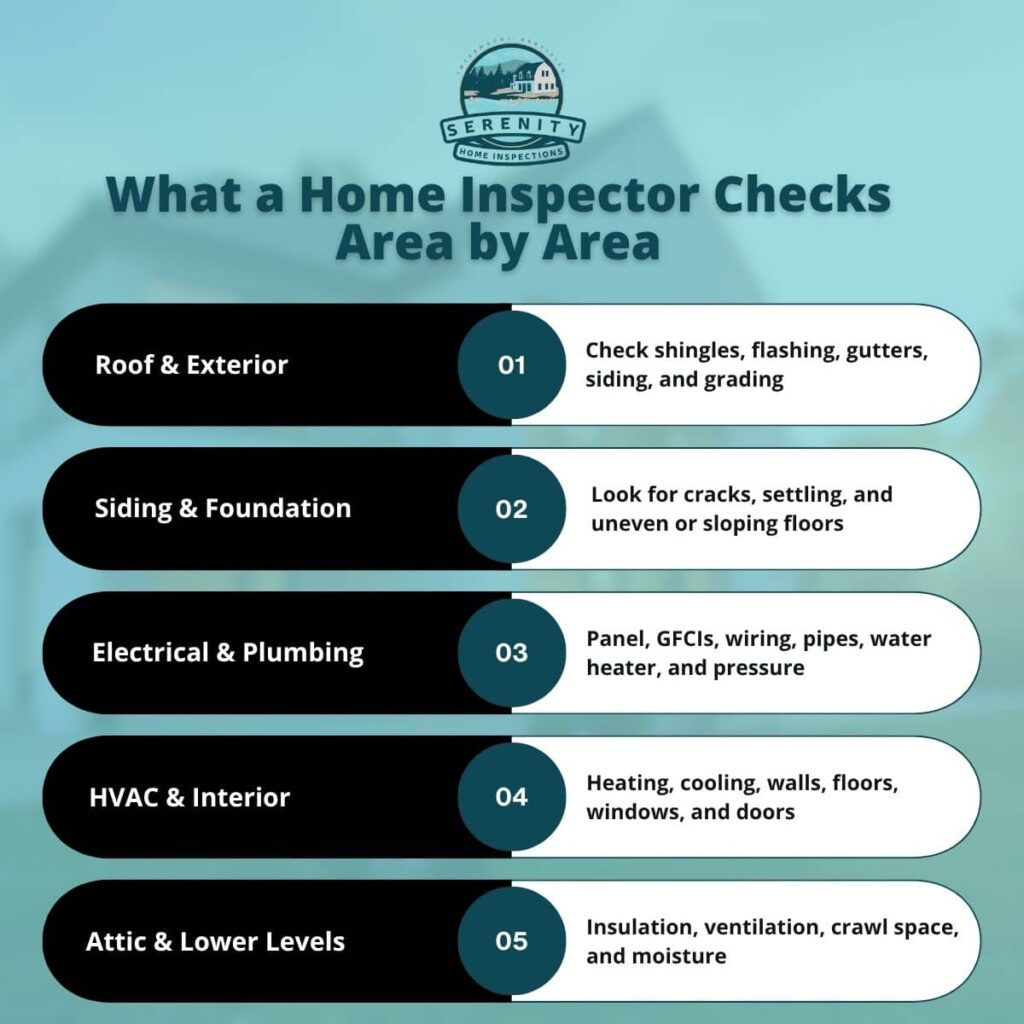
A standard home inspection covers the home from the roof down to the foundation. Here is what an inspector evaluates in each area.
Roof, Gutters, and Chimney
The roof is one of the first and most important things an inspector checks, because it is among the most expensive components to replace. Inspectors look for missing, curling, or damaged shingles, worn flashing around penetrations, soft spots, and signs of past leaks.
They also assess gutters, downspouts, and the chimney cap and crown. A roof near the end of its life can shift a negotiation, so its remaining lifespan matters as much as its current leaks.
Foundation and Structure
Inspectors look for cracks, settling, bowing walls, sloping floors, and gaps around doors and windows that point to structural movement. Not every crack is a problem. A thin vertical crack is often just concrete shrinkage, while a horizontal crack or one with displacement deserves a closer look.
If you want a deeper read on which cracks matter, this guide on how to gauge the severity of a foundation crack breaks it down well. In Metro Atlanta, our red clay soil expands and contracts with moisture, which stresses foundations more than in many other regions, so this section gets real attention on local homes.
Electrical System
Inspectors test and evaluate the electrical system with safety as the priority. They check the main panel, breakers and fuses, outlets, switches, light fixtures, and wiring.
Common findings include missing GFCI protection near sinks and bathrooms, double-tapped breakers, outdated panels, and improper or unsafe splices. These are flagged because faulty wiring is a leading cause of house fires.
Plumbing and Water Heater
The plumbing review covers supply lines, drain lines, water pressure, the water heater, and visible pipe materials. Inspectors look for leaks, corrosion, weak pressure, and outdated materials like polybutylene or galvanized steel that tend to fail. A standard inspection only confirms that fixtures drain and flush.
It does not show the condition of the underground sewer line, which is why a sewer scope inspection is often worth adding to older properties.
Heating and Cooling (HVAC)
Inspectors evaluate the heating and cooling system for proper function and overall condition. That includes the furnace, evaporator coil, compressor, ductwork, air handler, thermostat, and filter. Red flags include a cracked heat exchanger, dirty or neglected components, improper venting, and equipment near the end of its service life.
We frequently use infrared thermal imaging to spot temperature differences that reveal hidden HVAC and insulation issues.
Attic, Insulation, and Ventilation
The attic tells the story of the home above the ceiling. Inspectors check roof decking for staining from leaks, framing for damage or improper modifications, insulation for adequate depth, and ventilation for proper airflow through soffit and ridge vents.
Poor attic ventilation traps heat and moisture, which shortens roof life and can fuel mold growth.
Basement and Crawl Space
Below the living space, inspectors look for water intrusion, efflorescence, standing water, sagging support beams, and signs of mold or wood rot. Moisture is the recurring theme here.
A musty odor is often the first clue that something needs attention, and knowing how to diagnose a musty smell in the basement helps resolve what those smells usually point to. Basements and crawl spaces are also where radon tends to enter, which leads to the next point.
Interior: Walls, Floors, Windows, and Doors
Inside each room, inspectors check walls, ceilings, and floors for cracks, water stains, and sagging, and they operate windows and doors to confirm they open, close, and seal.
Sticking doors and uneven floors can be cosmetic, or they can hint at foundation movement, so inspectors read them alongside everything else.
Exterior, Grading, and Drainage
Outside, inspectors evaluate siding, trim, decks, porches, and the grading around the home. They look for warped or loose siding, rot, and ground that slopes toward the foundation instead of away from it.
Poor drainage is one of the most common root causes of basement and foundation moisture, so this section often connects back to problems found elsewhere.
Built-In Appliances and Safety Devices
Inspectors test built-in appliances such as the stove, dishwasher, and built-in microwave for basic function, and they check safety devices like smoke and carbon monoxide detectors. These are small items individually, but a report full of inexpensive, easy fixes still gives a buyer a useful punch list before move-in.
What Commonly Gets Flagged: Red Flags That Can Derail a Sale
The findings most likely to affect a sale are safety hazards and high-cost repairs. Most homes have some defects, so the goal is not a perfect house. The goal is to catch the deal-breakers. The issues that come up most often, and carry the most weight, include:
- Roof at the end of its life or with active leaks
- Foundation cracks with displacement or signs of structural movement
- Electrical hazards like outdated panels, missing GFCI protection, or unsafe wiring
- Major plumbing problems, including sewer line failures and hidden leaks
- A failing or non-functional HVAC system
- Water intrusion and moisture in the basement or crawl space
When the report shows significant issues, you and your agent can request repairs, ask for a credit, or walk away. A strong inspection contingency is what protects your options and your earnest money during that window.
What a Standard Home Inspection Does Not Include
A standard inspection is a visual check of accessible systems, so several important items require separate, specialized testing. The most common add-ons include:
- Radon testing. Radon is an odorless, radioactive gas, and the EPA notes it is the second leading cause of lung cancer in the United States, per EPA guidance on radon health risks. North Georgia sits in elevated radon zones, so radon testing is a smart pairing with a general inspection here.
- Mold and air quality testing. Visible mold gets noted, but mold and air quality testing confirm what is in the air and behind the surfaces.
- Sewer scope. A camera sends a live view down the underground sewer line, where standard inspections cannot reach.
- Termite and pest (WDO). A WDO and pest inspection, sometimes called a Georgia termite letter, documents wood-destroying organisms.
- Pool and septic. Each is its own specialized inspection.
For a full breakdown of what is and is not part of the base service, see what’s included in your home inspection.
What Inspectors Pay Extra Attention to in Older Atlanta Homes
Older Metro Atlanta homes, like those in Grant Park, Kirkwood, and Virginia Highland, carry great character and a few predictable issues. Inspectors look closely at aging electrical systems, original plumbing materials, clay or cast-iron sewer lines, and foundation movement tied to the area’s red clay soil.
Homes built before 1990, or with large trees near the sewer line, are strong candidates for a sewer scope. Knowing the local patterns is the difference between a generic checklist and an inspection that reflects how Atlanta homes actually age.
Related Questions to Explore
What do home inspectors look for the most? Inspectors focus most on safety hazards and the home’s most expensive systems: the roof, foundation, electrical, plumbing, and HVAC. These carry the biggest repair costs and the greatest safety impact, so they receive the most attention in the report.
How long does a home inspection take? A standard home inspection usually takes two to four hours, depending on the home’s size, age, and condition. Larger homes or added services like mold or drone inspections can take longer. We deliver same-day or next-day reports, so you have time to act within your due diligence window.
Should I attend my home inspection? Yes, attending is a good idea, especially for first-time buyers. Joining the last 30 to 60 minutes lets the inspector walk you through findings in person and explain which items are safety issues and which are routine maintenance.
Do home inspectors check for mold? Inspectors note visible mold and moisture during a standard inspection, but confirming the type and extent requires dedicated mold and air quality testing. Because mold spores are small and spread easily, a clean visual check does not always mean the air is clear.
What do home inspectors look for in a crawl space? In a crawl space, inspectors look for standing water, high humidity, sagging beams or joists, wood rot, pest activity, and signs of radon entry. Moisture is the main concern, since it drives most of the structural and air-quality problems found below the home.
Do new construction homes need an inspection? Yes. Even brand-new homes commonly have missing insulation, reversed wiring, and plumbing leaks. A new construction inspection catches these while the builder is still responsible for fixing them.
When to Call a Professional
A self-guided walkthrough helps you spot obvious issues, but a licensed inspector is the right call the moment you go under contract, especially in Atlanta’s fast-moving market, where due diligence windows are often only five to seven days.
Reach out early if you are a first-time buyer who wants the home explained in plain language, an investor who needs accurate repair costs, or a buyer relocating to Georgia who may not know the local soil and humidity issues.
At Serenity, every inspector is InterNACHI certified, reports arrive the same day or the next day, and every inspection is backed by our honor guarantee and a free 90-day warranty.
Conclusion
Knowing what an inspector checks puts you in control of one of the biggest decisions you will make. A few things to carry with you:
- A standard inspection covers the roof, foundation, electrical, plumbing, HVAC, interior, and exterior, with a focus on safety and major costs.
- Specialty concerns like radon, mold, sewer lines, and termites need separate testing.
- The report is a tool: use it to negotiate repairs, request credits, or walk away with confidence.
When you are ready for a clear, honest read on a home’s condition, schedule a home inspection with Serenity and get the facts you need to move forward.