A home inspection on a new build is not about assuming something was done wrong, but homes are complex systems, and even high-quality construction can include oversights, rushed installations, or components that do not function as expected once the home is lived in.
Many buyers assume that inspections are mainly for older homes with years of wear and tear, but new homes can still have issues that are just as important to catch early.
For buyers and homeowners in the Atlanta area, a professional inspection provides clarity at key moments, such as before closing or before a builder’s warranty expires. It gives you an unbiased, documented look at the home so you can move forward with confidence.
What a Home Inspection on a New Build Really Covers
Buying a new construction home often comes with a sense of relief. Everything is new, unused, and freshly installed. A home inspection on your new build is how you protect your investment.
It’s a comprehensive evaluation of the home’s visible and accessible systems and components that focuses on how those systems are installed and how they function under normal operating conditions.
During a new construction inspection, your inspector typically evaluates:
- Foundation and visible structural components
- Roof coverings, flashing, and attic conditions
- Heating and cooling systems and airflow
- Electrical systems and safety protections
- Plumbing systems, fixtures, and drainage
- Insulation and ventilation
- Exterior grading and moisture management
Each of these areas plays a role in how the home performs over time. Even small inconsistencies in installation can affect comfort, efficiency, and durability once the home is occupied.
Inspectors do not perform code enforcement inspections. Instead, they evaluate homes based on professional standards of practice, manufacturer installation guidelines, and local building requirements where applicable.
The goal is to identify conditions that may impact safety, performance, or long-term reliability so homeowners understand what they are responsible for moving forward.
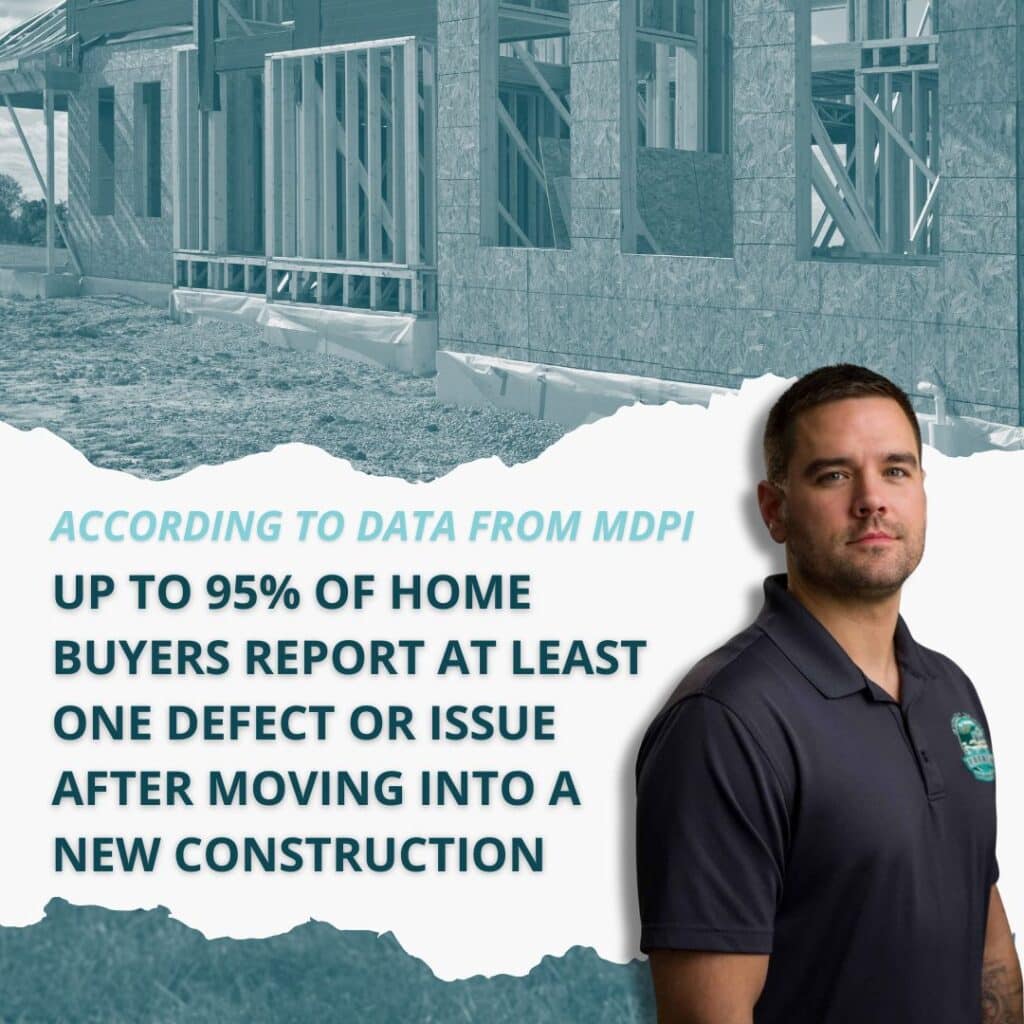
According to the National Association of Home Builders, many construction-related issues are not discovered until after homeowners move in and begin using systems daily. This is why inspections remain valuable even when a home is brand new.
Why New Homes Can Still Have Problems
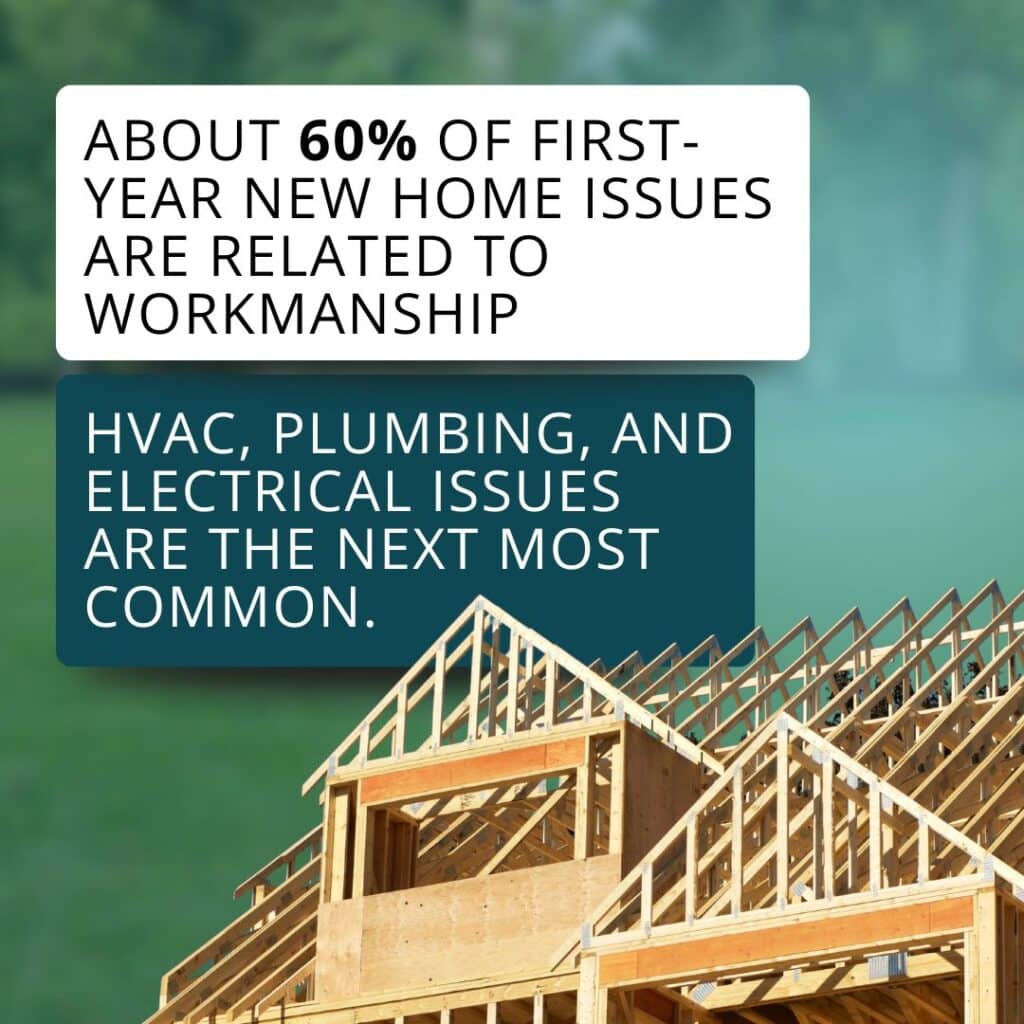
New construction homes are built on tight schedules using many subcontractors. Even with experienced builders, coordination challenges and time pressure can lead to small but important issues.
Common reasons problems appear after move-in include:
- Materials settling, as the home adjusts to soil conditions
- Drainage patterns becoming clear after heavy rain
- HVAC systems operating through seasonal temperature swings
- Plumbing and electrical systems being used daily for the first time
These are normal realities of construction. A home may pass a final walkthrough but still develop performance issues once it experiences real-world conditions.
An inspection helps document how the home responds to those conditions rather than relying on assumptions made during the build.
Builder Walkthroughs Versus Independent Inspections
Builder walkthroughs serve a purpose, but they are not designed to replace a professional inspection. Walkthroughs usually focus on cosmetic items such as paint touch-ups, trim alignment, and visible finish quality.
A professional inspection focuses on the function and performance of the system. Inspectors evaluate how systems are installed, how they operate together, and whether conditions could lead to future problems.
This includes areas that are rarely discussed during walkthroughs, such as attic ventilation balance, drainage slopes, moisture control, and electrical safety protections.
The difference is not about blame. It is about perspective. Inspectors are independent and focused on homeowner education rather than project completion.
When a New Build Inspection Is Most Valuable
New build inspections provide value at several important stages.
Before closing
A pre-closing inspection allows buyers to document concerns before final paperwork is signed. This creates a clear record of the home’s condition at move-in and helps prevent disputes about when an issue first appeared.
After move-in but within the warranty period
Many builder warranties cover workmanship and systems for a limited time. An inspection during this window helps identify issues that may qualify for correction while coverage still applies.
Near the end of the first year
An inspection around the 11th month is common because it allows homeowners to document concerns before warranty deadlines expire.
By this point, the home has experienced seasonal changes and regular use, making performance issues easier to spot.
Each stage helps homeowners protect their investment in a different way.
Common Findings in New Construction Homes
Even well-built homes can have minor deficiencies that are easy to miss without training. These issues may not feel urgent at first, but they can affect comfort, efficiency, and durability over time.
Common findings include:
- Incomplete or inconsistent caulking around windows and doors
- Insulation gaps that reduce energy efficiency
- HVAC airflow imbalances between rooms
- Drainage patterns that direct water toward the foundation
- Missing or improperly installed safety protections
Moisture-related concerns, insulation issues, and HVAC performance observations are among the most frequently noted findings in both new and existing homes.
Catching these early helps prevent more serious damage later and gives homeowners a clearer understanding of what to monitor.
New Build Assumptions Versus Inspection Reality
| Common New Build Assumption | What Inspections Often Reveal |
| Everything meets expectations | Some components function but need adjustment |
| Water drainage is not a concern | Grading issues may appear after rainfall |
| HVAC systems are fully balanced | Airflow differences between rooms are common |
| Electrical systems are complete | Safety protections may be missing or inconsistent |
| New means maintenance-free | Early adjustments and monitoring are still needed |
This table helps explain why inspections add value even when a home looks finished and well-built. Appearance alone does not reflect how a home will perform over time.
Why Small Issues Matter Over Time
Minor issues often feel easy to ignore, especially in a new home. However, small problems tend to grow when left unaddressed.
For example:
- Poor drainage can contribute to moisture intrusion
- Insulation gaps can increase energy costs
- Improper ventilation can affect indoor air quality
- HVAC strain can shorten equipment lifespan
Research from the International Code Council shows that moisture management problems are one of the leading contributors to long-term building damage. Identifying contributing factors early helps protect both the structure and the living environment.
How Inspections Support Builder Warranty Use
Builder warranties typically include coverage for workmanship, materials, and systems for limited periods. They also require issues to be reported within specific timeframes.
An inspection report provides:
- Clear written descriptions of observed conditions
- Photos that show location and context
- Documentation that concerns existed within the warranty window
This documentation helps homeowners communicate clearly and reduces misunderstandings about timing or responsibility. It also helps homeowners prioritize which issues should be addressed first.
Why Atlanta-Area Homes Benefit Specifically
Atlanta’s climate and soil conditions create unique challenges for homes. Hot summers, heavy rainfall, and clay-rich soils all influence how homes settle and perform.
Inspections in this area often pay close attention to:
- Drainage and grading after rain events
- Attic ventilation and heat buildup
- HVAC sizing and airflow in warm climates
- Moisture control around foundations
Local experience matters. An inspection informed by regional conditions provides insight that generic walkthroughs often miss, especially in new developments where soil disturbance is common.
Other Questions Buyers Often Ask About New Build Inspections
Is a New Construction Inspection Different From a Pre-Drywall Inspection?
Yes. A pre-drywall inspection focuses on structural framing, plumbing, and electrical components before walls are closed. A completed new construction inspection evaluates how finished systems perform once the home is ready for occupancy.
Many buyers use both to get a clearer picture at different stages.
Do Homes Built Recently Still Need a Standard Home Inspection?
They can. A standard home inspection looks at overall condition and performance, regardless of age. Even newer homes can benefit from this type of inspection once systems have been in use for a period of time.
Can an Inspection Help Me Understand Maintenance Priorities?
Inspection reports often point out areas that may need monitoring or routine upkeep, even if no immediate repair is required. This helps homeowners understand where future maintenance is most likely to matter.
When to Call an Inspector
Calling a professional home inspector makes sense when you want an unbiased, thorough evaluation of your new build.
You should consider scheduling an inspection if:
- You are purchasing a new construction home
- You want documentation before closing
- You are within the builder’s warranty period
- You are approaching the end of the first year
- You want to understand how systems are performing after real use
A professional inspection provides education, documentation, and clarity. It does not involve repairs or enforcement. Its value lies in helping homeowners understand the home they are responsible for.
Serenity Home Inspection provides professional home inspections and new construction inspections for buyers and homeowners throughout the Atlanta area.
Conclusion
New construction homes offer many benefits, but new does not mean flawless. A home inspection is still essential because it verifies performance, documents concerns, and helps homeowners make informed decisions while options are still available.
For Atlanta buyers, a new construction inspection is a practical step that protects your investment and provides confidence in your home both now and in the years ahead. Book yours today with Serenity Home Inspections.