
Home inspection reports are meant to bring clarity to the home-buying or selling process. Instead, many people open their report and feel overwhelmed by the length, the terminology, and the number of findings listed on the page.
This reaction is common and understandable. A professional home inspection report documents a large amount of information, even when a home is generally in good condition.
Without knowing how the report is structured or how inspectors prioritize findings, it can be difficult to tell what actually matters.
Once you know how to approach the report, it becomes a practical tool that helps you make informed decisions rather than a document that creates unnecessary stress.
What a Home Inspection Report Is Designed to Do
A home inspection report documents the visible condition of a property at the time of the inspection. Inspectors evaluate accessible areas of the home and report on what they can observe and test under normal conditions.
The report aims to help buyers, sellers, and property owners understand the current condition of major systems and components.
A home inspection report intends to:
- Identify safety concerns that may pose a risk
- Highlight defects that affect function or performance
- Document visible damage, deterioration, or improper installation
- Provide context for future maintenance and planning
It is important to understand what the report is not designed to do. Inspection reports do not predict future failures, provide repair estimates, or guarantee that a home is free of defects.
They reflect conditions observed on a specific day, not what may happen months or years later. Understanding this purpose helps set realistic expectations before reviewing individual findings.
Why Home Inspection Reports Can Feel Overwhelming
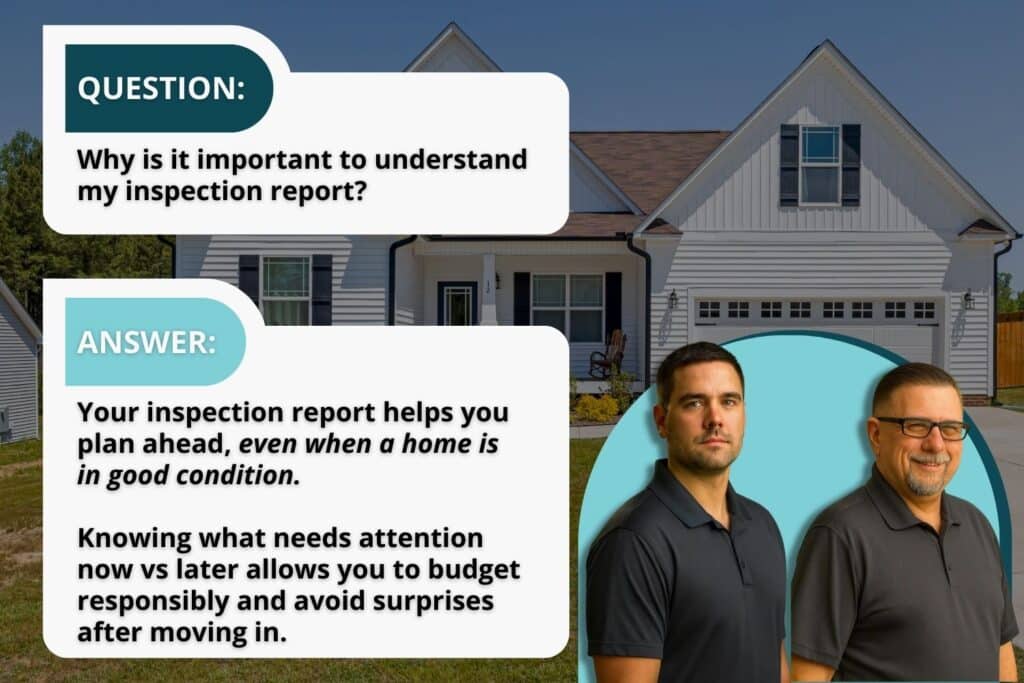
Many people are surprised by how long an inspection report can be. A report may include dozens of pages, hundreds of photos, and notes on every major system in the home.
This does not mean the home is in poor condition.
Inspection reports are detailed because inspectors document everything they observe, not just major problems. Minor maintenance items, normal wear, and informational notes are included alongside more serious findings.
Reports often feel overwhelming because:
- Minor and major issues are listed together
- Photos highlight specific conditions without showing the full context
- Technical language is used for accuracy, not alarm
- Buyers may be seeing these systems for the first time
Learning how to prioritize information is key to reading the report effectively.
How Home Inspection Reports Are Organized
Most inspection reports follow a system-based structure. Inspectors review each major area of the home separately so readers can focus on one system at a time.
Common sections include:
- Roofing and exterior components
- Structural elements and foundation
- Electrical systems
- Plumbing systems
- Heating and cooling systems
- Attic, insulation, and ventilation
- Interior components such as walls, ceilings, doors, and windows
Within each section, findings are listed individually with descriptions and photos. Reading the report section by section, rather than jumping around, helps prevent confusion and information overload.
Understanding Severity Levels and Categories
Inspection reports often categorize findings to help readers understand priority and significance. These categories are meant to guide attention, not to suggest that everything listed requires immediate action.
While wording varies by company, findings typically fall into a few broad groups.
| Category | What It Means |
| Safety Concern | A condition that could pose a risk to occupants |
| Major Defect | An issue affecting function or performance |
| Minor Defect | An item that should be addressed but is not urgent |
| Maintenance Item | Routine upkeep or preventative care |
| Informational Note | General observations or context |
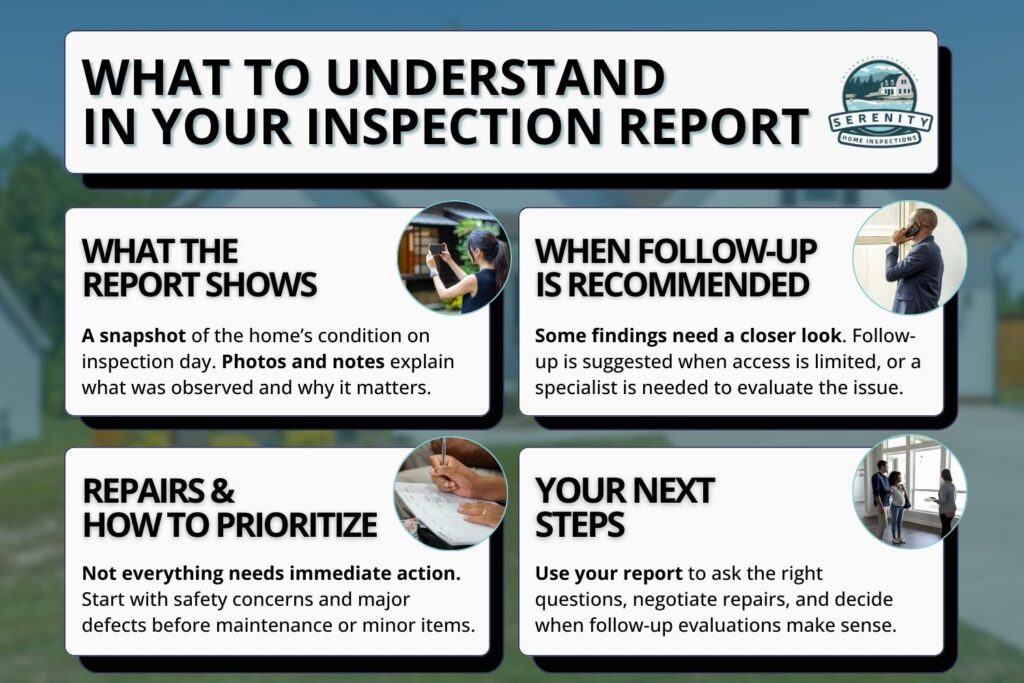
Not every item carries the same weight. A safety concern or major defect usually deserves attention before maintenance or informational notes.
Understanding these categories helps readers focus on what matters most.
How to Interpret Photos in Inspection Reports
Photos are included to document conditions observed during the inspection. They are not meant to represent the entire home or to exaggerate issues.
Photos often show:
- Close-up views of specific defects
- Limited angles due to access restrictions
- Conditions that appear more dramatic when zoomed in
A photo without context can be misleading. Always read the written explanation that accompanies the image. The description explains why the photo is there and how serious the issue may be.
Sections Buyers Should Review Carefully
While every section of the report has value, certain systems tend to have a greater impact on safety, long-term costs, and insurability.
Buyers often benefit from paying close attention to:
- Roofing and drainage systems
- Foundation and structural components
- Electrical safety issues
- Plumbing leaks or water-related concerns
- Heating and cooling performance
Issues in these areas are more likely to influence repair planning or negotiation decisions.
Age, Wear, and What Is Normal
One of the most common misunderstandings in inspection reports is the difference between age-related wear and an actual defect.
Homes age over time. Components naturally wear, even when properly maintained.
For example:
- An older roof may show wear without active leaks
- An aging HVAC system may still function properly
- Older electrical components may not meet modern standards
Age alone does not necessarily mean a component is defective. Inspectors note age-related conditions to provide context and help homeowners plan for future maintenance or replacement.
Why Inspectors Recommend Further Evaluation
Inspection reports often include recommendations for further evaluation by licensed specialists. This does not automatically mean something is wrong.
Your inspector may recommend further evaluation when:
- There’s limited access to a component
- The home needs specialty tools or testing
- Conditions cannot be fully confirmed during a visual inspection
This recommendation helps protect the buyer by ensuring that complex systems receive appropriate review when needed.
How Inspection Reports Are Used in Real Estate Transactions
Inspection reports play different roles depending on the situation.
Reports help buyers:
- Understand the true condition of the home
- Identify items to monitor or repair
- Plan future maintenance
For sellers, reports can:
- Highlight issues to address before listing
- Reduce surprises during buyer inspections
- Support smoother transactions
When it comes to property investments, reports provide insight into long-term maintenance needs and potential risks.
Common Misconceptions About Inspection Reports
Many misunderstandings stem from assumptions about what inspection findings mean.
Some common misconceptions include:
- Every item in the report must be repaired
- A long report means the home is in bad condition
- Older homes are always problematic
- Inspectors are listing cosmetic issues only
In reality, inspection reports are designed to inform, not to judge or condemn a property.
Related Questions to Explore
Why do inspection reports include so many minor items?
The inspector will note minor items to provide a complete picture of the home and help with future maintenance planning.
Should sellers fix everything in the report?
Not necessarily. Many items are informational or related to normal wear.
Can buyers use the report for future maintenance planning?
Yes. Inspection reports often serve as a long-term reference for homeowners.
When to Ask Questions About Your Report
Inspection reports are for reading, reviewing, and discussion. If something is unclear, it is appropriate to ask questions.
Buyers and sellers may want clarification when:
- The severity of an issue is unclear
- A recommendation is unfamiliar
- A system is near the end of its typical service life
Clear communication helps ensure the report is as valuable to you as possible.
Conclusion
Home inspection reports include lots of details by design. They document the visible condition of a home so buyers and sellers can make informed decisions.
Understanding how to read and interpret the report allows you to focus on what truly matters, avoid unnecessary worry, and plan responsibly for the future.
Serenity Home Inspections provides clear, thorough inspection reports to educate and inform, not overwhelm.