

If you are buying a home in the Atlanta area (or anywhere, really), you will likely hear two terms before you close, and it’s important to know the difference: home warranty vs home insurance.
They sound similar, and both involve some kind of protection for your home, but they cover very different things. Mixing them up can leave you with a gap you did not know existed until something goes wrong.
You could have one without the other, but most homeowners in Metro Atlanta benefit from understanding both before making that call.
What Is Home Insurance?
Home insurance is a policy that protects your home and belongings from sudden, unexpected damage. It is not optional if you have a mortgage. Your lender will require it, and going without it, even on a paid-off home, is a significant financial risk.
A standard policy typically covers:
- Dwelling coverage: Repairs or rebuilding costs from covered events like fire, lightning, wind, or hail
- Personal property: Replacement of belongings that are stolen or destroyed
- Liability protection: Legal and medical costs if someone is injured on your property
- Additional living expenses: Temporary housing if your home becomes uninhabitable after a covered loss
What home insurance does not cover matters just as much. Most standard policies exclude flooding, earthquake damage, and normal wear and tear.
In Georgia, flood coverage requires a separate policy, which is worth keeping in mind for homeowners near the Chattahoochee or in lower-lying parts of Metro Atlanta.
What Is a Home Warranty?
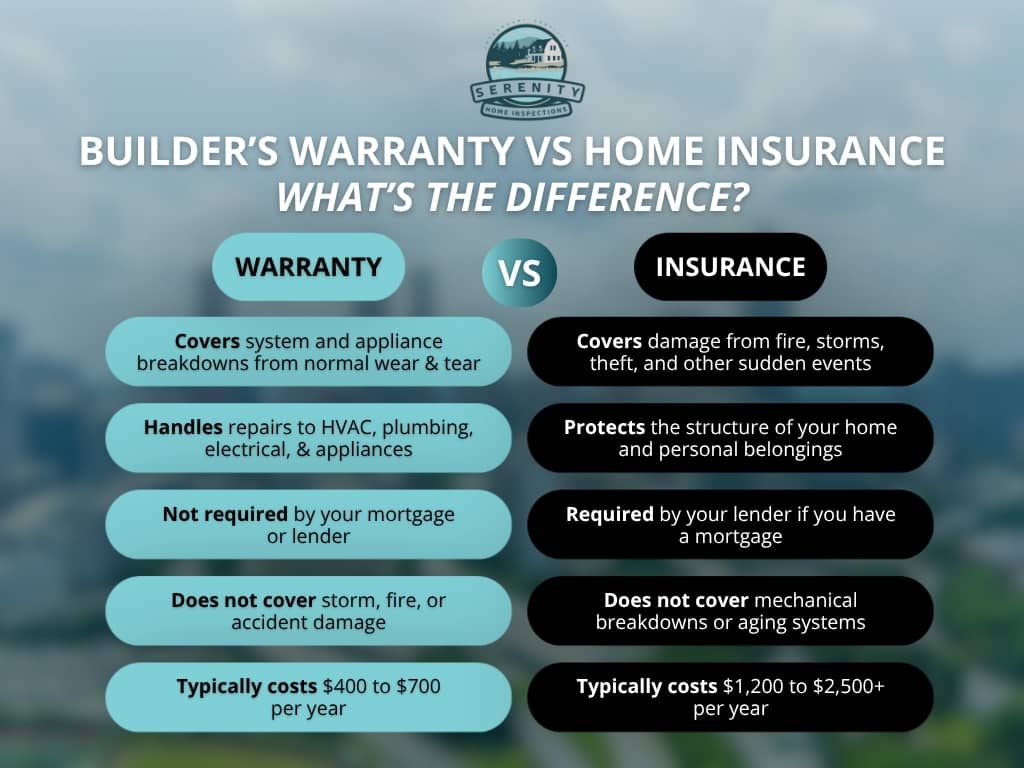
A home warranty is a service contract that covers the repair or replacement of home systems and appliances that break down due to normal use over time.
It is separate from your insurance policy, not required by lenders, and often negotiated as part of a real estate transaction.
A standard home warranty typically covers:
- Major systems: HVAC, electrical, plumbing
- Kitchen appliances: Refrigerator, dishwasher, oven, microwave
- Other appliances: Washer, dryer, garbage disposal, water heater
Coverage varies by provider and plan, and add-ons are often available for pools, septic systems, and other specialty items.
What a warranty does not cover is equally important. Warranties exclude pre-existing conditions, improper installation, cosmetic damage, and anything caused by a sudden event rather than gradual wear.
That leaky roof after a storm? That is insurance. The HVAC that finally quits after 15 Atlanta summers? That is a warranty claim.
Side-by-Side Comparison
| Criteria | Home Insurance | Home Warranty |
| Required by lenders? | Yes | No |
| Covers fire, storm, theft? | Yes | No |
| Covers system breakdowns? | No | Yes |
| Covers appliance failure? | No | Yes |
| Covers pre-existing conditions? | No | No |
| Covers flooding? | No (separate policy) | No |
| Typical annual cost | $1,200 to $2,500+ | $400 to $700+ |
Where They Overlap and Where They Do Not
The most common point of confusion is water damage. Home insurance covers sudden, accidental water damage, like a pipe that bursts overnight and floods your kitchen.
A home warranty may cover the repair of the pipe itself if the failure is due to wear, but it typically does not cover the resulting damage to walls, floors, or cabinetry. That part is insurance territory.
The clearest way to think about it: insurance protects you from what happens to your home. A warranty protects you from what wears out inside it over time.
Do You Need Both?
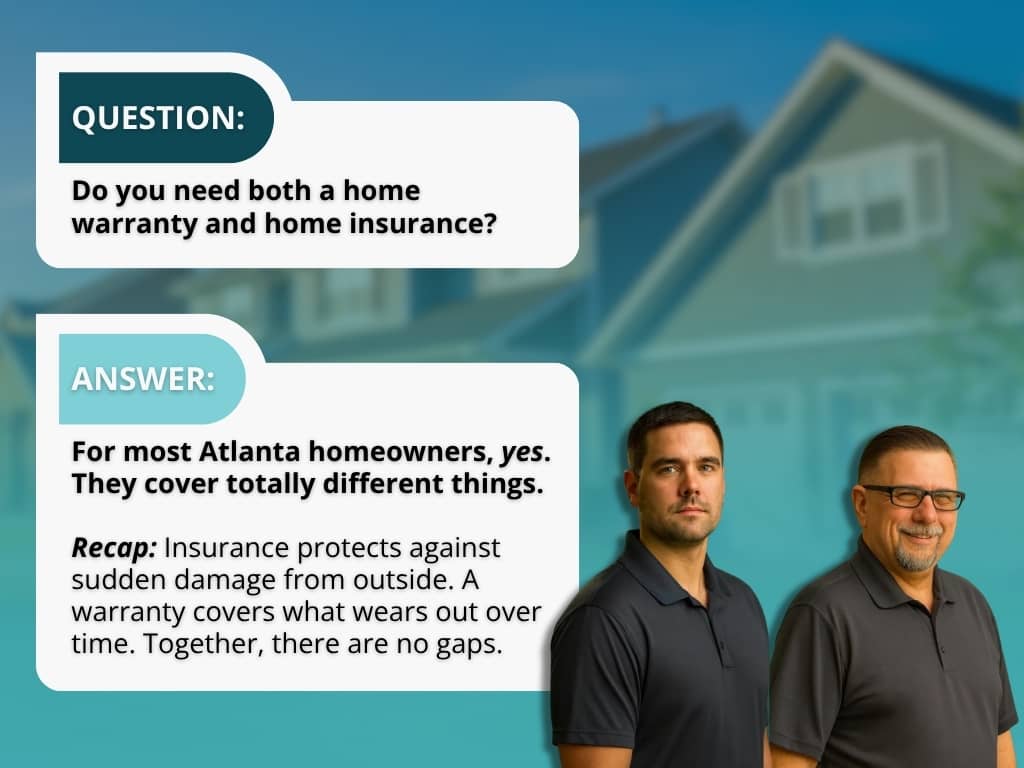
For most homeowners in the Atlanta area, having both makes sense, especially when buying a resale home with older systems.
Georgia weather puts real stress on HVAC equipment. Hot, humid summers mean air conditioners run hard from May through September. A system that is eight to ten years old when you buy it may hold up for several more years, or it may not. A home warranty transfers that risk to the warranty provider for a relatively low annual cost.
At the same time, hailstorms, fallen trees, and severe weather are a regular part of life across Metro Atlanta. Homeowners without adequate insurance are one bad storm away from a serious financial hit.
Together, both policies give you coverage for what comes from outside and what wears out from within.
What a Home Inspection Tells You That Neither Policy Will
Here is where many buyers miss an important step. Both home insurance and a home warranty exclude pre-existing conditions. If a system or component was already failing when you took ownership, neither policy is likely to cover it.
A thorough home inspection before closing gives you a clear picture of what is already in marginal condition. Knowing the HVAC is aging, the water heater is near the end of life, or the electrical panel has concerns lets you negotiate repairs or credits before you close, rather than inheriting those problems after the fact.
Serenity’s inspectors use infrared thermal imaging to detect moisture intrusion, heat loss, and hidden issues that a visual inspection alone can miss. In Atlanta’s humidity, those conditions escalate quickly. Catching them before closing is far better than discovering them after.
Home Warranties and New Construction
If you are buying a new build in a community like Alpharetta, Suwanee, or Peachtree Corners, your builder likely provides some form of warranty.
Georgia law requires builders to provide a written warranty on new home construction. Most builders structure that coverage in three tiers: one year for workmanship, two years for major systems like electrical, plumbing, and HVAC, and ten years for structural defects.
These builder warranties are separate from both home insurance and a third-party home warranty. Knowing what your builder’s warranty covers and when it expires is important.
A builder’s warranty inspection in the months before coverage lapses is a smart way to document any issues while you still have recourse.
What to Ask Before Buying a Home Warranty
Not all home warranty providers are equal. Before signing a contract, it is worth asking:
- What systems and appliances are covered, and what is explicitly excluded?
- Is there a waiting period before coverage begins?
- What is the service call fee per claim?
- Does the contract cover replacement or only repair?
- Are there coverage caps per system or per year?
- How are pre-existing conditions defined and handled?
In Georgia, home warranty companies are not regulated the same way insurance companies are, so reading the contract carefully matters more than it might elsewhere.
Related Questions to Explore
How does infrared thermal imaging add to what a standard inspection finds?
Thermal imaging detects temperature differences behind walls, ceilings, and floors that can indicate moisture intrusion, insulation gaps, or electrical hot spots. Thermal imaging catches those conditions at the earliest possible stage.
Does the condition of my HVAC system affect my home inspection report?
Yes. Inspectors evaluate HVAC equipment for age, condition, and visible deficiencies. An aging or poorly maintained system will show up in the inspection report, which is relevant both for negotiating with a seller and for understanding what you may be relying on a home warranty to cover in the near term.
Are there inspection services specifically for investment properties?
Yes. An investor property review is a streamlined inspection designed for buyers who need to quickly assess a property’s condition and estimate repair costs without the full scope of a standard buyer’s inspection. It is useful for identifying deferred maintenance and capital expenses before committing to a purchase.
When to Contact a Professional
Understanding what your policies cover is important, but knowing the actual condition of the systems those policies are meant to protect is just as critical.
Reach out to Serenity Home Inspections if you are in any of these situations:
- You are under contract and want to know what condition you are actually buying
- You are approaching the end of your builder’s warranty and want to document issues before coverage lapses
- You are an existing homeowner who wants a clear picture of your home’s systems
- You are buying a home with a pool, septic system, or other specialty component
- You want thermal imaging included to catch moisture or insulation issues that a standard visual inspection may miss
Conclusion
Home insurance vs home warranty can be a tricky distinction. However, they both serve different purposes, and most Atlanta homeowners benefit from having both. Insurance protects your home from sudden, unexpected events. A warranty handles the gradual wear that every system and appliance goes through over time.
Neither one replaces a thorough home inspection, which is how you find out what condition everything is in before the policies you are counting on are put to the test.
At Serenity Home Inspections, our goal is to give you the clarity you need to make confident decisions about your home. With over 12,000 inspections completed across Metro Atlanta, we know what to look for and how to explain it clearly. Schedule your inspection today.