

When you walk through a home, you’re only seeing part of the picture. Walls, ceilings, and floors hide a lot, and some of the most costly problems a home can have, including moisture intrusion, failing insulation, and electrical hot spots, are completely invisible to the naked eye.
That’s exactly where an infrared thermal imaging camera earns its place in a home inspection. Rather than replacing what a trained inspector can see, it extends what’s possible, picking up heat variations that signal hidden problems before they show up as water stains, mold, high utility bills, or something worse.
If you’re buying or selling a home in the Atlanta area and wondering whether thermal imaging is worth including in your inspection, here’s a clear look at what it actually detects and why it matters.
How an Infrared Thermal Imaging Camera Works
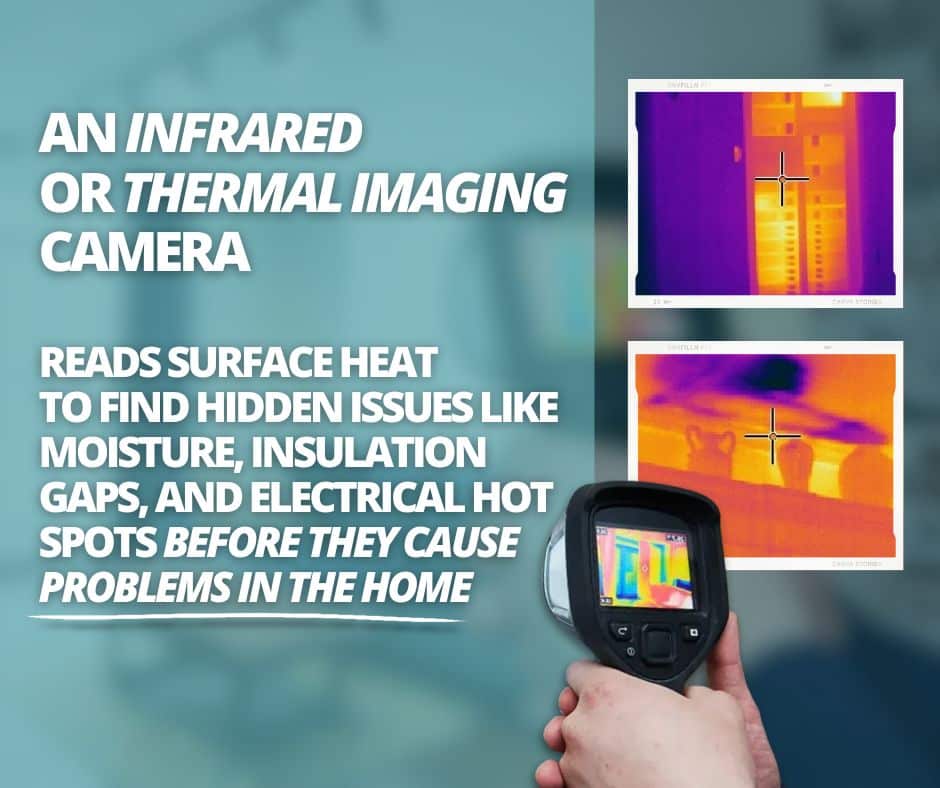
An infrared thermal imaging camera doesn’t see through walls. It reads surface heat.
Every object gives off thermal energy. When something behind a surface is going wrong, whether that’s trapped moisture, a leaking pipe, or an overheating electrical component, it creates a temperature difference that shows up in the camera’s image as a color variation.
The camera translates those differences into a visual gradient, with warmer areas appearing in lighter tones and cooler or wetter areas appearing darker.
A trained inspector reads thermal images alongside the visible inspection to identify anomalies worth investigating further. The result is a more complete picture of a home’s condition, particularly in the areas where problems tend to hide the longest.
What Thermal Imaging Can Detect
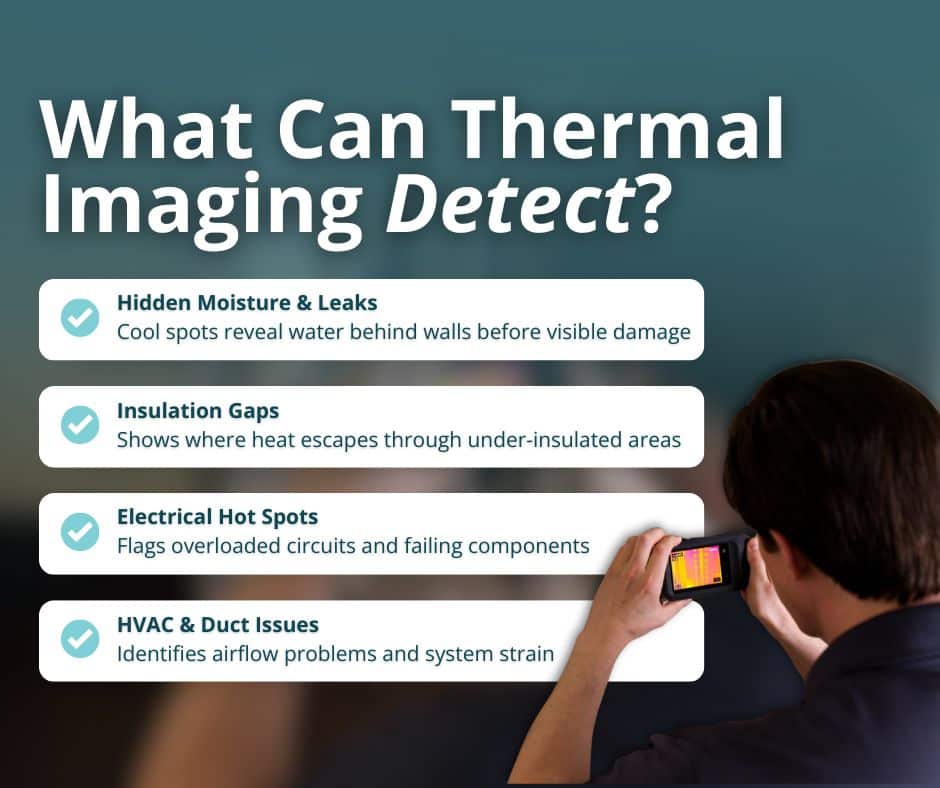
Thermal imaging picks up on a wider range of hidden issues than most homeowners expect. Here are the most common and consequential things it can identify during a professional home inspection.
Moisture Intrusion and Hidden Leaks
Moisture is one of the most damaging and hardest-to-spot problems in a home. It can enter through a compromised roof, a slow plumbing leak, a failing window seal, or a foundation crack, and sit inside walls or ceilings for months before visible damage appears.
Because water absorbs and releases heat differently than surrounding building materials, it shows up in thermal imaging as a cool, irregular spot on an otherwise uniform surface. This makes it possible to identify active moisture issues or areas of prior water damage behind drywall, under flooring, or above ceilings without any destructive investigation.
In the Atlanta metro area, where summer humidity is high and heavy rain is common, moisture intrusion is one of the most frequent findings during a thermal imaging inspection.
Insulation Deficiencies
Missing, compressed, or improperly installed insulation rarely announces itself until you’re looking at an unusually high utility bill. Thermal imaging makes those gaps visible by showing where heat is escaping or entering through under-insulated walls, ceilings, and floors.
For buyers in older Atlanta-area neighborhoods like Decatur, Smyrna, or East Cobb, this finding is especially relevant. Insulation in older homes may have settled over time, been disturbed during a renovation, or never been adequately installed to begin with.
Electrical Hot Spots
Overloaded circuits, loose connections, and failing components generate heat before they cause visible damage or trip a breaker. Thermal imaging can identify these hot spots during a home inspection, flagging electrical anomalies that warrant closer attention from a licensed electrician.
This is one of the most safety-critical applications of the technology. Electrical issues are among the leading causes of house fires in the U.S., and catching an overheating component early is exactly the kind of finding that makes a real difference.
HVAC Performance Issues
Rooms that run noticeably warmer or cooler than the rest of the house can point to duct leaks, airflow problems, or system deficiencies.
Thermal imaging helps identify whether the issue is structural, an insulation gap, or a performance problem with the HVAC system itself, rather than guessing.
Pest Activity
While thermal imaging is not a substitute for a dedicated WDO inspection, warm-blooded pests like rodents can create detectable heat signatures inside walls and concealed spaces.
An experienced inspector may flag areas of unusual thermal activity that warrant further investigation for pest presence.
Roof and Ceiling Moisture
Roof leaks don’t always show up where you’d expect them. Water can travel along roof decking or framing before collecting in a different area entirely, making the entry point and the visible damage appear in completely separate locations.
Thermal imaging of ceilings can reveal moisture that has accumulated above a surface before it causes a visible stain or structural damage below.
| What Thermal Imaging Detects | What It May Indicate |
|---|---|
| Cool, irregular spots on walls or ceilings | Moisture intrusion or hidden leak |
| Uneven heat distribution in walls or floors | Missing or compromised insulation |
| Hot spots in electrical panels or outlets | Overloaded circuit or failing component |
| Temperature inconsistencies room to room | Duct leak or HVAC performance issue |
| Unexplained warm areas inside the walls | Possible pest activity |
| Moisture above ceiling surface | Roof leak that hasn’t surfaced yet |
What Thermal Imaging Cannot Do
Thermal imaging is a powerful tool, but it has real limitations worth understanding upfront.
It reads surface temperatures, but doesn’t see through walls, pinpoint the exact source of a leak, or confirm the presence of mold.
It detects anomalies that indicate a potential problem, not a definitive diagnosis. A thermal image finding always needs to be interpreted by a trained inspector who can put it in context with the rest of what they observed.
Conditions matter too. The most accurate results occur when there is a meaningful temperature difference between the interior and exterior of the home, typically at least 15 to 20 degrees Fahrenheit. On mild days, some anomalies may be less apparent.
This is why thermal imaging is most valuable as part of a full professional inspection, not a standalone service.
How Serenity Incorporates Thermal Imaging
At Serenity Home Inspections, infrared thermal imaging is included as part of our inspection packages, not an expensive add-on. Here’s a quick look at what every package includes:
- Full residential inspection
- Infrared thermal imaging
- Visual mold inspection
- Drone inspection
- Complimentary home warranty
- Concierge service
Whether you’re purchasing in Marietta, Alpharetta, Sandy Springs, or anywhere else in the greater Atlanta metro, thermal imaging means fewer surprises after closing.
For sellers, it can surface issues worth addressing before listing, helping avoid last-minute renegotiations on the buyer’s terms.
Related Questions
Is thermal imaging the same as a mold inspection?
No. Thermal imaging can detect moisture conditions where mold is likely to develop, but it does not identify or confirm mold itself. A dedicated mold and air quality test is the right next step when thermal imaging reveals significant moisture concerns.
Does thermal imaging apply to commercial properties?
Yes. It’s just as applicable to commercial inspections as residential ones, often more so given larger roof areas, more complex electrical systems, and greater potential for concealed moisture issues.
Can thermal imaging find issues a standard inspection would miss?
It can surface anomalies that aren’t visible during a standard visual inspection, particularly moisture behind walls, insulation gaps, and electrical hot spots. It works best as a complement to a thorough inspection, not a replacement for one.
What should I do if thermal imaging reveals a potential issue?
Your inspection report will note any thermal anomalies with context from the inspection. From there, the right specialist can evaluate the specific concern in more detail.
When to Call a Professional
If you’re buying a home in the Atlanta area, scheduling an inspection that includes infrared thermal imaging is one of the most effective ways to reduce your risk before closing.
Problems that are invisible during a walkthrough, such as active moisture intrusion, insulation gaps, or an electrical component running hotter than it should, are exactly what this technology is built to surface.
For sellers preparing to list, a pre-listing inspection with thermal imaging can identify concerns worth addressing on your own terms, before a buyer’s inspector finds them first.
Conclusion
An infrared thermal imaging camera doesn’t change what a home inspection is. It extends how far it can see. Moisture behind drywall, insulation gaps inside walls, electrical hot spots, roof leaks that haven’t surfaced yet: these are real problems that affect real purchase decisions, and a standard visual inspection can’t catch all of them.
At Serenity Home Inspections, thermal imaging is built into the process because Atlanta-area buyers and sellers deserve a complete picture of a home’s condition, not just the parts that are easy to see.
Ready to schedule? Reach out to the Serenity team today.