How Do I Test for Mold in My House and Prevent Growth?

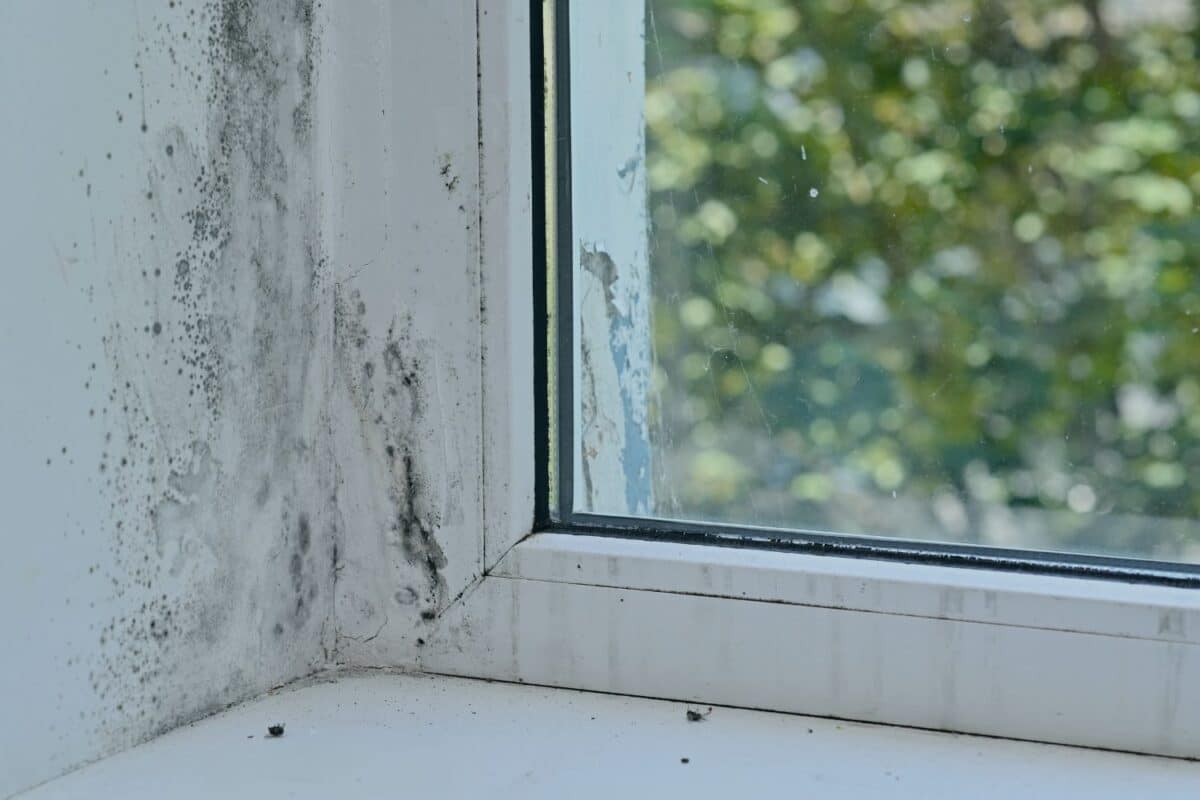
Whether you’ve noticed a musty smell, seen visible growth, or experienced unexplained health symptoms, understanding when to test for mold and how it works gives you the information you need to protect your house and family.
Mold growing in your home creates health concerns and property damage that get worse the longer it goes unaddressed. Testing for mold helps you identify problems early and take action before mold spreads.
Atlanta’s humid climate creates ideal conditions for mold growth. Between summer humidity, afternoon thunderstorms, and occasional flooding, homes across metro Atlanta face constant moisture challenges.
Signs You Might Need to Test for Mold in the House
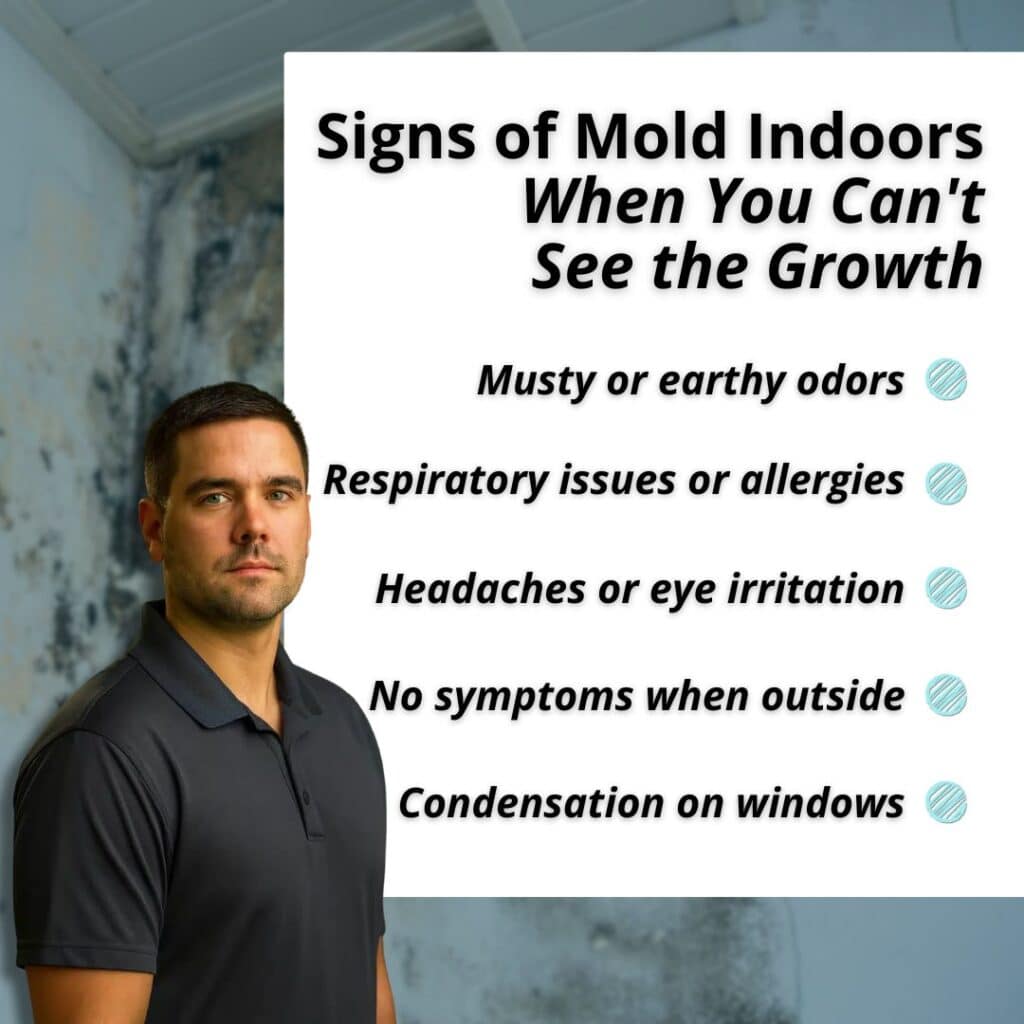
Mold doesn’t always announce itself with obvious visible growth. Many homeowners discover mold problems through indirect signs that indicate hidden growth behind walls, under floors, or in concealed spaces.
Common indicators of mold problems:
- Musty odors that smell earthy, damp, or like rotting wood
- Health symptoms, including respiratory issues, headaches, eye irritation, or allergy-like reactions that improve when you leave the house
- Visible discoloration on walls, ceilings, or around windows
- Water damage history from leaks, floods, or plumbing issues
- Condensation regularly appearing on windows or walls
- Peeling paint or wallpaper that bubbles or separates from the wall
Atlanta homes are particularly susceptible to mold in bathrooms, basements, attics, and crawl spaces where humidity accumulates. If you notice these signs, testing helps confirm whether mold is present and identifies the type and extent of contamination.
Visual Inspection Comes First
Before calling a professional for testing, conduct a thorough visual inspection of your home to locate obvious mold growth or moisture problems.
Check these high-risk areas:
- Bathrooms: Around tubs, showers, under sinks, behind toilets
- Kitchen: Under sinks, around dishwashers, behind refrigerators
- Basements: On walls, around windows, near sump pumps
- Attics: On roof decking, around vents, near insulation
- Crawl spaces: On floor joists, subfloors, foundation walls
- HVAC systems: Inside ductwork, on coils, in drain pans
Look for discoloration, fuzzy or slimy growth, water stains, and dampness. Mold appears in various colors, including black, green, white, orange, and brown.
Use a flashlight to inspect dark areas thoroughly. Pay attention to corners, seams, and anywhere two materials meet. Visual inspection identifies obvious problems and helps you decide whether professional testing is necessary.
DIY Mold Test Kits: What They Tell You
Hardware stores sell DIY mold test kits ranging from $10 to $50, but these kits have significant limitations that often leave homeowners with incomplete or misleading information.
Why DIY kits fall short:
- Limited sampling: You’re guessing where to test instead of using systematic inspection protocols
- No moisture detection: Kits don’t locate the water source causing mold growth
- Inconsistent results: Air sampling varies wildly by time of day, weather, and air movement
- No baseline comparison: You can’t tell if spore levels are elevated without outdoor samples
- Species identification only: Knowing what type of mold you have doesn’t tell you concentration levels or health risks
- No expert interpretation: Lab results arrive without guidance on what they mean or what actions to take
The biggest problem with DIY testing is that it doesn’t identify the moisture source. Without a professional’s assessment to find the water problem, mold keeps returning, no matter how many times you test or clean.
Professional Mold Testing Provides Comprehensive Results
Professional mold testing and air quality assessment deliver detailed, reliable information that DIY kits can’t match. Certified inspectors use calibrated equipment, proper sampling protocols, and accredited laboratories to analyze samples.
What professional testing includes:
- Visual inspection of the entire property to locate moisture sources and visible mold
- Moisture mapping using specialized meters to find hidden water problems
- Thermal imaging to detect moisture behind walls, under floors, and in other concealed areas without invasive testing
- Air sampling that captures airborne mold spore concentrations in multiple locations
- Surface sampling from suspected mold growth areas for species identification
- Lab analysis by accredited mycologists who identify mold types and concentration levels
- Detailed report explaining findings, health risks, and remediation recommendations
Professional testing identifies not just whether mold is present, but what species, how much, where it’s concentrated, and what’s causing the moisture problem. This information guides effective remediation.
Thermal imaging technology is particularly valuable because it reveals temperature differences that indicate moisture intrusion you can’t see. Cold spots on walls often signal water problems that lead to mold growth. This non-invasive approach identifies issues without cutting into walls or ceilings.
Air quality testing compares indoor spore levels to outdoor baseline samples. Elevated indoor levels indicate active mold growth even when you can’t see it.
Understanding Your Mold Test Results
Mold test results include species identification and concentration levels in the house. Not all mold is equally problematic, so understanding what you’re dealing with helps you respond appropriately.
Common mold types found in homes:
| Mold Type | Where It Grows | Health Concerns |
|---|---|---|
| Cladosporium | Surfaces, fabrics, wood | Generally low risk, allergenic |
| Penicillium | Water-damaged materials | Allergenic, some species produce toxins |
| Aspergillus | Dust, HVAC systems, insulation | Can cause respiratory issues |
| Produces mycotoxins, a serious health risk | Wet cellulose materials | Produces mycotoxins, serious health risk |
| Alternaria | Damp areas, showers | Common allergen |
Concentration levels matter as much as species. Even benign molds cause problems at high concentrations. Professional reports compare your indoor levels to acceptable standards and outdoor baseline levels.
Results also identify moisture sources. Fixing the water problem is essential because, without addressing moisture, mold returns even after remediation.
Testing During Real Estate Transactions
Mold testing plays an important role when buying or selling Atlanta homes. Many buyers request mold inspections, especially for older homes or properties with a water damage history.
Sellers benefit from proactive mold testing before listing. Identifying and addressing mold problems upfront prevents inspection surprises that derail sales or lead to price reductions.
Buyers should consider mold testing when:
- The home has a musty smell
- There’s visible water damage or staining
- The property has basement moisture or crawl space issues
- Previous inspection reports mention moisture concerns
Professional mold assessment during the inspection period gives you leverage to negotiate repairs or credits. It also provides documentation of the home’s condition at purchase.
How to Prevent Mold Growth in Your Home
Once you’ve tested for and addressed existing mold, prevention strategies keep mold from returning. Most prevention focuses on controlling moisture since mold can’t grow without water.
Effective mold prevention:
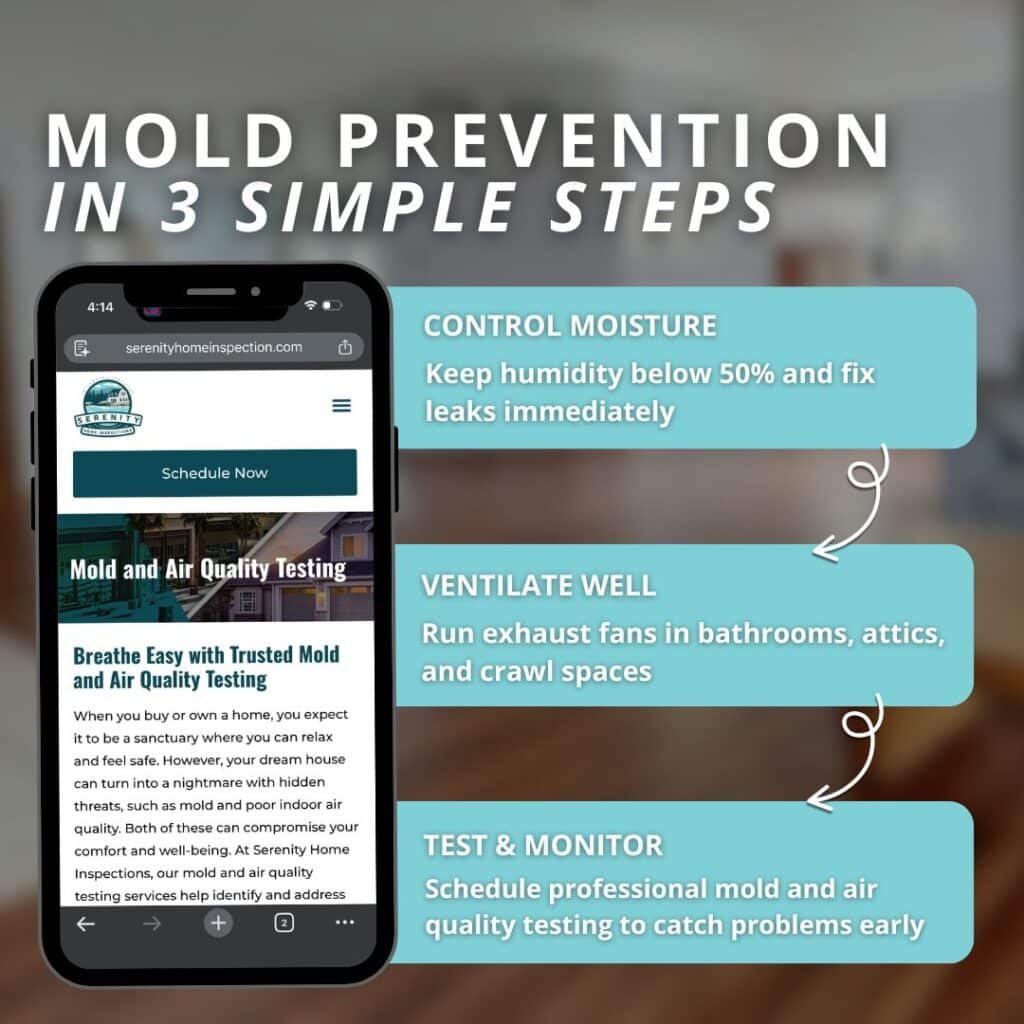
- Keep indoor humidity below 50% using dehumidifiers or AC
- Run bathroom exhaust fans during and 30 minutes after showers
- Vent dryers outside, not into attics or crawl spaces
- Fix leaks immediately in roofs, plumbing, and around windows
- Clean gutters and ensure proper drainage away from your foundation
- Use mold-resistant products in bathrooms and basements
In Atlanta’s humid climate, whole-house dehumidification systems work better than portable units for maintaining healthy humidity levels year-round. Proper attic ventilation prevents moisture buildup that leads to roof deck mold.
Address any water intrusion within 24 to 48 hours. Mold starts growing quickly once materials get wet. A quick response to water problems prevents mold from establishing.
Related Questions
What’s the difference between mold inspection and mold testing?
Mold inspection involves visual assessment and moisture evaluation to locate problems. Mold testing includes lab analysis of samples to identify species and concentration levels. A comprehensive mold assessment includes both inspection and testing.
When should I schedule a home inspection?
Home inspections are essential when buying property, but current homeowners benefit from periodic inspections every few years or after significant weather events. Regular inspections identify developing problems with moisture, ventilation, and building systems before they cause serious damage.
What other environmental concerns should homeowners test for?
Beyond mold, homes may have radon, carbon monoxide, VOCs from building materials, or poor ventilation. Comprehensive air quality testing evaluates multiple factors that affect indoor environmental health.
When to Call Professionals
Mold problems require expertise for accurate assessment and safe remediation. Different professionals handle different aspects of mold issues.
Call a professional for mold and air quality testing when:
- You suspect mold, but can’t locate the source
- You need comprehensive testing to identify mold types and concentration levels
- You’re buying or selling a home and want professional documentation
- You’ve had water damage and want to verifythat mold hasn’t developed
- You want thermal imaging to detect hidden moisture problems
Call a mold remediation specialist when:
- Testing confirms mold that needs professional removal
- You have mold growth larger than 10 square feet
- Mold is in HVAC systems or behind walls
Serenity Home Inspection provides comprehensive mold and air quality testing throughout Atlanta and the surrounding areas.
Professional testing gives you reliable information about your home’s mold situation and indoor air quality so you can make informed decisions about remediation and prevention.
Conclusion
Testing for mold in your house starts with visual inspection and recognizing warning signs like musty odors or unexplained health symptoms.
Professional mold and air quality testing provides accurate, comprehensive results that DIY kits can’t deliver, identifying mold species, concentration levels, and moisture sources.
Contact Serenity Home Inspection for a thorough mold and air quality assessment that gives you the information you need to protect your property and family.